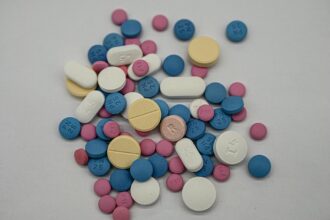
The UK’s Medicines and Healthcare products Regulatory Agency (MHRA) is leveraging a football metaphor to increase public awareness of its pharmacovigilance system, encouraging patients and healthcare professionals to report adverse drug reactions using its Yellow Card scheme. The initiative aims to bridge the gap between widespread understanding of yellow cards in sports and the critical importance of safety reporting in medicine, potentially expanding the volume and quality of post-market surveillance data that protects public health.
Key takeaways
- The MHRA’s Yellow Card scheme enables patients and clinicians to report suspected adverse reactions to medicines and medical devices
- The campaign uses sports metaphor recognition to increase public engagement with pharmacovigilance, a cornerstone of drug safety monitoring
- Voluntary reporting systems like Yellow Cards identify safety signals that regulatory databases alone may miss, particularly for rare or delayed adverse effects
- Post-market surveillance data from schemes like Yellow Card inform regulatory decisions on drug labelling, contraindications, and market withdrawals
Patient Safety Through Accessible Reporting
The MHRA operates the Yellow Card scheme, a voluntary adverse drug reaction reporting system that allows patients, carers, and healthcare professionals to report suspected side effects from medicines and medical devices directly to the regulator. Unlike mandatory hospital reporting systems, which capture serious adverse events within clinical settings, the Yellow Card scheme captures real-world experiences from community populations, capturing a critical but often underreported segment of adverse event data.
The public health significance of voluntary reporting was established through decades of pharmacovigilance research. Studies published in peer-reviewed pharmacovigilance literature demonstrate that voluntary reporting systems detect approximately 5 to 10 percent of serious adverse drug reactions occurring in the community, making them essential complements to hospital-based surveillance. The MHRA’s rationale for the current campaign reflects evidence that public awareness of reporting mechanisms directly correlates with reporting volume and timeliness of safety signal detection.
Voluntary reporting systems detect safety signals for rare and delayed adverse effects that hospital reporting databases may not capture due to incomplete longitudinal follow-up, making public engagement in pharmacovigilance a cornerstone of post-market drug safety.
— UK Medicines and Healthcare products Regulatory Agency (MHRA)
Bridging the Communication Gap in Pharmacovigilance
The MHRA’s use of the yellow card metaphor—a universally recognized symbol of caution and rule-breaking consequences in football—addresses a persistent challenge in public health communication: translating technical regulatory concepts into accessible language. Research on health communication effectiveness, published in health communication journals, supports the use of familiar cultural references to increase message retention and behavioral engagement.

The campaign positions adverse event reporting not as a bureaucratic compliance requirement, but as a direct mechanism through which individual patient experiences contribute to collective drug safety. This framing aligns with evidence-based health literacy principles that emphasize agency and tangible impact. The MHRA’s messaging—that Yellow Cards “make medicines and medical devices safer for everyone”—translates abstract regulatory functions into concrete public health outcomes.
Previous campaigns by regulatory agencies using plain-language communication have demonstrated measurable increases in reporting rates. The FDA’s MedWatch program and the EMA’s EudraVigilance system similarly emphasize accessibility and simplicity in their public-facing materials, recognizing that reporting barriers extend beyond technical complexity to include awareness and perceived relevance.
Real-World Impact: What Yellow Card Data Reveals
The Yellow Card scheme has historically identified safety signals that led to regulatory action. Evidence of scheme effectiveness comes from documented cases where increased reporting volume triggered regulatory review and, in some instances, market withdrawal or significant labelling changes. Post-market surveillance literature, indexed in PubMed’s pharmacovigilance database, consistently demonstrates that schemes with higher reporting rates and broader public participation identify safety issues more rapidly than those dependent solely on healthcare professional reporting.
The MHRA’s campaign addresses a documented gap in voluntary reporting: patients frequently underestimate the clinical significance of their adverse experiences and fail to report them. Qualitative research on reporting behavior shows that public campaigns emphasizing the legitimacy and impact of patient-initiated reporting increase both reporting volume and the proportion of serious events captured. This expands the denominator for calculating adverse event rates and improves the precision of pharmacovigilance signal detection.
What this means
The Broader Context: Pharmacovigilance as a Global Standard
The MHRA’s emphasis on public participation in drug safety reporting aligns with international pharmacovigilance standards established by the World Health Organization (WHO). WHO guidance on pharmacovigilance systems emphasizes that robust post-market surveillance depends on multiple data sources, including patient reports, and that regulatory agencies should actively promote public awareness of reporting mechanisms as part of their core mandate.
Other European national medicines agencies and the European Medicines Agency (EMA) operate similarly structured voluntary reporting systems. The comparative effectiveness of these schemes depends partly on population awareness and perceived accessibility. The MHRA’s campaign reflects evidence-based practice in regulatory communication and represents an investment in the foundational infrastructure of post-market drug safety.
Frequently asked questions
How do I report a suspected adverse drug reaction via Yellow Card?
You can report online at the MHRA’s Yellow Card portal, or ask your pharmacist or GP to report on your behalf. Reports can be submitted by patients, carers, and healthcare professionals. You do not need certainty that the medicine caused the reaction—suspected reactions are valuable for signal detection.
What happens after I submit a Yellow Card report?
The MHRA reviews all reports for patterns and safety signals. If multiple reports identify a similar adverse effect, the agency may initiate a formal safety review, request additional data from the manufacturer, issue a safety communication to healthcare professionals, or recommend regulatory action such as labelling changes or market withdrawal. Individual reports are part of a larger surveillance system designed to protect public health.
Are adverse event reports kept confidential?
Yes. The MHRA maintains confidentiality of patient information in Yellow Card reports. Summary safety data from reports are published anonymously to enable healthcare professionals and the public to access information about known adverse effects, but individual patient identities are protected.
As the MHRA continues its campaign to raise public awareness of the Yellow Card scheme, the underlying message is clear: post-market drug safety depends on the collective vigilance of patients, clinicians, and regulators. By translating the familiar concept of a yellow card into the context of patient safety, the agency aims to transform individual health experiences into actionable intelligence that protects entire populations. The success of voluntary reporting systems ultimately depends on public trust, accessibility, and understanding that patient voice matters in medicine regulation.
Was this article helpful?
Disclaimer. This article is health journalism intended for general information and education. It is not medical advice and is not a substitute for professional diagnosis or treatment. Always consult a qualified healthcare provider about your individual circumstances. Full disclaimer →
Related Coverage




Editorial standards. This article was produced under the GMJ News editorial process, with oversight by the GMJ Editorial Board. Our editorial process. Spotted an error? Contact the editorial team.