By using this site, you agree to the Privacy Policy and Terms of Use.
Accept
GMJ NewsGMJ NewsGMJ News
  • Latest News
    • GMJ Briefs
  • Podcast & Media
    • Podcast Episodes
    • GMJ Audio
    • GMJ Videos
  • Research Digest
    • New Studies
    • Georgian Research
    • Data & Numbers
  • Policy & Systems
    • Health Policy
    • Quality & Safety
    • Migration & Health
    • Global Health
  • Practice
    • Clinical Updates
    • Case Discussions
    • Pharmacy & Prescribing
    • Ingredients A-Z
  • Dictionary
    • Browse A–Z
    • About the Project
    • Contribute a Term
  • Perspectives
    • Editorial
    • Explainers
    • Voices
    • Letters
  • Health Topics
  • GMJ Articles
    • Vol. 1 Issue 2 (2026)
    • Vol. 1 Issue 1 (2026)
    • Pre-Launch Articles (2025)
  • Read the Journal →
  • About GMJ News
Notification Show More
Font ResizerAa
GMJ NewsGMJ News
Font ResizerAa
  • Latest News
    • GMJ Briefs
  • Podcast & Media
    • Podcast Episodes
    • GMJ Audio
    • GMJ Videos
  • Research Digest
    • New Studies
    • Georgian Research
    • Data & Numbers
  • Policy & Systems
    • Health Policy
    • Quality & Safety
    • Migration & Health
    • Global Health
  • Practice
    • Clinical Updates
    • Case Discussions
    • Pharmacy & Prescribing
    • Ingredients A-Z
  • Dictionary
    • Browse A–Z
    • About the Project
    • Contribute a Term
  • Perspectives
    • Editorial
    • Explainers
    • Voices
    • Letters
  • Health Topics
  • GMJ Articles
    • Vol. 1 Issue 2 (2026)
    • Vol. 1 Issue 1 (2026)
    • Pre-Launch Articles (2025)
  • Read the Journal →
  • About GMJ News
Follow US
GMJ News > GMJ Briefs > Three Evidence-Based Benefits of Toy MRI Scanners for Child Patients

Three Evidence-Based Benefits of Toy MRI Scanners for Child Patients

GMJ
Last updated: 04/08/2026 12:43
By
Prof. Giorgi Pkhakadze
Share
1 Min Read
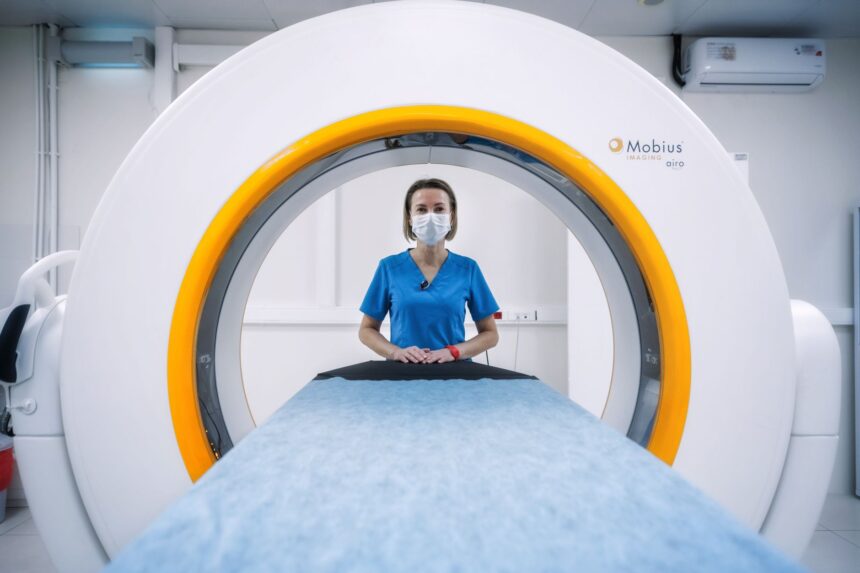
Child using miniature toy MRI scanner with stuffed animal during medical preparation session
A miniature replica MRI scanner helps children practice with toys before medical scans, significantly reducing anxiety during actual procedures according to healthcare providers. — Photo by Max Mishin on Pexels (Pexels License)
SHARE
1 min read|144 words

Toy MRI scanners offer multiple clinical advantages for pediatric patients preparing for diagnostic imaging procedures. First, practicing positioning with toys helps children understand body placement requirements and reduces fear of the unfamiliar equipment. Second, exposure to realistic MRI sounds through toy scanners familiarizes young patients with the distinctive acoustic environment they will encounter during actual procedures, diminishing startle responses and anxiety.

Third, clinical data demonstrates a 40 percent reduction in anxiety levels among children who participate in toy scanner preparation programs before undergoing real scans. This significant improvement translates to better imaging quality, reduced need for sedation, and importantly, more positive long-term attitudes toward medical care.

For healthcare providers, integrating toy MRI scanners into standard pediatric protocols represents a practical, non-pharmacological intervention that improves patient outcomes while supporting the emotional well-being of young patients entering the medical system. Read the full article on GMJ Newsroom.

Was this article helpful?

GMJ Brief · Takeaway

📰 Read the full article: Toy MRI Scanner Reduces Children’s Anxiety Before Medical Scans →

Related reference
  • Iron · Ingredient
Share This Article
Facebook LinkedIn Bluesky Copy Link Print
GMJ
ByProf. Giorgi Pkhakadze
Follow:
Prof. Giorgi Pkhakadze, MD, MPH, PhD, is Editor-in-Chief of the Georgian Medical Journal and Chair of the Public Health Institute of Georgia (PHIG). He is Professor and Head of the Department of Social and Behavioural Sciences at David Tvildiani Medical University, and Secretary/Treasurer of the UEMS Section of Public Health. ORCID: 0000-0001-7609-4515.

Submit Your Paper →

Georgia's peer-reviewed open-access medical journal. No APC until January 2027.
Submit Manuscript →
Ethiopia Study Reveals Stakeholder Concerns Over Novel Malaria Treatments

A qualitative study in Ethiopia reveals that health workers and patients view…

Sitafloxacin monotherapy matches doxycycline-rifampicin for brucellosis treatment in landmark trial

A multicenter randomized trial in The Lancet Regional Health – Western Pacific…

Ultra-processed foods linked to higher kidney cancer risk in large US study

A prospective analysis of over 300,000 US adults found that higher consumption…

Submit Your Paper to GMJ

No APC until January 2027.
Submit Manuscript →

You Might Also Like

Medical professional inspecting positive pressure breathing device in hospital setting

Three Essential Steps for Healthcare Providers Addressing Volara Device Safety

By
Prof. Giorgi Pkhakadze
27/07/2026
Medical illustration showing comparison between surgical and natural menopause symptoms

Tailored Treatment Strategies Needed: What Healthcare Providers Should Know About Surgical Menopause

By
Prof. Giorgi Pkhakadze
25/07/2026
Data visualisation showing THC potency trend and psychosis risk association across cohort studies

Announcement: Most Cannabis Users Unaware of THC Potency, but Psychosis Risk Evidence Is Clear

By
Prof. Giorgi Pkhakadze
10/08/2026
Cyclists exercising on stationary bikes with and without music; heart rate and lactate monitors visible

The Mind Over Matter Effect: How Music Boosts Cycling Endurance Without Easing Physical Strain

By
Prof. Giorgi Pkhakadze
26/07/2026
Facebook Twitter Youtube Instagram
Company
  • Privacy Policy
  • Contact US
  • GMJ Journal
  • Submit Manuscript
  • Editorial Team
  • Register at GMJ
  • Terms of Use

Subscribe to GMJ News — Click here

Join Community
© 2026 Georgian Medical Journal (GMJ). Published by the Public Health Institute of Georgia (PHIG). All rights reserved.
Welcome Back!

Sign in to your account

Username or Email Address
Password

Lost your password?