
🟠 Moderate Evidence
Melatonin, the hormone released by the pineal gland when light fades, has become one of the most popular over-the-counter sleep aids in Western pharmacies. Yet most commercial formulations contain 20–30 times the dose your body naturally produces each night, according to research published in the Journal of Pineal Research (2024). The discrepancy between physiological dosing and retail reality raises questions about both safety and efficacy that few consumers—or prescribers—understand.
Key takeaways
- Your body produces approximately 0.3 mg of melatonin per night; most pills contain 5–10 mg
- Melatonin’s two brain receptors (MT1 and MT2) saturate at very low doses, meaning higher amounts do not enhance the clock-shifting effect
- Meta-analyses confirm melatonin modestly reduces time to sleep onset but does not improve sleep maintenance or overall quality in most populations
- Excess dosing produces more side effects (vivid dreams, next-day grogginess) without additional therapeutic benefit
- Physiological dosing ranges from 0.3–0.5 mg taken 30–60 minutes before bedtime
Melatonin Dosing: Physiological Versus Retail
Comparison of natural production, receptor saturation threshold, and common OTC formulations (mg)
Sources: Comai et al., Journal of Pineal Research, 2024; Ferracioli-Oda et al., PLoS One, 2013 | Georgian Medical Journal News

How Melatonin Works: A Brief Neurochemistry
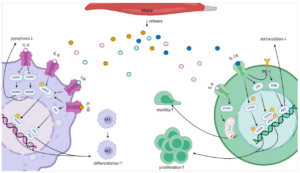
Melatonin is not a sedative in the classical sense. Instead, it is a chronobiotic—a compound that shifts your body’s internal clock. The hormone binds to two specific receptors in the suprachiasmatic nucleus (SCN), the brain’s master circadian pacemaker. According to Comai et al.’s 2024 analysis in the Journal of Pineal Research, the MT1 receptor suppresses alerting signals and helps initiate sleep onset, while the MT2 receptor adjusts the timing of your circadian phase.
Critically, both receptors reach saturation—maximum occupancy—at very low concentrations. A meta-analysis by Ferracioli-Oda and colleagues in PLoS One (2013) found that the chronobiotic effect operates at doses as low as 0.125 mg, roughly 1/80th the amount in a standard retail pill. Once receptors are saturated, additional melatonin does not strengthen the clock-shifting signal; it merely accumulates in the bloodstream and tissues.
Efficacy: What the Evidence Actually Shows
Meta-analytic evidence paints a modest picture of melatonin’s clinical utility. Ferracioli-Oda’s 2013 review in PLoS One confirmed that melatonin does reduce the time to sleep onset (sleep latency) in many populations—a real, measurable effect. However, the same meta-analyses found no consistent improvement in sleep maintenance (staying asleep) or in subjective sleep quality ratings in most groups.
The pharmacokinetics explain why. Standard immediate-release melatonin formulations have a half-life under one hour, according to the Journal of Pineal Research (2024). This means the hormone is largely cleared from your system long before the second half of the night, when sleep maintenance becomes critical. Extended-release formulations have shown modest benefits for sleep continuity in older adults, but these represent a fundamentally different product than the immediate-release pills that dominate retail shelves across clinical practice updates.
The Dose-Response Paradox: More Is Not Better
Because melatonin’s receptors saturate at low doses, escalating the dose does not produce a stronger circadian signal. Instead, excess melatonin generates off-target effects: more vivid or disturbing dreams, grogginess the following morning, and potential interactions with other medications. Comai et al. (2024) note in their Journal of Pineal Research analysis that higher doses simply increase side-effect burden without improving the therapeutic outcome.
This reality challenges the marketing logic behind 5 mg, 10 mg, or even 20 mg pills. Consumers and healthcare providers often assume that a higher dose will produce a stronger effect, a principle true for many drugs. With melatonin, however, the neuropharmacology does not support this assumption. The receptors responsible for the circadian effect are already fully engaged at a fraction of the common OTC dose. You are not gaining precision; you are gaining unwanted side effects.
Both melatonin receptors (MT1 and MT2) saturate at very low concentrations. The chronobiotic effect operates at doses as low as 0.125 mg, yet most over-the-counter formulations contain 5–10 mg—20–30 times higher than physiological nighttime production.
— Comai et al., Department of Neuroscience, University of Padua, Italy (Journal of Pineal Research, 2024)
Physiological Dosing and Clinical Implications
If melatonin supplementation is being considered, evidence from the Journal of Pineal Research (2024) supports a physiological range of 0.3–0.5 mg, taken 30–60 minutes before your target bedtime. This dose aligns with your body’s natural production rate and is sufficient to engage the relevant receptors without triggering excess side effects.
If a dose in this range does not improve sleep onset or circadian timing, the underlying problem is unlikely to be melatonin deficiency. Instead, it may reflect circadian misalignment (requiring light exposure adjustment), insufficient sleep duration, poor sleep hygiene, an underlying sleep disorder, or a psychiatric or medical condition. Further investigation and potentially non-pharmacological interventions—such as evidence-based health policy recommendations—are more appropriate next steps. See our plain-language explainers on sleep and circadian health for patient-friendly guidance.
What this means
Frequently asked questions
Is melatonin safe at high doses?
Melatonin has a favorable safety profile even at supraphysiological doses, and serious adverse events are rare. However, high doses do not provide additional benefit for circadian timing because receptors saturate at low concentrations. Common side effects at higher doses include vivid dreams, grogginess, and daytime drowsiness. According to the PLoS One meta-analysis (2013), mild headache and dizziness are also reported more frequently with higher doses.
Will melatonin help me sleep through the night?
Standard immediate-release melatonin is cleared from your body in under an hour, so it is not designed to improve sleep maintenance. Research in the Journal of Pineal Research (2024) confirms that melatonin modestly reduces time to sleep onset but does not improve staying asleep in most populations. Extended-release formulations may offer modest benefits for older adults, but the immediate-release pills on retail shelves will not solve nighttime awakening.
Can I use melatonin long-term?
Melatonin is not associated with tolerance development or dependence in available studies, making it suitable for extended use. However, the evidence for long-term efficacy is limited, and repeated use for circadian phase shifting (jet lag, shift work) works best when combined with light exposure adjustment, according to the Journal of Pineal Research (2024). If melatonin is not effective after a few weeks at an appropriate dose, reassess whether sleep complaints reflect a different etiology.
As melatonin supplements continue to proliferate on pharmacy shelves and online retailers worldwide, understanding the gap between physiology and retail dosing becomes increasingly important for both patients and healthcare providers. The evidence is clear: more melatonin does not mean better sleep. Physiological dosing, combined with light exposure management and sleep hygiene, remains the most evidence-based approach.
Source: Comai et al., Journal of Pineal Research, 2024; Ferracioli-Oda et al., PLoS One, 2013
Was this article helpful?
Disclaimer. This article is health journalism intended for general information and education. It is not medical advice and is not a substitute for professional diagnosis or treatment. Always consult a qualified healthcare provider about your individual circumstances. Full disclaimer →
Related Coverage



Editorial standards. This article was produced under the GMJ News editorial process, with oversight by the GMJ Editorial Board. Our editorial process. Spotted an error? Contact the editorial team.