By using this site, you agree to the Privacy Policy and Terms of Use.
Accept
GMJ NewsGMJ NewsGMJ News
  • Latest News
    • GMJ Briefs
  • Podcast & Media
    • Podcast Episodes
    • GMJ Audio
    • GMJ Videos
  • Research Digest
    • New Studies
    • Georgian Research
    • Data & Numbers
  • Policy & Systems
    • Health Policy
    • Quality & Safety
    • Migration & Health
    • Global Health
  • Practice
    • Clinical Updates
    • Case Discussions
    • Pharmacy & Prescribing
    • Ingredients A-Z
  • Dictionary
    • Browse A–Z
    • About the Project
    • Contribute a Term
  • Perspectives
    • Editorial
    • Explainers
    • Voices
    • Letters
  • Health Topics
  • GMJ Articles
    • Vol. 1 Issue 2 (2026)
    • Vol. 1 Issue 1 (2026)
    • Pre-Launch Articles (2025)
  • Read the Journal →
  • About GMJ News
Notification Show More
Font ResizerAa
GMJ NewsGMJ News
Font ResizerAa
  • Latest News
    • GMJ Briefs
  • Podcast & Media
    • Podcast Episodes
    • GMJ Audio
    • GMJ Videos
  • Research Digest
    • New Studies
    • Georgian Research
    • Data & Numbers
  • Policy & Systems
    • Health Policy
    • Quality & Safety
    • Migration & Health
    • Global Health
  • Practice
    • Clinical Updates
    • Case Discussions
    • Pharmacy & Prescribing
    • Ingredients A-Z
  • Dictionary
    • Browse A–Z
    • About the Project
    • Contribute a Term
  • Perspectives
    • Editorial
    • Explainers
    • Voices
    • Letters
  • Health Topics
  • GMJ Articles
    • Vol. 1 Issue 2 (2026)
    • Vol. 1 Issue 1 (2026)
    • Pre-Launch Articles (2025)
  • Read the Journal →
  • About GMJ News
Follow US
GMJ News > GMJ Briefs > Three Evidence-Based Insights on How Muscle Contraction Controls Blood Glucose

Three Evidence-Based Insights on How Muscle Contraction Controls Blood Glucose

GMJ
Last updated: 16/08/2026 07:30
By
Prof. Giorgi Pkhakadze
Share
1 Min Read
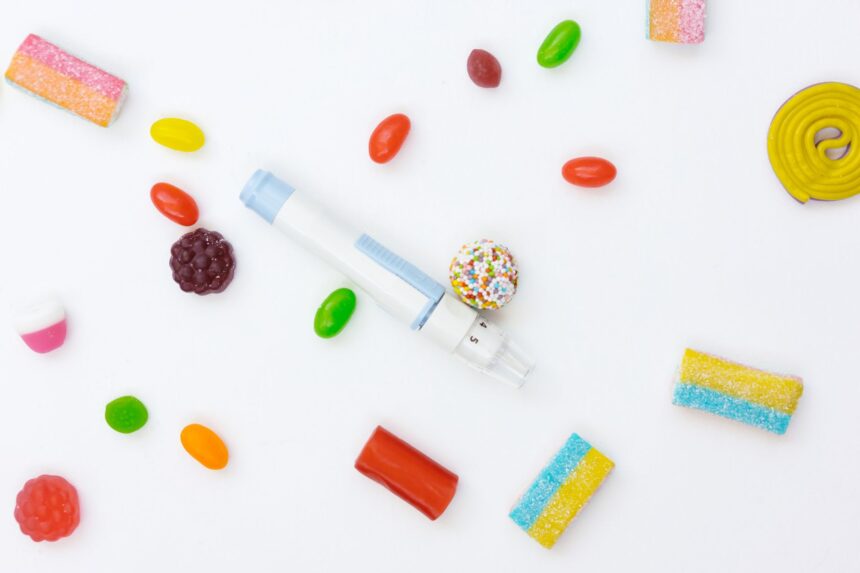
Diagram showing dual glucose clearance pathways: insulin-dependent at rest and contraction-mediated during movement
Skeletal muscle activates a second glucose-clearance pathway during physical activity that operates independently of insulin, allowing direct glucose uptake without relying on pancreatic insulin secretion—explaining why even light movement after meals reduces postprandial glucose spikes. — Photo by Mikhail Nilov on Pexels (Pexels License)
SHARE
1 min read|137 words

Understanding muscle physiology reveals three critical mechanisms for postprandial glucose management. First, muscle contraction activates GLUT4 glucose transporters independently of insulin, enabling direct glucose uptake during physical activity. This pathway operates in parallel with—not instead of—pancreatic insulin secretion, providing a complementary mechanism for glucose disposal.

Second, postprandial movement simultaneously reduces glucose peaks and decreases pancreatic insulin demand. This dual benefit minimizes metabolic strain while improving glucose control, addressing a fundamental challenge in modern sedentary lifestyles. Third, even light activity engages this contraction-mediated pathway effectively—vigorous exercise is unnecessary. Walking, standing, or gentle movement suffices to activate meaningful glucose clearance improvements.

These findings translate into practical guidance: timing light activity around meals represents an evidence-based, medication-free intervention for metabolic health. No complex protocols or intensive exercise programs are required. Read the full article on GMJ Newsroom.

Was this article helpful?
GMJ Brief · Takeaway

📰 Read the full article: How muscle contraction clears blood glucose independently of insulin after meals →

Related reference
  • Insulin · Drug
Share This Article
Facebook LinkedIn Bluesky Copy Link Print
GMJ
ByProf. Giorgi Pkhakadze
Follow:
Prof. Giorgi Pkhakadze, MD, MPH, PhD, is Editor-in-Chief of the Georgian Medical Journal and Chair of the Public Health Institute of Georgia (PHIG). He is Professor and Head of the Department of Social and Behavioural Sciences at David Tvildiani Medical University, and Secretary/Treasurer of the UEMS Section of Public Health. ORCID: 0000-0001-7609-4515.

Submit Your Paper →

Georgia's peer-reviewed open-access medical journal. No APC until January 2027.
Submit Manuscript →
Ethiopia Study Reveals Stakeholder Concerns Over Novel Malaria Treatments

A qualitative study in Ethiopia reveals that health workers and patients view…

Sitafloxacin monotherapy matches doxycycline-rifampicin for brucellosis treatment in landmark trial

A multicenter randomized trial in The Lancet Regional Health – Western Pacific…

Ultra-processed foods linked to higher kidney cancer risk in large US study

A prospective analysis of over 300,000 US adults found that higher consumption…

Submit Your Paper to GMJ

No APC until January 2027.
Submit Manuscript →

You Might Also Like

Brain scan showing appetite control regions affected by childhood junk food consumption

Brain Imaging Reveals Persistent Appetite Circuit Changes from Childhood Diet

By
Prof. Giorgi Pkhakadze
09/06/2026
Scientific illustration of gut-brain connection and parasitic organisms

The Hidden Influence: How Gut Parasites May Shape Human Behavior

By
Prof. Giorgi Pkhakadze
22/06/2026
Clinical UpdatesGlobal HealthPolicy & SystemsPractice

Three Ebola Vaccine Candidates Fast-Tracked as Kenya Rejects US-Backed Quarantine Facility

By
Prof. Giorgi Pkhakadze
07/06/2026
Laboratory testing omega-3 supplement capsules for oxidation levels

85% of Omega-3 Supplements Fail Lab Tests, Yet Show Minimal Human Health Impact

By
Prof. Giorgi Pkhakadze
24/05/2026
Facebook Twitter Youtube Instagram
Company
  • Privacy Policy
  • Contact US
  • GMJ Journal
  • Submit Manuscript
  • Editorial Team
  • Register at GMJ
  • Terms of Use

Subscribe to GMJ News — Click here

Join Community
© 2026 Georgian Medical Journal (GMJ). Published by the Public Health Institute of Georgia (PHIG). All rights reserved.
Welcome Back!

Sign in to your account

Username or Email Address
Password

Lost your password?