By using this site, you agree to the Privacy Policy and Terms of Use.
Accept
GMJ NewsGMJ NewsGMJ News
  • Latest News
    • GMJ Briefs
  • Podcast & Media
    • Podcast Episodes
    • GMJ Audio
    • GMJ Videos
  • Research Digest
    • New Studies
    • Georgian Research
    • Data & Numbers
  • Policy & Systems
    • Health Policy
    • Quality & Safety
    • Migration & Health
    • Global Health
  • Practice
    • Clinical Updates
    • Case Discussions
    • Pharmacy & Prescribing
    • Ingredients A-Z
  • Perspectives
    • Editorial
    • Explainers
    • Voices
    • Letters
  • GMJ Articles
    • Vol. 1 Issue 2 (2026)
    • Vol. 1 Issue 1 (2026)
    • Pre-Launch Articles (2025)
  • Read the Journal →
  • About GMJ News
Notification Show More
Font ResizerAa
GMJ NewsGMJ News
Font ResizerAa
  • Latest News
    • GMJ Briefs
  • Podcast & Media
    • Podcast Episodes
    • GMJ Audio
    • GMJ Videos
  • Research Digest
    • New Studies
    • Georgian Research
    • Data & Numbers
  • Policy & Systems
    • Health Policy
    • Quality & Safety
    • Migration & Health
    • Global Health
  • Practice
    • Clinical Updates
    • Case Discussions
    • Pharmacy & Prescribing
    • Ingredients A-Z
  • Perspectives
    • Editorial
    • Explainers
    • Voices
    • Letters
  • GMJ Articles
    • Vol. 1 Issue 2 (2026)
    • Vol. 1 Issue 1 (2026)
    • Pre-Launch Articles (2025)
  • Read the Journal →
  • About GMJ News
Follow US
GMJ News > GMJ Briefs > Understanding Gaza’s Child Skin Disease Crisis: What Healthcare Providers Need to Know

Understanding Gaza’s Child Skin Disease Crisis: What Healthcare Providers Need to Know

GMJ
Last updated: 01/07/2026 00:28
By
Prof. Giorgi Pkhakadze
Share
1 Min Read
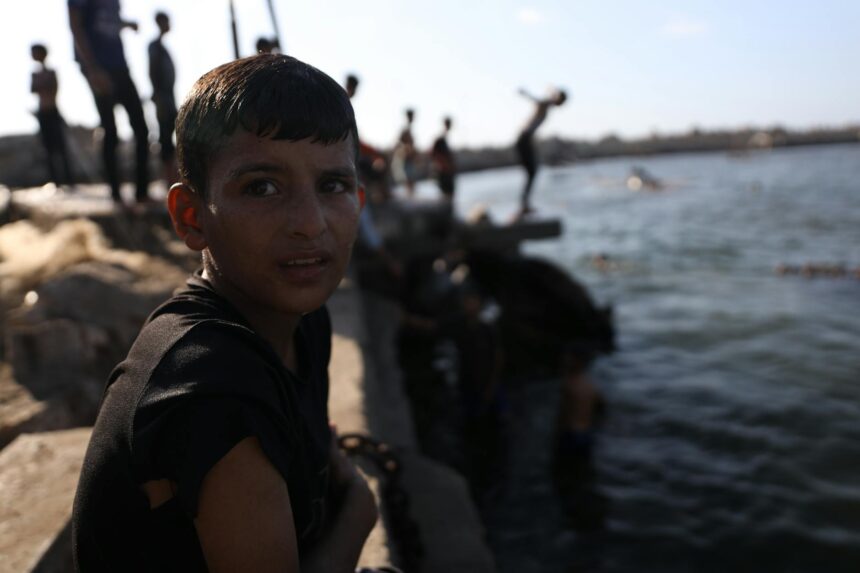
Children receiving medical care in Gaza humanitarian crisis
At least 1,500 children in Gaza suffer from severe skin diseases as deteriorating living conditions create preventable health crises. UNICEF reports document how limited access to clean water and medical supplies compounds what would be easily treatable conditions under normal circumstances. — Photo: itz.alawii / Pexels
SHARE
1 min read|156 words

Healthcare professionals and policy stakeholders should understand three critical dimensions of the emerging skin disease crisis affecting Gaza’s children. First, the scale is significant: 1,500 documented cases represent children suffering from conditions that are entirely preventable and treatable under normal healthcare conditions. Second, the root causes are systemic—poor sanitation, overcrowded displacement shelters, and limited water access create a perfect environment for skin infections to spread rapidly through vulnerable pediatric populations.

Third, the practical implication is sobering: medical personnel lack basic tools to intervene effectively. Standard antiseptics, appropriate medications, and proper clinical facilities are severely constrained, forcing healthcare workers to watch preventable complications develop. For clinicians working in humanitarian settings, this crisis illustrates how addressing child health requires simultaneous attention to water infrastructure, medical supply chains, and healthcare facility capacity. The situation demands coordinated international response focused on both immediate medical care and the underlying humanitarian conditions enabling disease proliferation.

Read the full article on GMJ Newsroom.

Was this article helpful?

GMJ Brief · Takeaway

📰 Read the full article: Gaza’s Child Health Crisis: 1,500 Children Suffering Severe Skin Diseases Amid Humanitarian Collapse →

Related reference
  • Iron · Ingredient
Share This Article
Facebook LinkedIn Bluesky Copy Link Print
GMJ
ByProf. Giorgi Pkhakadze
Follow:
Prof. Giorgi Pkhakadze, MD, MPH, PhD, is Editor-in-Chief of the Georgian Medical Journal and Chair of the Public Health Institute of Georgia (PHIG). He is Professor and Head of the Department of Social and Behavioural Sciences at David Tvildiani Medical University, and Secretary/Treasurer of the UEMS Section of Public Health. ORCID: 0000-0001-7609-4515.

Submit Your Paper →

Georgia's peer-reviewed open-access medical journal. No APC until January 2027.
Submit Manuscript →
Orforglipron Shows Clinically Significant HbA1c Reductions in Type 2 Diabetes

Two phase III randomised controlled trials presented at the American Diabetes Association…

Plasma protein signatures reveal how individual cell types age and predict disease risk

Plasma proteomics can measure biological aging independently in 40+ cell types, with…

Bidi Smoking Linked to Elevated Cancer Risk in Large Indian Study

A multicentre case-control study in India links bidi smoking—hand-rolled cigarettes common in…

Submit Your Paper to GMJ

No APC until January 2027.
Submit Manuscript →

You Might Also Like

Medical professionals operating radiotherapy equipment in hospital treatment room

What UK Radiotherapy Safety Data Means for Clinical Practice: Three Key Takeaways

By
Prof. Giorgi Pkhakadze
01/07/2026
Global HealthPolicy & Systems

WHO Declares Public Health Emergency as Ebola Outbreak Spreads Across Borders in Central Africa

By
Prof. Giorgi Pkhakadze
31/05/2026
Medical illustration of enhanced deep brain stimulation electrode configuration

Swiss Team Advances Noninvasive Brain Stimulation Without Surgery

By
Prof. Giorgi Pkhakadze
06/07/2026
Infographic showing global blood donation statistics and safety improvements by WHO

WHO Celebrates Blood Safety Milestone as Voluntary Donations Surpass 85% Globally

By
Prof. Giorgi Pkhakadze
05/07/2026
Facebook Twitter Youtube Instagram
Company
  • Privacy Policy
  • Contact US
  • GMJ Journal
  • Submit Manuscript
  • Editorial Team
  • Register at GMJ
  • Terms of Use

Subscribe to GMJ News — Click here

Join Community
© 2026 Georgian Medical Journal (GMJ). Published by the Public Health Institute of Georgia (PHIG). All rights reserved.
Welcome Back!

Sign in to your account

Username or Email Address
Password

Lost your password?

Not a member? Sign Up