By using this site, you agree to the Privacy Policy and Terms of Use.
Accept
GMJ NewsGMJ NewsGMJ News
  • Latest News
    • GMJ Briefs
  • Podcast & Media
    • Podcast Episodes
    • GMJ Audio
    • GMJ Videos
  • Research Digest
    • New Studies
    • Georgian Research
    • Data & Numbers
  • Policy & Systems
    • Health Policy
    • Quality & Safety
    • Migration & Health
    • Global Health
  • Practice
    • Clinical Updates
    • Case Discussions
    • Pharmacy & Prescribing
    • Ingredients A-Z
  • Perspectives
    • Editorial
    • Explainers
    • Voices
    • Letters
  • GMJ Articles
    • Vol. 1 Issue 2 (2026)
    • Vol. 1 Issue 1 (2026)
    • Pre-Launch Articles (2025)
  • Read the Journal →
  • About GMJ News
Notification Show More
Font ResizerAa
GMJ NewsGMJ News
Font ResizerAa
  • Latest News
    • GMJ Briefs
  • Podcast & Media
    • Podcast Episodes
    • GMJ Audio
    • GMJ Videos
  • Research Digest
    • New Studies
    • Georgian Research
    • Data & Numbers
  • Policy & Systems
    • Health Policy
    • Quality & Safety
    • Migration & Health
    • Global Health
  • Practice
    • Clinical Updates
    • Case Discussions
    • Pharmacy & Prescribing
    • Ingredients A-Z
  • Perspectives
    • Editorial
    • Explainers
    • Voices
    • Letters
  • GMJ Articles
    • Vol. 1 Issue 2 (2026)
    • Vol. 1 Issue 1 (2026)
    • Pre-Launch Articles (2025)
  • Read the Journal →
  • About GMJ News
Follow US
GMJ News > GMJ Briefs > Vitamin D Takes Center Stage in Brain Dopamine Regulation, Offering New Parkinson’s Prevention Insights

Vitamin D Takes Center Stage in Brain Dopamine Regulation, Offering New Parkinson’s Prevention Insights

GMJ
Last updated: 03/06/2026 16:55
By
Prof. Giorgi Pkhakadze
Share
1 Min Read
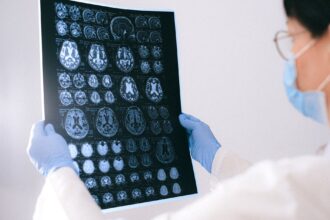
Brain neurons with vitamin D receptors controlling dopamine production
New research reveals vitamin D receptors are physically present in dopamine-producing brain neurons, where they directly control neurotransmitter synthesis and neuronal survival. Studies show activation can double dopamine cell production, with implications for Parkinson's disease prevention. — Photo: cottonbro studio / Pexels
SHARE
1 min read|127 words

Vitamin D’s role in human health extends far beyond calcium absorption and bone strength. Recent neuroscience research reveals that vitamin D directly regulates dopamine production within the brain’s substantia nigra—the critical region that degenerates in Parkinson’s disease patients.

Studies by Cui and colleagues demonstrate that vitamin D receptors are physically embedded within dopamine-producing neurons, where they control three essential genes governing both dopamine synthesis and neuronal survival. When vitamin D activates these neural receptors, the effects are substantial and measurable. Research published in Neuroscience showed that vitamin D treatment can increase tyrosine hydroxylase expression—the rate-limiting enzyme in dopamine production—effectively doubling the capacity of dopamine-producing cells.

This discovery opens promising avenues for understanding how nutritional factors influence neurodegenerative disease development and potentially inform preventive strategies.

Was this article helpful?
GMJ Brief · Announcement

📰 Read the full article: Vitamin D Directly Controls Dopamine Production in Human Brain Neurons According to Cui et al. Research →

Related reference
  • Vitamin D · Ingredient
  • Calcium · Ingredient
Share This Article
Facebook LinkedIn Bluesky Copy Link Print
GMJ
ByProf. Giorgi Pkhakadze
Follow:
Prof. Giorgi Pkhakadze, MD, MPH, PhD, is Editor-in-Chief of the Georgian Medical Journal and Chair of the Public Health Institute of Georgia (PHIG). He is Professor and Head of the Department of Social and Behavioural Sciences at David Tvildiani Medical University, and Secretary/Treasurer of the UEMS Section of Public Health. ORCID: 0000-0001-7609-4515.

Submit Your Paper →

Georgia's peer-reviewed open-access medical journal. No APC until January 2027.
Submit Manuscript →
PFAS Create Unique Blood Signatures as Body Transforms Forever Chemicals

Scientists discover PFAS compounds create unique chemical fingerprints in blood as they…

Spinal Cord Stimulation Shows Promise for Chronic Stroke Recovery After Four Years

University of Pittsburgh researchers demonstrate that spinal cord stimulation can improve arm…

WHO: Unsafe Food Causes 866 Million Illnesses Annually, Children Face Triple Risk

New WHO data reveals children under 5 face triple the risk of…

Submit Your Paper to GMJ

No APC until January 2027.
Submit Manuscript →

You Might Also Like

PHEIC Declaration: Ebola Cross-Border Transmission DRC-Uganda

By
Prof. Giorgi Pkhakadze
31/05/2026

EBOLA OUTBREAK – DRC/UGANDA CROSS-BORDER SPREAD – PHEIC DECLARED

By
Prof. Giorgi Pkhakadze
31/05/2026

PHEIC Declaration: Ebola Outbreak Cross-Border Transmission DRC-Uganda

By
Prof. Giorgi Pkhakadze
31/05/2026
Global HealthPolicy & Systems

Western Australia Mobilizes Emergency Vaccination Response as Regional Diphtheria Outbreak Spreads

By
Prof. Giorgi Pkhakadze
26/05/2026
Facebook Twitter Youtube Instagram
Company
  • Privacy Policy
  • Contact US
  • GMJ Journal
  • Submit Manuscript
  • Editorial Team
  • Register at GMJ
  • Terms of Use

Subscribe to GMJ News — Click here

Join Community
© 2026 Georgian Medical Journal (GMJ). Published by the Public Health Institute of Georgia (PHIG). All rights reserved.
Welcome Back!

Sign in to your account

Username or Email Address
Password

Lost your password?

Not a member? Sign Up