By using this site, you agree to the Privacy Policy and Terms of Use.
Accept
GMJ NewsGMJ NewsGMJ News
  • Latest News
    • GMJ Briefs
  • Podcast & Media
    • Podcast Episodes
    • GMJ Audio
    • GMJ Videos
  • Research Digest
    • New Studies
    • Georgian Research
    • Data & Numbers
  • Policy & Systems
    • Health Policy
    • Quality & Safety
    • Migration & Health
    • Global Health
  • Practice
    • Clinical Updates
    • Case Discussions
    • Pharmacy & Prescribing
    • Ingredients A-Z
  • Perspectives
    • Editorial
    • Explainers
    • Voices
    • Letters
  • GMJ Articles
    • Vol. 1 Issue 2 (2026)
    • Vol. 1 Issue 1 (2026)
    • Pre-Launch Articles (2025)
  • Read the Journal →
  • About GMJ News
Notification Show More
Font ResizerAa
GMJ NewsGMJ News
Font ResizerAa
  • Latest News
    • GMJ Briefs
  • Podcast & Media
    • Podcast Episodes
    • GMJ Audio
    • GMJ Videos
  • Research Digest
    • New Studies
    • Georgian Research
    • Data & Numbers
  • Policy & Systems
    • Health Policy
    • Quality & Safety
    • Migration & Health
    • Global Health
  • Practice
    • Clinical Updates
    • Case Discussions
    • Pharmacy & Prescribing
    • Ingredients A-Z
  • Perspectives
    • Editorial
    • Explainers
    • Voices
    • Letters
  • GMJ Articles
    • Vol. 1 Issue 2 (2026)
    • Vol. 1 Issue 1 (2026)
    • Pre-Launch Articles (2025)
  • Read the Journal →
  • About GMJ News
Follow US
GMJ News > GMJ Briefs > Study Confirms: Three-Quarters of Depression Patients Struggle with Anhedonia—New Treatment Offers Hope

Study Confirms: Three-Quarters of Depression Patients Struggle with Anhedonia—New Treatment Offers Hope

GMJ
Last updated: 17/07/2026 22:43
By
Prof. Giorgi Pkhakadze
Share
1 Min Read
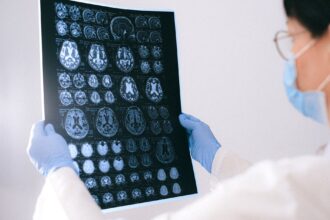
Medical illustration showing dopamine pathways in brain for depression treatment research
Randomized trial shows pramipexole significantly reduces anhedonia symptoms in depression patients. The dopamine agonist demonstrated efficacy across major depressive disorder, dysthymia, and bipolar depression. — Photo by Andrew Patrick Photo on Pexels (Pexels License)
SHARE
1 min read|132 words

New research underscores the staggering prevalence of anhedonia in depression populations. According to data cited in a Nature Medicine clinical trial, up to 75 percent of patients with major depressive disorder experience anhedonia—a symptom characterized by diminished capacity to feel pleasure. In the randomized placebo-controlled study, pramipexole, a dopamine agonist, significantly reduced anhedonia scores compared to placebo across depression, dysthymia, and bipolar depression cohorts. This statistic highlights why anhedonia warrants dedicated therapeutic attention. The symptom substantially impairs quality of life and frequently resists treatment with conventional antidepressants. By targeting dopamine pathways rather than serotonin systems alone, pramipexole demonstrates the clinical value of addressing multiple neurobiological mechanisms in depression. These findings suggest dopamine agonists merit further investigation as adjunctive or primary treatments for anhedonia-predominant depression presentations. Read the full article on GMJ Newsroom.

Was this article helpful?

GMJ Brief · Key Finding

📰 Read the full article: Dopamine Agonist Pramipexole Shows Promise for Anhedonia in Depression Trial →

Related reference
  • Major Depressive Disorder · Condition
Share This Article
Facebook LinkedIn Bluesky Copy Link Print
GMJ
ByProf. Giorgi Pkhakadze
Follow:
Prof. Giorgi Pkhakadze, MD, MPH, PhD, is Editor-in-Chief of the Georgian Medical Journal and Chair of the Public Health Institute of Georgia (PHIG). He is Professor and Head of the Department of Social and Behavioural Sciences at David Tvildiani Medical University, and Secretary/Treasurer of the UEMS Section of Public Health. ORCID: 0000-0001-7609-4515.

Submit Your Paper →

Georgia's peer-reviewed open-access medical journal. No APC until January 2027.
Submit Manuscript →
Sleep deprivation damages multiple body systems simultaneously, six controlled studies show

Six controlled studies show that sleep deprivation simultaneously disrupts hormonal regulation, metabolic…

How Vitamins and Minerals Power Brain Chemistry: The Neurotransmitter Connection

Vitamins B6, B12, folate, and minerals including zinc, magnesium, and iron function…

Beyond Neurons: How Brain’s Supporting Cells Drive Inflammation and Cognitive Resilience

The brain's health depends on more than neurons alone. A complex cellular…

Submit Your Paper to GMJ

No APC until January 2027.
Submit Manuscript →

You Might Also Like

Traditional Chinese medicinal herbs and modern laboratory equipment representing convergence of ancient and contemporary medicine

Laboratory Research Validates Traditional Chinese Herb for Hair Loss Management

By
Prof. Giorgi Pkhakadze
19/06/2026
Community health workers in discussion during mental health training session

Tailored Organizational Support: The Missing Link for Counselor Wellbeing in Resource-Limited Settings

By
Prof. Giorgi Pkhakadze
14/07/2026
Scientific researchers working on longevity interventions in laboratory setting

Global Longevity Initiative Launches $101 Million Competition for Age Reversal Research

By
Prof. Giorgi Pkhakadze
05/06/2026
Chart showing rising Lyme disease case numbers in England with tick illustration

England’s Lyme Disease Cases Jump to 1,168 in 2025—A 22% Annual Surge

By
Prof. Giorgi Pkhakadze
06/07/2026
Facebook Twitter Youtube Instagram
Company
  • Privacy Policy
  • Contact US
  • GMJ Journal
  • Submit Manuscript
  • Editorial Team
  • Register at GMJ
  • Terms of Use

Subscribe to GMJ News — Click here

Join Community
© 2026 Georgian Medical Journal (GMJ). Published by the Public Health Institute of Georgia (PHIG). All rights reserved.
Welcome Back!

Sign in to your account

Username or Email Address
Password

Lost your password?

Not a member? Sign Up