By using this site, you agree to the Privacy Policy and Terms of Use.
Accept
GMJ NewsGMJ NewsGMJ News
  • Latest News
    • GMJ Briefs
  • Podcast & Media
    • Podcast Episodes
    • GMJ Audio
    • GMJ Videos
  • Research Digest
    • New Studies
    • Georgian Research
    • Data & Numbers
  • Policy & Systems
    • Health Policy
    • Quality & Safety
    • Migration & Health
    • Global Health
  • Practice
    • Clinical Updates
    • Case Discussions
    • Pharmacy & Prescribing
    • Ingredients A-Z
  • Perspectives
    • Editorial
    • Explainers
    • Voices
    • Letters
  • Health Topics
  • GMJ Articles
    • Vol. 1 Issue 2 (2026)
    • Vol. 1 Issue 1 (2026)
    • Pre-Launch Articles (2025)
  • Read the Journal →
  • About GMJ News
Notification Show More
Font ResizerAa
GMJ NewsGMJ News
Font ResizerAa
  • Latest News
    • GMJ Briefs
  • Podcast & Media
    • Podcast Episodes
    • GMJ Audio
    • GMJ Videos
  • Research Digest
    • New Studies
    • Georgian Research
    • Data & Numbers
  • Policy & Systems
    • Health Policy
    • Quality & Safety
    • Migration & Health
    • Global Health
  • Practice
    • Clinical Updates
    • Case Discussions
    • Pharmacy & Prescribing
    • Ingredients A-Z
  • Perspectives
    • Editorial
    • Explainers
    • Voices
    • Letters
  • Health Topics
  • GMJ Articles
    • Vol. 1 Issue 2 (2026)
    • Vol. 1 Issue 1 (2026)
    • Pre-Launch Articles (2025)
  • Read the Journal →
  • About GMJ News
Follow US
GMJ News > GMJ Briefs > What Adaptive Deep Brain Stimulation Means for Parkinson’s Patients: Three Key Advances

What Adaptive Deep Brain Stimulation Means for Parkinson’s Patients: Three Key Advances

GMJ
Last updated: 11/08/2026 17:52
By
Prof. Giorgi Pkhakadze
Share
1 Min Read
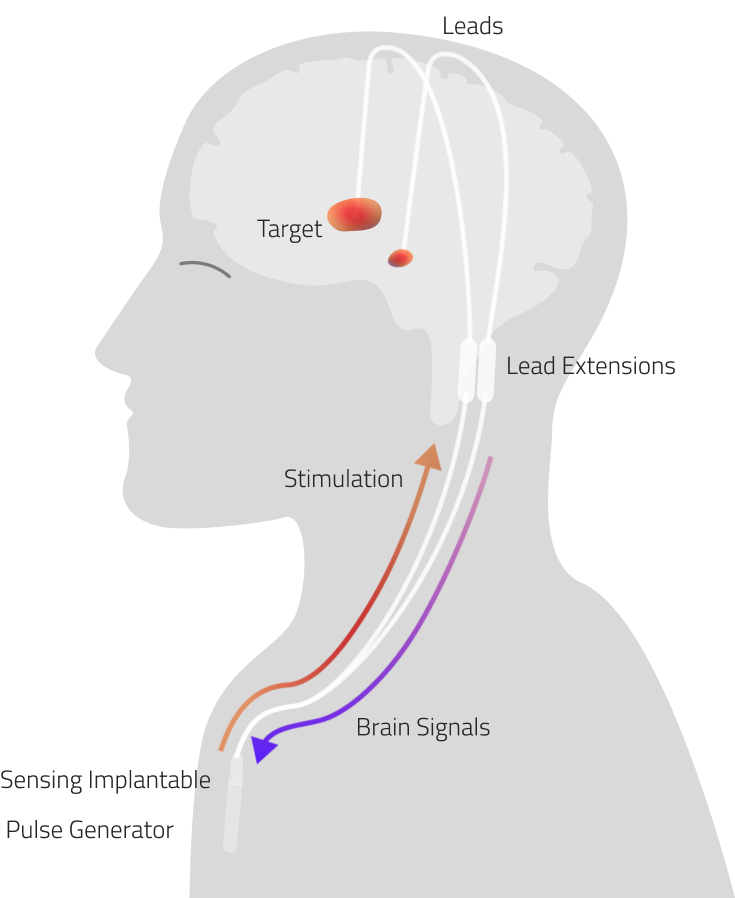
Illustration of adaptive deep brain stimulation system with neural decoding for Parkinson's disease gait improvement
A new study in Nature Medicine demonstrates that deep brain stimulation devices using real-time neural decoding algorithms can significantly improve walking ability in Parkinson's disease patients by adapting stimulation to brain activity patterns during movement. — "Adaptive Deep Brain Stimulation" by Jacopo Cavagnoli is licensed under CC BY-SA 4.0. To view a copy of this license, visit https://creativecommons.org/licenses/by-sa/4.0/. (CC BY-SA 4.0)
SHARE
1 min read|124 words

Adaptive deep brain stimulation technology introduces three critical improvements for Parkinson’s disease treatment. First, machine learning algorithms now decode real-time brain signals during movement, enabling precise monitoring of neural activity associated with walking. Second, DBS devices respond dynamically by adjusting electrical stimulation continuously rather than delivering uniform pulses throughout the day. Third, this real-time adaptation substantially improves walking ability and motor function beyond what conventional deep brain stimulation achieves. For patients experiencing gait impairment—a hallmark challenge in Parkinson’s disease—these advances offer meaningful restoration of mobility and independence. The practical implication is transformative: treatment becomes personalized to each patient’s neurophysiology and movement patterns, optimizing therapeutic outcomes. This development suggests that future neuromodulation therapies will increasingly prioritize adaptive, context-aware approaches over static intervention models.

Was this article helpful?

GMJ Brief · Takeaway

📰 Read the full article: Adaptive Deep Brain Stimulation Restores Walking in Parkinson’s Disease: Nature Medicine Study →

Share This Article
Facebook LinkedIn Bluesky Copy Link Print
GMJ
ByProf. Giorgi Pkhakadze
Follow:
Prof. Giorgi Pkhakadze, MD, MPH, PhD, is Editor-in-Chief of the Georgian Medical Journal and Chair of the Public Health Institute of Georgia (PHIG). He is Professor and Head of the Department of Social and Behavioural Sciences at David Tvildiani Medical University, and Secretary/Treasurer of the UEMS Section of Public Health. ORCID: 0000-0001-7609-4515.

Submit Your Paper →

Georgia's peer-reviewed open-access medical journal. No APC until January 2027.
Submit Manuscript →
Florida’s Push to End School Vaccine Mandates Stalls: What the Setback Reveals

Florida's campaign to end school vaccine mandates has stalled despite state-level political…

FDA Restricts Sunscreen Ingredient as Rural Dialysis Clinics Face Closure Crisis

The FDA restricts sunscreen ingredients whilst rural dialysis clinics in Nebraska face…

UK Medical Device Manufacturers Must Navigate New MHRA Registration System Post-Brexit

Medical device manufacturers must now register separately with the UK's MHRA for…

Submit Your Paper to GMJ

No APC until January 2027.
Submit Manuscript →

You Might Also Like

Healthcare workers discussing patient care in rural hospital setting

Systemic Healthcare Barriers Drive Poor Outcomes for Valley Fever Patients in California

By
Prof. Giorgi Pkhakadze
14/07/2026
American Diabetes Association annual convention with attendees and medical professionals

ADA Leadership Takes Accountability: CEO Apologizes for Convention Member Expulsions

By
Prof. Giorgi Pkhakadze
03/07/2026
Global HealthHealth PolicyPolicy & Systems

WHO Issues Six-Month Continental Response Plan for Bundibugyo Ebola Virus Preparedness

By
Prof. Giorgi Pkhakadze
07/06/2026
Scientific illustration showing GPNMB protein interaction between brain cells in Parkinson's disease research

How One Protein Drives Parkinson’s Disease Spread Between Brain Cells

By
Prof. Giorgi Pkhakadze
28/06/2026
Facebook Twitter Youtube Instagram
Company
  • Privacy Policy
  • Contact US
  • GMJ Journal
  • Submit Manuscript
  • Editorial Team
  • Register at GMJ
  • Terms of Use

Subscribe to GMJ News — Click here

Join Community
© 2026 Georgian Medical Journal (GMJ). Published by the Public Health Institute of Georgia (PHIG). All rights reserved.
Welcome Back!

Sign in to your account

Username or Email Address
Password

Lost your password?

Not a member? Sign Up