By using this site, you agree to the Privacy Policy and Terms of Use.
Accept
GMJ NewsGMJ NewsGMJ News
  • Latest News
    • GMJ Briefs
  • Podcast & Media
    • Podcast Episodes
    • GMJ Audio
    • GMJ Videos
  • Research Digest
    • New Studies
    • Georgian Research
    • Data & Numbers
  • Policy & Systems
    • Health Policy
    • Quality & Safety
    • Migration & Health
    • Global Health
  • Practice
    • Clinical Updates
    • Case Discussions
    • Pharmacy & Prescribing
    • Ingredients A-Z
  • Perspectives
    • Editorial
    • Explainers
    • Voices
    • Letters
  • GMJ Articles
    • Vol. 1 Issue 2 (2026)
    • Vol. 1 Issue 1 (2026)
    • Pre-Launch Articles (2025)
  • Read the Journal →
  • About GMJ News
Notification Show More
Font ResizerAa
GMJ NewsGMJ News
Font ResizerAa
  • Latest News
    • GMJ Briefs
  • Podcast & Media
    • Podcast Episodes
    • GMJ Audio
    • GMJ Videos
  • Research Digest
    • New Studies
    • Georgian Research
    • Data & Numbers
  • Policy & Systems
    • Health Policy
    • Quality & Safety
    • Migration & Health
    • Global Health
  • Practice
    • Clinical Updates
    • Case Discussions
    • Pharmacy & Prescribing
    • Ingredients A-Z
  • Perspectives
    • Editorial
    • Explainers
    • Voices
    • Letters
  • GMJ Articles
    • Vol. 1 Issue 2 (2026)
    • Vol. 1 Issue 1 (2026)
    • Pre-Launch Articles (2025)
  • Read the Journal →
  • About GMJ News
Follow US
GMJ News > GMJ Briefs > What Anxiety’s Unique Brain Chemistry Means for Treatment and Diagnosis

What Anxiety’s Unique Brain Chemistry Means for Treatment and Diagnosis

GMJ
Last updated: 26/06/2026 12:42
By
Prof. Giorgi Pkhakadze
Share
1 Min Read
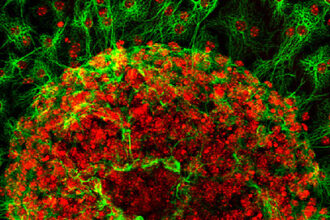
Brain imaging visualization showing metabolic activity patterns in anxiety disorders research
Brain-imaging meta-analysis reveals first consistent biochemical signature across multiple anxiety disorders, showing opposite metabolic patterns compared to other psychiatric conditions. Separate metabolic stress research finds nearly identical patterns outside the brain. — Photo: www.kaboompics.com / Pexels
SHARE
1 min read|141 words

New research identifying a distinct biochemical signature in anxiety disorders carries important implications for clinical practice and patient care. The discovery that anxiety demonstrates increased metabolic patterns—opposite to depression, schizophrenia, and bipolar disorder—suggests that current psychiatric approaches may benefit from condition-specific treatment strategies. For clinicians, this finding underscores the importance of accurate differential diagnosis, as anxiety’s unique biological profile may respond differently to therapeutic interventions designed for other conditions. The research also validates anxiety as a distinct neurobiological entity, potentially reducing misdiagnosis and inappropriate treatment selection. Additionally, the discovery of metabolic stress patterns similar to those in anxious brains suggests that targeted interventions addressing metabolic dysfunction may offer new therapeutic avenues. These insights encourage a shift toward personalized medicine approaches in psychiatry, where treatment is tailored to an individual’s specific biochemical profile rather than relying on general psychiatric categories.

Was this article helpful?

GMJ Brief · Takeaway

📰 Read the full article: Meta-Analysis Reveals First Biochemical Signature Common Across Multiple Anxiety Disorders →

Related reference
  • Bipolar Disorder · Condition
  • Schizophrenia · Condition
Share This Article
Facebook LinkedIn Bluesky Copy Link Print
GMJ
ByProf. Giorgi Pkhakadze
Follow:
Prof. Giorgi Pkhakadze, MD, MPH, PhD, is Editor-in-Chief of the Georgian Medical Journal and Chair of the Public Health Institute of Georgia (PHIG). He is Professor and Head of the Department of Social and Behavioural Sciences at David Tvildiani Medical University, and Secretary/Treasurer of the UEMS Section of Public Health. ORCID: 0000-0001-7609-4515.

Submit Your Paper →

Georgia's peer-reviewed open-access medical journal. No APC until January 2027.
Submit Manuscript →
Trump Administration Removes Job Protections for Thousands of Federal Health Workers

Thousands of federal health workers at HHS agencies including CDC, FDA, and…

Rare Lymphatic-Urinary Fistula Causes Milky Urine in NEJM Case Report

A rare case of chyluria caused by a lymphatic-urinary fistula demonstrates how…

Gene Therapy Shows Promise for Inherited Cholesterol Disorder in First-in-Human Trial

First-in-human gene therapy trial shows preliminary safety and efficacy for treating homozygous…

Submit Your Paper to GMJ

No APC until January 2027.
Submit Manuscript →

You Might Also Like

Medical laboratory testing for measles virus confirmation showing positive results

Three Critical Lessons from England’s Measles Outbreak for Healthcare Systems

By
Prof. Giorgi Pkhakadze
01/07/2026
Global HealthPolicy & Systems

WHO Declares Public Health Emergency as Ebola Outbreak Crosses DRC-Uganda Border

By
Prof. Giorgi Pkhakadze
31/05/2026

PHEIC Declaration: Ebola Outbreak with Confirmed Cross-Border Transmission DRC-Uganda

By
Prof. Giorgi Pkhakadze
31/05/2026
Medical researcher holding vaccine vial in laboratory setting

300,000 Annual Cases Drive Urgent Need for Lassa Fever Prevention Strategy

By
Prof. Giorgi Pkhakadze
08/07/2026
Facebook Twitter Youtube Instagram
Company
  • Privacy Policy
  • Contact US
  • GMJ Journal
  • Submit Manuscript
  • Editorial Team
  • Register at GMJ
  • Terms of Use

Subscribe to GMJ News — Click here

Join Community
© 2026 Georgian Medical Journal (GMJ). Published by the Public Health Institute of Georgia (PHIG). All rights reserved.
Welcome Back!

Sign in to your account

Username or Email Address
Password

Lost your password?

Not a member? Sign Up