By using this site, you agree to the Privacy Policy and Terms of Use.
Accept
GMJ NewsGMJ NewsGMJ News
  • Latest News
    • GMJ Briefs
  • Podcast & Media
    • Podcast Episodes
    • GMJ Audio
    • GMJ Videos
  • Research Digest
    • New Studies
    • Georgian Research
    • Data & Numbers
  • Policy & Systems
    • Health Policy
    • Quality & Safety
    • Migration & Health
    • Global Health
  • Practice
    • Clinical Updates
    • Case Discussions
    • Pharmacy & Prescribing
    • Ingredients A-Z
  • Perspectives
    • Editorial
    • Explainers
    • Voices
    • Letters
  • GMJ Articles
    • Vol. 1 Issue 2 (2026)
    • Vol. 1 Issue 1 (2026)
    • Pre-Launch Articles (2025)
  • Read the Journal →
  • About GMJ News
Notification Show More
Font ResizerAa
GMJ NewsGMJ News
Font ResizerAa
  • Latest News
    • GMJ Briefs
  • Podcast & Media
    • Podcast Episodes
    • GMJ Audio
    • GMJ Videos
  • Research Digest
    • New Studies
    • Georgian Research
    • Data & Numbers
  • Policy & Systems
    • Health Policy
    • Quality & Safety
    • Migration & Health
    • Global Health
  • Practice
    • Clinical Updates
    • Case Discussions
    • Pharmacy & Prescribing
    • Ingredients A-Z
  • Perspectives
    • Editorial
    • Explainers
    • Voices
    • Letters
  • GMJ Articles
    • Vol. 1 Issue 2 (2026)
    • Vol. 1 Issue 1 (2026)
    • Pre-Launch Articles (2025)
  • Read the Journal →
  • About GMJ News
Follow US
GMJ News > GMJ Briefs > What Centenarians Can Teach Us About Preventing Dementia

What Centenarians Can Teach Us About Preventing Dementia

GMJ
Last updated: 03/08/2026 06:43
By
Prof. Giorgi Pkhakadze
Share
1 Min Read
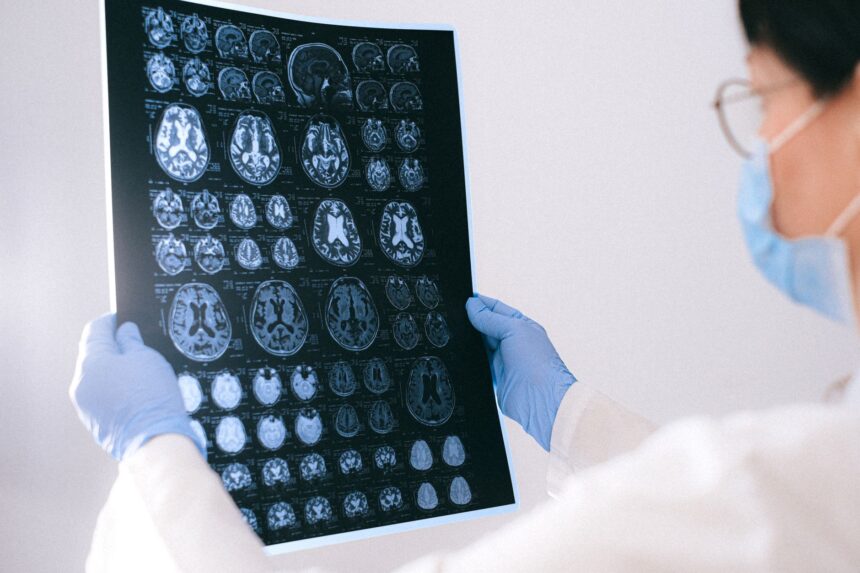
Brain tissue analysis showing microglial patterns around amyloid plaques in Alzheimer's disease
Study of cognitively resilient centenarians reveals why some people with substantial Alzheimer's pathology never develop dementia. Spatial transcriptomics identified critical microglial activation patterns that determine cognitive outcomes. — Photo by Anna Shvets on Pexels (Pexels License)
SHARE
1 min read|167 words

A new Nature Medicine study examining cognitively resilient centenarians offers three critical insights that could reshape dementia prevention strategies. First, microglial activation patterns—not the presence of amyloid plaques alone—determine whether individuals develop cognitive decline. Second, spatial gene mapping reveals that protective mechanisms operate in specific cellular neighborhoods around brain pathology, suggesting targeted interventions may be more effective than broad approaches.

Third, researchers identified novel therapeutic targets based on the gene expression signatures of cognitively resilient individuals, moving beyond current amyloid-focused treatments. These findings suggest that future dementia prevention should focus on promoting protective microglial phenotypes rather than exclusively attempting to clear pathological proteins.

For clinicians and patients, this research provides hope that cognitive resilience can be achieved even in the presence of Alzheimer’s pathology through targeted manipulation of immune responses. Understanding these mechanisms could enable development of interventions that maintain cognitive function throughout the lifespan, transforming dementia from an inevitable consequence of aging to a potentially preventable condition.

Read the full article on GMJ Newsroom.

Submit Your Paper
GMJ_Submit_Banner

Was this article helpful?

GMJ Brief · Takeaway

📰 Read the full article: Brain Study Reveals Why Some People Resist Alzheimer’s Dementia Despite Disease Pathology →

Share This Article
Facebook LinkedIn Bluesky Copy Link Print
GMJ
ByProf. Giorgi Pkhakadze
Follow:
Prof. Giorgi Pkhakadze, MD, MPH, PhD, is Editor-in-Chief of the Georgian Medical Journal and Chair of the Public Health Institute of Georgia (PHIG). He is Professor and Head of the Department of Social and Behavioural Sciences at David Tvildiani Medical University, and Secretary/Treasurer of the UEMS Section of Public Health. ORCID: 0000-0001-7609-4515.

Submit Your Paper →

Georgia's peer-reviewed open-access medical journal. No APC until January 2027.
Submit Manuscript →
L-Theanine Improves Task Accuracy Without Expected Brain Wave Changes, Research Shows

L-theanine marketing claims about alpha brain wave enhancement lack experimental support in…

Astrocytes Reshape Understanding of Brain Control: Beyond Neurons to Cellular Regulation

Astrocytes, comprising roughly 50% of brain cells, are now recognised as active…

How the immune system learns to remember threats: the science of innate and adaptive immunity

The immune system operates in two coordinated layers: an immediate innate response…

Submit Your Paper to GMJ

No APC until January 2027.
Submit Manuscript →

You Might Also Like

🚨 Green earthquake (Magnitude 6M, Depth:10km) in Mexico 30/06/2026 19:45 UTC, 10 thousand in MMI V.

By
Prof. Giorgi Pkhakadze
01/07/2026

🚨 [Editorial] Migration: a reality, not an emergency

By
Prof. Giorgi Pkhakadze
19/06/2026
Diagram showing the four primary functions of mitochondria: ATP generation, ROS balance, mtDNA maintenance, and membrane dynamics

Aging Mitochondria: DNA Mutations Link Directly to Neurodegeneration

By
Prof. Giorgi Pkhakadze
31/07/2026
Digital clinical trial guidance documents and regulatory framework illustration

Digital Clinical Trial Infrastructure: 65% of EU States Have Fully Implemented Regulatory Frameworks

By
Prof. Giorgi Pkhakadze
12/07/2026
Facebook Twitter Youtube Instagram
Company
  • Privacy Policy
  • Contact US
  • GMJ Journal
  • Submit Manuscript
  • Editorial Team
  • Register at GMJ
  • Terms of Use

Subscribe to GMJ News — Click here

Join Community
© 2026 Georgian Medical Journal (GMJ). Published by the Public Health Institute of Georgia (PHIG). All rights reserved.
Welcome Back!

Sign in to your account

Username or Email Address
Password

Lost your password?

Not a member? Sign Up