By using this site, you agree to the Privacy Policy and Terms of Use.
Accept
GMJ NewsGMJ NewsGMJ News
  • Latest News
    • GMJ Briefs
  • Podcast & Media
    • Podcast Episodes
    • GMJ Audio
    • GMJ Videos
  • Research Digest
    • New Studies
    • Georgian Research
    • Data & Numbers
  • Policy & Systems
    • Health Policy
    • Quality & Safety
    • Migration & Health
    • Global Health
  • Practice
    • Clinical Updates
    • Case Discussions
    • Pharmacy & Prescribing
    • Ingredients A-Z
  • Perspectives
    • Editorial
    • Explainers
    • Voices
    • Letters
  • GMJ Articles
    • Vol. 1 Issue 2 (2026)
    • Vol. 1 Issue 1 (2026)
    • Pre-Launch Articles (2025)
  • Read the Journal →
  • About GMJ News
Notification Show More
Font ResizerAa
GMJ NewsGMJ News
Font ResizerAa
  • Latest News
    • GMJ Briefs
  • Podcast & Media
    • Podcast Episodes
    • GMJ Audio
    • GMJ Videos
  • Research Digest
    • New Studies
    • Georgian Research
    • Data & Numbers
  • Policy & Systems
    • Health Policy
    • Quality & Safety
    • Migration & Health
    • Global Health
  • Practice
    • Clinical Updates
    • Case Discussions
    • Pharmacy & Prescribing
    • Ingredients A-Z
  • Perspectives
    • Editorial
    • Explainers
    • Voices
    • Letters
  • GMJ Articles
    • Vol. 1 Issue 2 (2026)
    • Vol. 1 Issue 1 (2026)
    • Pre-Launch Articles (2025)
  • Read the Journal →
  • About GMJ News
Follow US
GMJ News > Perspectives > Explainers > Astrocytes Reshape Understanding of Brain Control: Beyond Neurons to Cellular Regulation
ExplainersNew StudiesPerspectivesResearch Digest

Astrocytes Reshape Understanding of Brain Control: Beyond Neurons to Cellular Regulation

GMJ
Last updated: 12/07/2026 13:29
By
GMJ Perspectives Desk
Share
8 Min Read
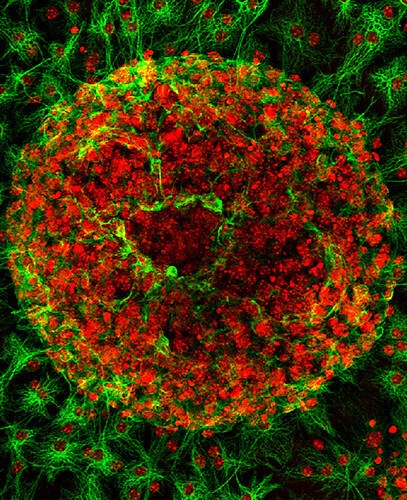
Illustration of astrocytes (star-shaped cells) regulating neural network activity across synapsesIllustrative image · "Astrocytes" by NICHD NIH is licensed under CC BY 2.0. To view a copy of this license, visit https://creativecommons.org/licenses/by/2.0/. (CC BY 2.0)
Astrocytes, comprising roughly 50% of brain cells, are now recognised as active global regulators of brain state rather than passive support cells. They influence alertness, stress response, and motivation by modulating neural networks without requiring structural rewiring—a paradigm shift reshaping neuroscience and psychiatric disease understanding. — "Astrocytes" by NICHD NIH is licensed under CC BY 2.0. To view a copy of this license, visit https://creativecommons.org/licenses/by/2.0/. (CC BY 2.0)
SHARE
5 min read|1,045 words
✓ Reviewed by Prof. Giorgi Pkhakadze, MD, MPH, PhD · ORCID 0000-0001-7609-4515

🟡 Preliminary Evidence

Contents
    • Key takeaways
      • Astrocytes vs. Neurons: Complementary Roles in Brain Function
  • The Paradigm Shift: From Support to Regulation
  • Three Dimensions of Brain State Astrocytes Control
  • Implications for Understanding Brain Disease
    • What this means
  • Frequently asked questions
    • Are astrocytes neurons?
    • Can astrocyte dysfunction explain psychiatric symptoms?
    • Could astrocyte-targeted therapies become available?

For decades, neuroscience treated neurons as the brain’s sole decision-makers, relegating astrocytes—star-shaped glial cells that comprise roughly 50% of brain cells—to a purely supportive role. This model is fundamentally shifting. Recent research now recognizes astrocytes as global regulators of brain state that actively tune neural network function through modulatory signalling and integration of activity across thousands of synapses, without directly encoding specific thoughts or actions.

Key takeaways

  • Astrocytes regulate brain alertness, stress response, and motivation through global modulatory signals—not individual neural encoding
  • These cells integrate activity across large neural populations and adjust network behaviour over time, functioning as metabolic and signalling hubs
  • Astrocyte dysfunction is implicated in neurodevelopmental and neuropsychiatric conditions, suggesting therapeutic targets beyond neuronal interventions
  • The brain operates via dual control: wired architecture (neurons) plus active regulation (astrocytes)
~50%
of brain cells are astrocytes, yet their regulatory role remained largely unrecognised until the past two decades of research

Astrocytes vs. Neurons: Complementary Roles in Brain Function

How astrocytes differ from neurons in terms of function and scope of influence

Neurons (discrete encoding)
45%
Astrocytes (global regulation)
55%
Integration across synapses
85%
Timescale (seconds to minutes)
70%

Source: Neuroscience literature review | Georgian Medical Journal News

Submit Your Paper
GMJ_Submit_Banner

The Paradigm Shift: From Support to Regulation

The classical model of brain function placed neurons at centre stage as information processors and decision-makers, while astrocytes were viewed as metabolic housekeepers—supplying glucose, clearing waste, and maintaining the extracellular environment. This picture has been challenged by mounting evidence showing that astrocytes actively modulate neural circuits through calcium signalling and release of neuroactive substances.

🎙️ Related Podcast Episodes
🎧 #45 | GMJ Podcast | Tskaltubo Mineral Baths in Osteoarthritis — Microcirculation, Erythrocytes, and Clinical Effects · 18m
🎧 #41 | GMJ Podcast | Hydrochemical Stability and Radiobiology of Tskaltubo Mineral Water — Clinical and Scientific Evaluation · 17m
🎧 #37 | GMJ Podcast | NAD⁺ Injections and “NAD Boosters” — Public Health Risks and Regulatory Implications · 20m
🎧 #33 | GMJ Podcast | Public Health Policy as Education in NCD Prevention — Commentary by Owen Thomas · 21m
🎧 #23 | WHO: Next-Generation Influenza Vaccines Could Save Millions of Lives · 18m

Unlike neurons, which transmit discrete signals via action potentials, astrocytes operate on slower timescales (seconds to minutes) and influence entire populations of neurons simultaneously. They track slow metabolic changes, detect shifts in extracellular ion concentration, and respond by releasing gliotransmitters—substances that alter how neurons fire and how synapses transmit signals. This represents a fundamentally different mode of brain control: tuning the neuronal environment rather than hardwiring specific circuits.

Three Dimensions of Brain State Astrocytes Control

Recent neuroscience literature identifies astrocytes as key regulators of three major dimensions of brain function. First, they influence alertness versus fatigue by modulating the release of neuromodulators such as adenosine and ATP, which affect arousal circuits. Second, they regulate stress versus calm through their interaction with the hypothalamic-pituitary-adrenal (HPA) axis and local modulation of corticotropin-releasing hormone. Third, they control motivation versus disengagement by influencing dopaminergic and glutamatergic signalling in reward circuits.

Critically, these shifts in brain state do not require structural rewiring of neural connections or formation of new synapses. Instead, astrocytes achieve functional reconfiguration through chemical signalling—a mechanism that is faster, more flexible, and potentially more reversible than permanent anatomical changes. This suggests that many variations in mood, attention, and motivation may reflect astrocyte regulation rather than fixed neuronal wiring.

Implications for Understanding Brain Disease

If astrocytes are central regulators of brain state, then their dysfunction should be implicated in disorders of consciousness, mood, and motivation. Emerging evidence supports this hypothesis. Studies examining astrocyte pathology in autism spectrum disorder, schizophrenia, and major depression have identified abnormalities in astrocyte calcium signalling, gliotransmitter release, and synaptic support. In neurodevelopmental conditions such as autism, altered astrocyte maturation during critical windows may disrupt the fine-tuning of neural networks, leading to lasting differences in sensory and social processing.

This reconceptualisation opens new therapeutic avenues. Rather than targeting neurons exclusively, clinicians and researchers may develop interventions that enhance astrocyte function—through pharmacological modulation of astrocyte signalling, genetic approaches to restore astrocyte health, or lifestyle interventions (sleep, exercise, stress management) known to support astrocyte-mediated brain regulation. Such approaches could complement existing neuronal-focused treatments and address aspects of neuropsychiatric disease that remain refractory to current therapies.

Astrocytes function as global regulators of brain state by integrating activity across thousands of synapses and releasing modulatory signals that adjust neural network behaviour over time—without directly encoding specific thoughts or actions. This dual-control model (wired neurons + regulatory astrocytes) fundamentally changes how neuroscientists understand brain function and disease.

— Neuroscience consensus model, derived from recent literature on glial regulation

What this means

For patients: Mood, attention, and motivation fluctuations may reflect not fixed personality traits but dynamic astrocyte-mediated brain state changes. This suggests that lifestyle factors supporting sleep, stress management, and exercise—which enhance astrocyte function—could improve cognitive and emotional wellbeing alongside medical treatment.
For clinicians: Current neuropsychiatric treatments focus heavily on neuronal signalling (neurotransmitter reuptake inhibitors, antipsychotics). Understanding astrocyte dysfunction in depression, autism, and schizophrenia suggests the need for assessment tools targeting glial pathology and potential benefit from interventions that restore astrocyte-mediated network regulation.
For policymakers: Funding for new neuroscience studies that map astrocyte dysfunction across psychiatric conditions is critical to develop a comprehensive understanding of disease mechanisms. This could inform public health priorities for early intervention and precision medicine approaches to neuropsychiatric care.

Frequently asked questions

Are astrocytes neurons?

No. Astrocytes are a type of glial cell—non-neuronal brain cells that support neuronal function. However, unlike classical glial models, astrocytes are now understood to actively regulate neural circuits, not merely provide passive support. They have their own signalling capabilities and can influence large populations of neurons simultaneously.

Can astrocyte dysfunction explain psychiatric symptoms?

Emerging evidence suggests yes. Studies have documented astrocyte abnormalities in major depression, bipolar disorder, and schizophrenia, suggesting that altered glial regulation of brain state may contribute to mood, motivation, and cognitive symptoms. However, this does not replace the role of neuronal circuits; rather, it adds a complementary layer of disease mechanism.

Could astrocyte-targeted therapies become available?

This is an active area of clinical research. Promising preclinical approaches include selective modulation of astrocyte calcium signalling, enhancement of astrocyte metabolic support to neurons, and promotion of astrocyte maturation in developmental disorders. However, no astrocyte-specific drugs are yet in widespread clinical use; most candidate therapies remain in early-stage development.

The recognition of astrocytes as active regulators rather than passive support cells marks a maturation in neuroscience understanding. As research continues to map the molecular and cellular mechanisms by which astrocytes control brain state, clinicians and researchers will gain new tools to diagnose and treat disorders of consciousness, mood, and cognition. The brain, it turns out, is not just wired—it is actively regulated, and astrocytes are key to that regulation.

Source: Astrocyte-mediated brain regulation literature

Was this article helpful?

Disclaimer. This article is health journalism intended for general information and education. It is not medical advice and is not a substitute for professional diagnosis or treatment. Always consult a qualified healthcare provider about your individual circumstances. Full disclaimer →

Related Coverage
How the immune system learns to remember threats: the science of innate and adaptive immunityAug 3, 2026
How Brain Chemistry Shapes Mood, Sleep, and Focus: A Guide to NeurotransmittersAug 3, 2026
Extra Virgin Olive Oil: 20 Grams Daily Linked to Lower Cancer and All-Cause MortalityAug 3, 2026
How Neurotransmitters Control Your Mood, Sleep, and Focus: A Brain Chemistry PrimerAug 3, 2026
Related reference
  • Bipolar Disorder · Condition
  • Schizophrenia · Condition
  • Calcium · Ingredient
  • Iron · Ingredient
PG
Written by
Prof. Giorgi Pkhakadze, MD, MPH, PhD
Editor-in-Chief, GMJ News
Full profile →  ·  ORCID 0000-0001-7609-4515
Medical disclaimer. This article is health journalism intended for general information. It is not medical advice and is not a substitute for consultation with a qualified healthcare professional. Always seek your physician's advice regarding any medical condition.
Medically reviewed by Prof. Giorgi Pkhakadze, MD, MPH, PhD. Spotted an error? Contact the editorial team.

Get the GMJ News digest
Evidence-based health journalism in your inbox. No spam; unsubscribe anytime.
TAGGED:astrocytesbrain regulationglianeural plasticityneurosciencepsychiatric disease
Share This Article
Facebook LinkedIn Bluesky Copy Link Print
GMJ
ByGMJ Perspectives Desk
Follow:
GMJ Perspectives Desk is part of GMJ News, the newsroom of the Georgian Medical Journal (gmj.ge), published by the Public Health Institute of Georgia. Every article is editorially reviewed before publication.
Leave a Comment Leave a Comment

Leave a Reply Cancel reply

Your email address will not be published. Required fields are marked *

Submit Your Paper →

Georgia's peer-reviewed open-access medical journal. No APC until January 2027.
Submit Manuscript →
How the immune system learns to remember threats: the science of innate and adaptive immunity

The immune system operates in two coordinated layers: an immediate innate response…

How Brain Chemistry Shapes Mood, Sleep, and Focus: A Guide to Neurotransmitters

Neurotransmitters—chemical messengers between brain cells—regulate mood, sleep, motivation, and cognitive focus. Understanding…

Extra Virgin Olive Oil: 20 Grams Daily Linked to Lower Cancer and All-Cause Mortality

Approximately 23,000 Italian adults consuming 30 grams of extra virgin olive oil…

Submit Your Paper to GMJ

No APC until January 2027.
Submit Manuscript →

You Might Also Like

Scientific illustration of diverse gut microorganisms including bacteria, viruses and fungiIllustrative image · Microorganisms-08-01140-g001 The possible role of gut microbiota in the interplay between dietary restrictions, gut barrier functions, health benefits, and non-communicable diseases.jpg by 1UOC di Nutrizione Clinica, Dipartimento di Scienze mediche e chirurgiche, Fondazione Policlinico Universitario A. Gemelli IRCCS, Largo A. Gemelli 8, 00168 Rome, Italy 2Scuola di Specializzazione in Scienza dell’Alimentazione, Università di Roma Tor Vergata, Via Montpellier 1, 00133 Rome, Italy; moc.liamg@inotnic.ocram 3UOSD di Nutrizione Avanzata in Oncologia, Dipartimento di Scienze mediche e chirurgiche, Fondazione Policlinico Universitario A. Gemelli IRCCS, Largo A. Gemelli 8, 00168 Rome, Italy; moc.liamg@1luoar.eniluap (P.R.); ti.ttacinu@elem.anitsircairam (M.C.M.) 4UOC di Medicina Interna e Gastroenterologia, Dipartimento di Scienze mediche e chirurgiche, Fondazione Policlinico Universitario A. Gemelli IRCCS, Largo A. Gemelli 8, 00168 Rome, Italy; ti.liamtoh@orinai.aculnaig (G.I.); moc.liamg@aizercul.azretal (L.L.); ti.orebil@sirolosutepol (L.R.L.); moc.liamg@inaiznop.acsecnarf (F.R.P.); ti.ttacinu@inirrabsag.oinotna (A.G.) 5Department of Medicine and Ageing Sciences, Faculty of Medicine and Surgery,“G. d’Annunzio” University of Chieti-Pescara, Via dei Vestini 31, 66100 Chieti, Italy 6Center for Advanced Studies and Technology (CAST), “G. d’Annunzio” University of Chieti-Pescara, Via dei Vestini 31, 66100 Chieti, Italy 7Dipartimento di Medicina e Chirurgia traslazionale, Facoltà di Medicina e Chirurgia, Università Cattolica Del Sacro Cuore, Largo F. Vito 1, 00168 Rome, Italy / CC BY-SA 4.0 via Wikimedia Commons (CC BY-SA 4.0)
New StudiesResearch Digest

The Human Gut Microbiome: Trillions of Microorganisms Shape Health and Disease

By
GMJ Research Desk
26/06/2026
Comparison chart showing thiamine deficiency rates in heart failure patients versus healthy controlsIllustrative image · "Heart Monitor" by medipics1066 is marked with Public Domain Mark 1.0. To view the terms, visit https://creativecommons.org/publicdomain/mark/1.0/. (Public Domain Mark)
Clinical UpdatesNew StudiesPracticeResearch Digest

Why Heart Failure Patients Need Thiamine: A Metabolic Imperative Often Overlooked

By
GMJ Practice Desk
19/07/2026
Medical chart showing health risk factors including mental health conditions and socioeconomic status
New Studies

Mental Health Conditions and Low Income Create Dual Health Risks, Danish Study Reveals

By
GMJ Research Desk
21/05/2026
Chart showing cardiovascular risk elevation from light smoking and recovery timeline after cessationIllustrative image · Photo by Fabiana Zambrano on Pexels (Pexels License)
Clinical UpdatesNew StudiesPracticeResearch Digest

Even Light Smoking Raises Heart Disease Risk by 50–60%, Study Shows—and Quitting Doesn’t Fully Reverse It

By
GMJ Practice Desk
30/07/2026
Facebook Twitter Youtube Instagram
Company
  • Privacy Policy
  • Contact US
  • GMJ Journal
  • Submit Manuscript
  • Editorial Team
  • Register at GMJ
  • Terms of Use

Subscribe to GMJ News — Click here

Join Community
© 2026 Georgian Medical Journal (GMJ). Published by the Public Health Institute of Georgia (PHIG). All rights reserved.
Welcome Back!

Sign in to your account

Username or Email Address
Password

Lost your password?

Not a member? Sign Up