By using this site, you agree to the Privacy Policy and Terms of Use.
Accept
GMJ NewsGMJ NewsGMJ News
  • Latest News
    • GMJ Briefs
  • Podcast & Media
    • Podcast Episodes
    • GMJ Audio
    • GMJ Videos
  • Research Digest
    • New Studies
    • Georgian Research
    • Data & Numbers
  • Policy & Systems
    • Health Policy
    • Quality & Safety
    • Migration & Health
    • Global Health
  • Practice
    • Clinical Updates
    • Case Discussions
    • Pharmacy & Prescribing
    • Ingredients A-Z
  • Perspectives
    • Editorial
    • Explainers
    • Voices
    • Letters
  • GMJ Articles
    • Vol. 1 Issue 2 (2026)
    • Vol. 1 Issue 1 (2026)
    • Pre-Launch Articles (2025)
  • Read the Journal →
  • About GMJ News
Notification Show More
Font ResizerAa
GMJ NewsGMJ News
Font ResizerAa
  • Latest News
    • GMJ Briefs
  • Podcast & Media
    • Podcast Episodes
    • GMJ Audio
    • GMJ Videos
  • Research Digest
    • New Studies
    • Georgian Research
    • Data & Numbers
  • Policy & Systems
    • Health Policy
    • Quality & Safety
    • Migration & Health
    • Global Health
  • Practice
    • Clinical Updates
    • Case Discussions
    • Pharmacy & Prescribing
    • Ingredients A-Z
  • Perspectives
    • Editorial
    • Explainers
    • Voices
    • Letters
  • GMJ Articles
    • Vol. 1 Issue 2 (2026)
    • Vol. 1 Issue 1 (2026)
    • Pre-Launch Articles (2025)
  • Read the Journal →
  • About GMJ News
Follow US
GMJ News > GMJ Briefs > What Clinicians Should Know About Bispecific Antibodies: Three Key Insights from ASCO 2026

What Clinicians Should Know About Bispecific Antibodies: Three Key Insights from ASCO 2026

GMJ
Last updated: 04/07/2026 10:19
By
Prof. Giorgi Pkhakadze
Share
1 Min Read
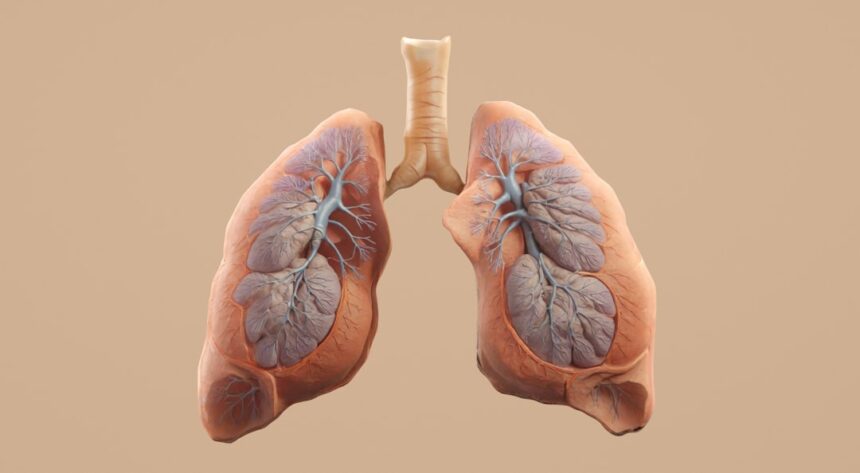
Medical illustration of bispecific antibody targeting cancer cells
BioNTech and Pfizer's experimental bispecific antibody BNT327 showed promising activity in advanced lung cancer patients at ASCO 2026. The dual-pathway approach achieved 67% disease control in heavily pretreated patients who had failed standard immunotherapies. — Photo: Aakash Dhage / Pexels
SHARE
1 min read|155 words

The BNT327 presentation at ASCO 2026 offers three critical insights for oncology practitioners managing advanced lung cancer. First, bispecific antibodies represent a mechanistic advance over conventional monotherapy: patients who progressed on checkpoint inhibitors demonstrated response to BNT327’s dual PD-L1 and VEGF-A targeting, suggesting additive or synergistic benefit. Second, this dual-pathway approach addresses a fundamental challenge in cancer immunotherapy—single-agent resistance—by engaging multiple tumor evasion mechanisms simultaneously. Third, regulatory acceleration through FDA Fast Track designation may shorten the timeline for bringing this therapy to clinical practice, potentially offering treatment options for patients with limited alternatives. The declining response rates with increasing treatment lines (78% to 52%) reflect expected disease biology but demonstrate continued benefit even in heavily pretreated populations. As bispecific antibodies mature from experimental to mainstream therapy, these data underscore their potential to improve outcomes for immunotherapy-resistant patients. Clinicians should monitor ongoing trials for patient eligibility and efficacy updates. Read the full article on GMJ Newsroom.

Was this article helpful?

GMJ Brief · Takeaway

📰 Read the full article: BioNTech-Pfizer Bispecific Antibody Shows Promise in Advanced Lung Cancer at ASCO 2026 →

Related reference
  • Lung Cancer · Condition
Share This Article
Facebook LinkedIn Bluesky Copy Link Print
GMJ
ByProf. Giorgi Pkhakadze
Follow:
Prof. Giorgi Pkhakadze, MD, MPH, PhD, is Editor-in-Chief of the Georgian Medical Journal and Chair of the Public Health Institute of Georgia (PHIG). He is Professor and Head of the Department of Social and Behavioural Sciences at David Tvildiani Medical University, and Secretary/Treasurer of the UEMS Section of Public Health. ORCID: 0000-0001-7609-4515.

Submit Your Paper →

Georgia's peer-reviewed open-access medical journal. No APC until January 2027.
Submit Manuscript →
AI-Guided Ultrasound Predicts Bubble Collapse to Improve Brain Barrier Opening

Researchers at Georgia Institute of Technology have developed an AI system that…

Orforglipron Shows Clinically Significant HbA1c Reductions in Type 2 Diabetes

Two phase III randomised controlled trials presented at the American Diabetes Association…

Plasma protein signatures reveal how individual cell types age and predict disease risk

Plasma proteomics can measure biological aging independently in 40+ cell types, with…

Submit Your Paper to GMJ

No APC until January 2027.
Submit Manuscript →

You Might Also Like

Infographic showing declining birth rates in England and Wales from 1977 to 2023

What UK Birth Rate Decline Means for Healthcare Planning and Policy

By
Prof. Giorgi Pkhakadze
28/06/2026
Data visualization showing fiber intake mortality benefits across population studies

Three Evidence-Based Fiber Findings That Could Transform Clinical Practice

By
Prof. Giorgi Pkhakadze
27/06/2026
Scientific illustration of amygdala brain circuits involved in anxiety processing

What This Anxiety Breakthrough Means for Future Treatment Development

By
Prof. Giorgi Pkhakadze
08/07/2026
PET scan image showing blood clot detection in legs and lungs using novel radiotracer technology

Single PET Scan Now Detects Blood Clots Throughout the Body

By
Prof. Giorgi Pkhakadze
20/06/2026
Facebook Twitter Youtube Instagram
Company
  • Privacy Policy
  • Contact US
  • GMJ Journal
  • Submit Manuscript
  • Editorial Team
  • Register at GMJ
  • Terms of Use

Subscribe to GMJ News — Click here

Join Community
© 2026 Georgian Medical Journal (GMJ). Published by the Public Health Institute of Georgia (PHIG). All rights reserved.
Welcome Back!

Sign in to your account

Username or Email Address
Password

Lost your password?

Not a member? Sign Up