By using this site, you agree to the Privacy Policy and Terms of Use.
Accept
GMJ NewsGMJ NewsGMJ News
  • Latest News
    • GMJ Briefs
  • Podcast & Media
    • Podcast Episodes
    • GMJ Audio
    • GMJ Videos
  • Research Digest
    • New Studies
    • Georgian Research
    • Data & Numbers
  • Policy & Systems
    • Health Policy
    • Quality & Safety
    • Migration & Health
    • Global Health
  • Practice
    • Clinical Updates
    • Case Discussions
    • Pharmacy & Prescribing
    • Ingredients A-Z
  • Perspectives
    • Editorial
    • Explainers
    • Voices
    • Letters
  • GMJ Articles
    • Vol. 1 Issue 2 (2026)
    • Vol. 1 Issue 1 (2026)
    • Pre-Launch Articles (2025)
  • Read the Journal →
  • About GMJ News
Notification Show More
Font ResizerAa
GMJ NewsGMJ News
Font ResizerAa
  • Latest News
    • GMJ Briefs
  • Podcast & Media
    • Podcast Episodes
    • GMJ Audio
    • GMJ Videos
  • Research Digest
    • New Studies
    • Georgian Research
    • Data & Numbers
  • Policy & Systems
    • Health Policy
    • Quality & Safety
    • Migration & Health
    • Global Health
  • Practice
    • Clinical Updates
    • Case Discussions
    • Pharmacy & Prescribing
    • Ingredients A-Z
  • Perspectives
    • Editorial
    • Explainers
    • Voices
    • Letters
  • GMJ Articles
    • Vol. 1 Issue 2 (2026)
    • Vol. 1 Issue 1 (2026)
    • Pre-Launch Articles (2025)
  • Read the Journal →
  • About GMJ News
Follow US
GMJ News > GMJ Briefs > What Global Health Programs Must Learn: Three Key Findings on Infant Healthcare Seeking

What Global Health Programs Must Learn: Three Key Findings on Infant Healthcare Seeking

GMJ
Last updated: 24/06/2026 17:52
By
Prof. Giorgi Pkhakadze
Share
1 Min Read
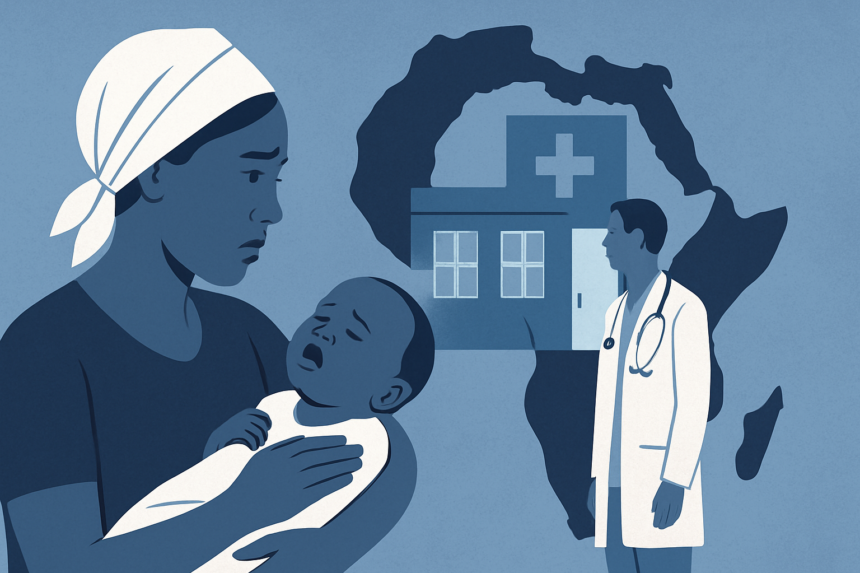
Healthcare worker examining infant in African clinic setting
New research reveals parents seek medical care for severely ill infants only 8.4%-41.8% of the time, compared to 66.7% for mild illness. Johns Hopkins study develops simple two-sign assessment tool for identifying illness severity.
SHARE
1 min read|144 words

A major new study from Johns Hopkins researchers reveals critical insights that should reshape how child survival programs operate in sub-Saharan Africa and beyond. First, the paradoxical finding: severely ill neonates received formal care in only 8.4% to 41.8% of cases compared to 15.0% to 66.7% for mild illness—a reversal of expected behavior patterns.

Second, multivariate analysis identified infant age as the strongest predictor of healthcare seeking, not symptom severity. This suggests that cultural perceptions, economic constraints, and accessibility barriers may overwhelm clinical judgment when families make healthcare decisions.

Third, these findings demand a fundamental rethinking of intervention strategies. Rather than assuming that severe illness naturally motivates care-seeking, programs must address the underlying barriers—transportation costs, health literacy, trust in formal systems, and perceived fatalism—that prevent families from accessing emergency services precisely when their infants are most critically ill.

Read the full article on GMJ Newsroom.

Submit Your Paper
GMJ_Submit_Banner

Was this article helpful?

GMJ Brief · Takeaway

📰 Read the full article: Severe Infant Symptoms Paradoxically Reduce Healthcare Seeking in Sub-Saharan Africa →

Share This Article
Facebook LinkedIn Bluesky Copy Link Print
GMJ
ByProf. Giorgi Pkhakadze
Follow:
Prof. Giorgi Pkhakadze, MD, MPH, PhD, is Editor-in-Chief of the Georgian Medical Journal and Chair of the Public Health Institute of Georgia (PHIG). He is Professor and Head of the Department of Social and Behavioural Sciences at David Tvildiani Medical University, and Secretary/Treasurer of the UEMS Section of Public Health. ORCID: 0000-0001-7609-4515.

Submit Your Paper →

Georgia's peer-reviewed open-access medical journal. No APC until January 2027.
Submit Manuscript →
Immune Changes and RNA Patterns Predict Early Colorectal Cancer Risk in Precancerous Lesions

New research reveals immune system changes and RNA patterns that predict colorectal…

Oxford Study Unravels Inflammatory Bowel Disease as Multiple Distinct Conditions

Oxford-led research reveals IBD comprises multiple distinct diseases with different mechanisms. Discovery…

Surgical Menopause Linked to Severe Urogenital Symptoms Compared to Natural Menopause

New research shows surgical menopause leads to more severe genitourinary symptoms than…

Submit Your Paper to GMJ

No APC until January 2027.
Submit Manuscript →

You Might Also Like

Chart comparing preclinical and clinical evidence for apigenin sleep and longevity effects

Clinical Trial Shortfall: Only 6 Human Studies on Apigenin’s Effects on Sleep and Aging

By
Prof. Giorgi Pkhakadze
07/06/2026

Community Trust Critical to Controlling Ebola Outbreak in DRC, UN Says

By
Prof. Giorgi Pkhakadze
17/06/2026
Medical professional reviewing colorectal cancer screening test results and guidelines

Key Finding: New Blood Tests and Stool Screens Join Colonoscopy as Primary Options for Colorectal Cancer Detection

By
Prof. Giorgi Pkhakadze
23/06/2026
Medical catheter device with FDA safety warning symbol

New FDA Data Highlights Thrombus Risk with Extended Abiomed Catheter Use

By
Prof. Giorgi Pkhakadze
19/06/2026
Facebook Twitter Youtube Instagram
Company
  • Privacy Policy
  • Contact US
  • GMJ Journal
  • Submit Manuscript
  • Editorial Team
  • Register at GMJ
  • Terms of Use

Subscribe to GMJ News — Click here

Join Community
© 2026 Georgian Medical Journal (GMJ). Published by the Public Health Institute of Georgia (PHIG). All rights reserved.
Welcome Back!

Sign in to your account

Username or Email Address
Password

Lost your password?

Not a member? Sign Up