
By using this site, you agree to the Privacy Policy and Terms of Use.
Accept
GMJ NewsGMJ NewsGMJ News
  • Latest News
    • GMJ Briefs
  • Podcast & Media
    • Podcast Episodes
    • GMJ Audio
    • GMJ Videos
  • Research Digest
    • New Studies
    • Georgian Research
    • Data & Numbers
  • Policy & Systems
    • Health Policy
    • Quality & Safety
    • Migration & Health
    • Global Health
  • Practice
    • Clinical Updates
    • Case Discussions
    • Pharmacy & Prescribing
    • Ingredients A-Z
  • Perspectives
    • Editorial
    • Explainers
    • Voices
    • Letters
  • GMJ Articles
    • Vol. 1 Issue 2 (2026)
    • Vol. 1 Issue 1 (2026)
    • Pre-Launch Articles (2025)
  • Read the Journal →
  • About GMJ News
Notification Show More
Font ResizerAa
GMJ NewsGMJ News
Font ResizerAa
  • Latest News
    • GMJ Briefs
  • Podcast & Media
    • Podcast Episodes
    • GMJ Audio
    • GMJ Videos
  • Research Digest
    • New Studies
    • Georgian Research
    • Data & Numbers
  • Policy & Systems
    • Health Policy
    • Quality & Safety
    • Migration & Health
    • Global Health
  • Practice
    • Clinical Updates
    • Case Discussions
    • Pharmacy & Prescribing
    • Ingredients A-Z
  • Perspectives
    • Editorial
    • Explainers
    • Voices
    • Letters
  • GMJ Articles
    • Vol. 1 Issue 2 (2026)
    • Vol. 1 Issue 1 (2026)
    • Pre-Launch Articles (2025)
  • Read the Journal →
  • About GMJ News
Follow US
GMJ News > GMJ Briefs > What Healthcare Leaders Need to Know About Persistent Drug Shortage Patterns

What Healthcare Leaders Need to Know About Persistent Drug Shortage Patterns

GMJ
Last updated: 24/07/2026 20:43
By
Prof. Giorgi Pkhakadze
Share
1 Min Read
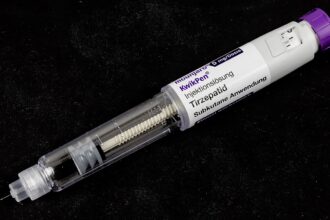
Chart showing decline in US prescription drug shortages by category with cancer medications highlighted
US prescription drug shortages fell 23% in 2025, but average shortage duration increased to 18 months. Cancer drugs and generic injectables remain most vulnerable to supply disruptions. — FDA Drug Shortages Briefing (0770) (6923357983).jpg by The U.S. Food and Drug Administration / Public domain via Wikimedia Commons (Public domain)
SHARE
1 min read|147 words

Recent analysis of US pharmaceutical shortages reveals three critical findings that should inform clinical and operational planning. First, overall drug shortage incidents declined 23% in 2025, the steepest improvement in over a decade. However, this headline progress masks deeper structural problems requiring sustained attention.

Second, cancer medications remain disproportionately vulnerable, accounting for 28% of all shortages despite representing a smaller percentage of total medications. This concentration demands specialized supply chain oversight and contingency planning in oncology departments.

Third, and most concerning, average shortage duration has increased to 18 months. This metric signals that when disruptions occur, they create prolonged access problems—forcing hospitals and clinicians into extended periods of therapeutic substitution and treatment protocol modifications.

For healthcare systems, these patterns suggest the need for robust drug shortage monitoring, enhanced supplier diversification, and coordinated clinical strategies to manage extended supply gaps in critical therapeutic areas.

Submit Your Paper
GMJ_Submit_Banner

Read the full article on GMJ Newsroom.

Was this article helpful?
GMJ Brief · Takeaway

📰 Read the full article: Drug Shortages Decline 23% in US, But Systemic Problems Persist →

Share This Article
Facebook LinkedIn Bluesky Copy Link Print
GMJ
ByProf. Giorgi Pkhakadze
Follow:
Prof. Giorgi Pkhakadze, MD, MPH, PhD, is Editor-in-Chief of the Georgian Medical Journal and Chair of the Public Health Institute of Georgia (PHIG). He is Professor and Head of the Department of Social and Behavioural Sciences at David Tvildiani Medical University, and Secretary/Treasurer of the UEMS Section of Public Health. ORCID: 0000-0001-7609-4515.

Submit Your Paper →

Georgia's peer-reviewed open-access medical journal. No APC until January 2027.
Submit Manuscript →
L-Theanine Improves Task Accuracy Without Expected Brain Wave Changes, Research Shows

L-theanine marketing claims about alpha brain wave enhancement lack experimental support in…

Astrocytes Reshape Understanding of Brain Control: Beyond Neurons to Cellular Regulation

Astrocytes, comprising roughly 50% of brain cells, are now recognised as active…

How the immune system learns to remember threats: the science of innate and adaptive immunity

The immune system operates in two coordinated layers: an immediate innate response…

Submit Your Paper to GMJ

No APC until January 2027.
Submit Manuscript →

You Might Also Like

Medical illustration of pancreatic cancer treatment research and targeted therapy development

Key Finding: New Pancreatic Cancer Drug Daraxonrasib Shows Promise in Phase 2 Trial

By
Prof. Giorgi Pkhakadze
16/06/2026

SITUATION BRIEF: Ebola Outbreak Cross-Border Transmission DRC-Uganda, WHO Emergency Declaration

By
Prof. Giorgi Pkhakadze
31/05/2026
Healthcare workers in Malawi distributing mosquito nets as part of malaria prevention program

From Success to Sustainability: What Malawi’s Malaria Progress Reveals About Health System Priorities

By
Prof. Giorgi Pkhakadze
10/07/2026
Diagram of TCA cycle intermediates and their regulatory roles in immune and stem cell biology

Mitochondrial Metabolites Emerge as Master Controllers of Immunity and Cancer Risk

By
Prof. Giorgi Pkhakadze
30/07/2026
Facebook Twitter Youtube Instagram
Company
  • Privacy Policy
  • Contact US
  • GMJ Journal
  • Submit Manuscript
  • Editorial Team
  • Register at GMJ
  • Terms of Use

Subscribe to GMJ News — Click here

Join Community
© 2026 Georgian Medical Journal (GMJ). Published by the Public Health Institute of Georgia (PHIG). All rights reserved.
Welcome Back!

Sign in to your account

Username or Email Address
Password

Lost your password?

Not a member? Sign Up