By using this site, you agree to the Privacy Policy and Terms of Use.
Accept
GMJ NewsGMJ NewsGMJ News
  • Latest News
    • GMJ Briefs
  • Podcast & Media
    • Podcast Episodes
    • GMJ Audio
    • GMJ Videos
  • Research Digest
    • New Studies
    • Georgian Research
    • Data & Numbers
  • Policy & Systems
    • Health Policy
    • Quality & Safety
    • Migration & Health
    • Global Health
  • Practice
    • Clinical Updates
    • Case Discussions
    • Pharmacy & Prescribing
    • Ingredients A-Z
  • Perspectives
    • Editorial
    • Explainers
    • Voices
    • Letters
  • GMJ Articles
    • Vol. 1 Issue 2 (2026)
    • Vol. 1 Issue 1 (2026)
    • Pre-Launch Articles (2025)
  • Read the Journal →
  • About GMJ News
Notification Show More
Font ResizerAa
GMJ NewsGMJ News
Font ResizerAa
  • Latest News
    • GMJ Briefs
  • Podcast & Media
    • Podcast Episodes
    • GMJ Audio
    • GMJ Videos
  • Research Digest
    • New Studies
    • Georgian Research
    • Data & Numbers
  • Policy & Systems
    • Health Policy
    • Quality & Safety
    • Migration & Health
    • Global Health
  • Practice
    • Clinical Updates
    • Case Discussions
    • Pharmacy & Prescribing
    • Ingredients A-Z
  • Perspectives
    • Editorial
    • Explainers
    • Voices
    • Letters
  • GMJ Articles
    • Vol. 1 Issue 2 (2026)
    • Vol. 1 Issue 1 (2026)
    • Pre-Launch Articles (2025)
  • Read the Journal →
  • About GMJ News
Follow US
GMJ News > GMJ Briefs > What ICU Clinicians Should Know: Sodium Bicarbonate Trial Reshapes Practice Guidelines

What ICU Clinicians Should Know: Sodium Bicarbonate Trial Reshapes Practice Guidelines

GMJ
Last updated: 01/08/2026 14:43
By
Prof. Giorgi Pkhakadze
Share
1 Min Read
Medical chart showing 28-day mortality comparison between bicarbonate and standard care groups
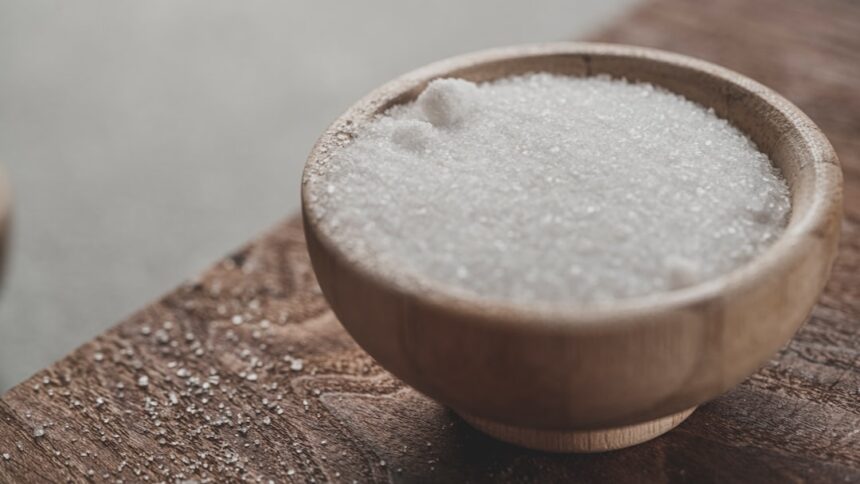
Largest trial to date finds sodium bicarbonate therapy does not reduce mortality in critically ill adults with metabolic acidosis and shock. The BICAR-ICU study challenges decades of routine clinical practice in intensive care units worldwide. — Photo by Faran Raufi on Unsplash (Unsplash License)
SHARE
1 min read|144 words

The BICAR-ICU trial delivers critical practical implications for intensive care practitioners worldwide. After enrolling 3,396 critically ill adults across French ICUs, researchers found that sodium bicarbonate—long considered a cornerstone intervention for severe metabolic acidosis—failed to reduce mortality or improve organ failure scores compared to standard supportive care alone.

For busy clinicians, the message is clear: routine bicarbonate supplementation in shock and acidosis may not offer the clinical benefit traditionally assumed. Beyond mortality, secondary endpoints revealed no advantage in organ dysfunction reversal or functional recovery. These findings suggest that clinical resources and practice patterns built around bicarbonate therapy warrant reassessment.

Instead, evidence-based practice should emphasize addressing underlying causes of acidosis and shock through hemodynamic optimization, infection control, and organ support strategies. This landmark study underscores the importance of periodic re-evaluation of established protocols against contemporary high-quality evidence.

Read the full article on GMJ Newsroom.

Submit Your Paper
GMJ_Submit_Banner

Was this article helpful?

GMJ Brief · Takeaway

📰 Read the full article: Sodium Bicarbonate Shows No Mortality Benefit for Critically Ill Adults in Largest Trial to Date →

Related reference
  • Sodium · Ingredient
Share This Article
Facebook LinkedIn Bluesky Copy Link Print
GMJ
ByProf. Giorgi Pkhakadze
Follow:
Prof. Giorgi Pkhakadze, MD, MPH, PhD, is Editor-in-Chief of the Georgian Medical Journal and Chair of the Public Health Institute of Georgia (PHIG). He is Professor and Head of the Department of Social and Behavioural Sciences at David Tvildiani Medical University, and Secretary/Treasurer of the UEMS Section of Public Health. ORCID: 0000-0001-7609-4515.

Submit Your Paper →

Georgia's peer-reviewed open-access medical journal. No APC until January 2027.
Submit Manuscript →
L-Theanine Improves Task Accuracy Without Expected Brain Wave Changes, Research Shows

L-theanine marketing claims about alpha brain wave enhancement lack experimental support in…

Astrocytes Reshape Understanding of Brain Control: Beyond Neurons to Cellular Regulation

Astrocytes, comprising roughly 50% of brain cells, are now recognised as active…

How the immune system learns to remember threats: the science of innate and adaptive immunity

The immune system operates in two coordinated layers: an immediate innate response…

Submit Your Paper to GMJ

No APC until January 2027.
Submit Manuscript →

You Might Also Like

Global HealthPolicy & Systems

WHO Declares Ebola Public Health Emergency as Virus Crosses DRC-Uganda Border

By
Prof. Giorgi Pkhakadze
31/05/2026
Scientific illustration showing nitrate sources and brain health impacts from vegetables versus drinking water

Study of 54,000 Adults Reveals Nitrate Source Critically Impacts Dementia Risk

By
Prof. Giorgi Pkhakadze
01/07/2026

UNICEF scaling up efforts to protect and support children and families following Ebola outbreaks in the Democratic Republic of the Congo and Uganda

By
Prof. Giorgi Pkhakadze
07/06/2026
Clinical UpdatesGlobal HealthPolicy & SystemsPractice

Three Ebola Vaccine Candidates Fast-Tracked as Kenya Rejects US-Backed Quarantine Facility

By
Prof. Giorgi Pkhakadze
07/06/2026
Facebook Twitter Youtube Instagram
Company
  • Privacy Policy
  • Contact US
  • GMJ Journal
  • Submit Manuscript
  • Editorial Team
  • Register at GMJ
  • Terms of Use

Subscribe to GMJ News — Click here

Join Community
© 2026 Georgian Medical Journal (GMJ). Published by the Public Health Institute of Georgia (PHIG). All rights reserved.
Welcome Back!

Sign in to your account

Username or Email Address
Password

Lost your password?

Not a member? Sign Up