By using this site, you agree to the Privacy Policy and Terms of Use.
Accept
GMJ NewsGMJ NewsGMJ News
  • Latest News
    • GMJ Briefs
  • Podcast & Media
    • Podcast Episodes
    • GMJ Audio
    • GMJ Videos
  • Research Digest
    • New Studies
    • Georgian Research
    • Data & Numbers
  • Policy & Systems
    • Health Policy
    • Quality & Safety
    • Migration & Health
    • Global Health
  • Practice
    • Clinical Updates
    • Case Discussions
    • Pharmacy & Prescribing
    • Ingredients A-Z
  • Perspectives
    • Editorial
    • Explainers
    • Voices
    • Letters
  • GMJ Articles
    • Vol. 1 Issue 2 (2026)
    • Vol. 1 Issue 1 (2026)
    • Pre-Launch Articles (2025)
  • Read the Journal →
  • About GMJ News
Notification Show More
Font ResizerAa
GMJ NewsGMJ News
Font ResizerAa
  • Latest News
    • GMJ Briefs
  • Podcast & Media
    • Podcast Episodes
    • GMJ Audio
    • GMJ Videos
  • Research Digest
    • New Studies
    • Georgian Research
    • Data & Numbers
  • Policy & Systems
    • Health Policy
    • Quality & Safety
    • Migration & Health
    • Global Health
  • Practice
    • Clinical Updates
    • Case Discussions
    • Pharmacy & Prescribing
    • Ingredients A-Z
  • Perspectives
    • Editorial
    • Explainers
    • Voices
    • Letters
  • GMJ Articles
    • Vol. 1 Issue 2 (2026)
    • Vol. 1 Issue 1 (2026)
    • Pre-Launch Articles (2025)
  • Read the Journal →
  • About GMJ News
Follow US
GMJ News > GMJ Briefs > What Migrant Health Practitioners Need to Know About IOM’s Expanded Research Priorities

What Migrant Health Practitioners Need to Know About IOM’s Expanded Research Priorities

GMJ
Last updated: 20/07/2026 15:07
By
Prof. Giorgi Pkhakadze
Share
1 Min Read
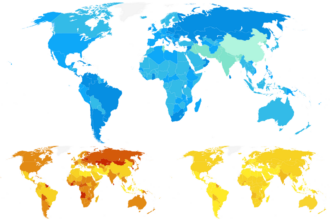
World map showing global migration research network connections and priority focus areas
IOM expands its global research network to address critical knowledge gaps in migration studies, with health disparities and climate migration as top priorities. The initiative focuses on evidence-based policy development for displaced populations worldwide. — Photo by Markus Winkler on Unsplash (Unsplash License)
SHARE
1 min read|154 words

The International Organization for Migration’s expanded global research network offers important implications for healthcare providers and policymakers working with displaced populations. Health disparities emerge as the paramount research focus at 92 percent, signaling that evidence-based interventions addressing healthcare access barriers represent the most pressing need in migrant health services.

Climate migration research gaining urgent priority at 87 percent indicates that healthcare systems must prepare for increasing numbers of climate-displaced persons, particularly in vulnerable regions. This research generates critical evidence linking environmental degradation to population mobility and associated health vulnerabilities.

For practitioners, these priorities translate into actionable intelligence: invest in trauma-informed care protocols, strengthen infectious disease surveillance systems, and develop culturally competent mental health services for migrants. Evidence-based policy development now emphasizes universal health coverage frameworks specifically designed for displaced populations. Healthcare organizations should align their service delivery models with research findings to ensure migrant populations receive equitable, evidence-informed care.

Read the full article on GMJ Newsroom.

Submit Your Paper
GMJ_Submit_Banner

Was this article helpful?

GMJ Brief · Takeaway

📰 Read the full article: IOM Global Migration Research Network Expands Scientific Evidence Base for Policy →

Related reference
  • Iron · Ingredient
Share This Article
Facebook LinkedIn Bluesky Copy Link Print
GMJ
ByProf. Giorgi Pkhakadze
Follow:
Prof. Giorgi Pkhakadze, MD, MPH, PhD, is Editor-in-Chief of the Georgian Medical Journal and Chair of the Public Health Institute of Georgia (PHIG). He is Professor and Head of the Department of Social and Behavioural Sciences at David Tvildiani Medical University, and Secretary/Treasurer of the UEMS Section of Public Health. ORCID: 0000-0001-7609-4515.

Submit Your Paper →

Georgia's peer-reviewed open-access medical journal. No APC until January 2027.
Submit Manuscript →
L-Theanine Improves Task Accuracy Without Expected Brain Wave Changes, Research Shows

L-theanine marketing claims about alpha brain wave enhancement lack experimental support in…

Astrocytes Reshape Understanding of Brain Control: Beyond Neurons to Cellular Regulation

Astrocytes, comprising roughly 50% of brain cells, are now recognised as active…

How the immune system learns to remember threats: the science of innate and adaptive immunity

The immune system operates in two coordinated layers: an immediate innate response…

Submit Your Paper to GMJ

No APC until January 2027.
Submit Manuscript →

You Might Also Like

Medical chart showing 28-day mortality comparison between bicarbonate and standard care groups

What ICU Clinicians Should Know: Sodium Bicarbonate Trial Reshapes Practice Guidelines

By
Prof. Giorgi Pkhakadze
01/08/2026
Rural Thai parents participating in blended parenting intervention programme

Blended Parenting Programme Fails to Reduce Child Violence in Rural Thailand

By
Prof. Giorgi Pkhakadze
06/06/2026
Healthcare worker examining infant in African clinic setting

What Global Health Programs Must Learn: Three Key Findings on Infant Healthcare Seeking

By
Prof. Giorgi Pkhakadze
24/06/2026
Global HealthPolicy & Systems

Norovirus Cases Surge 70% Above Five-Year Average in England

By
Prof. Giorgi Pkhakadze
28/05/2026
Facebook Twitter Youtube Instagram
Company
  • Privacy Policy
  • Contact US
  • GMJ Journal
  • Submit Manuscript
  • Editorial Team
  • Register at GMJ
  • Terms of Use

Subscribe to GMJ News — Click here

Join Community
© 2026 Georgian Medical Journal (GMJ). Published by the Public Health Institute of Georgia (PHIG). All rights reserved.
Welcome Back!

Sign in to your account

Username or Email Address
Password

Lost your password?

Not a member? Sign Up