By using this site, you agree to the Privacy Policy and Terms of Use.
Accept
GMJ NewsGMJ NewsGMJ News
  • Latest News
    • GMJ Briefs
  • Podcast & Media
    • Podcast Episodes
    • GMJ Audio
    • GMJ Videos
  • Research Digest
    • New Studies
    • Georgian Research
    • Data & Numbers
  • Policy & Systems
    • Health Policy
    • Quality & Safety
    • Migration & Health
    • Global Health
  • Practice
    • Clinical Updates
    • Case Discussions
    • Pharmacy & Prescribing
    • Ingredients A-Z
  • Perspectives
    • Editorial
    • Explainers
    • Voices
    • Letters
  • GMJ Articles
    • Vol. 1 Issue 2 (2026)
    • Vol. 1 Issue 1 (2026)
    • Pre-Launch Articles (2025)
  • Read the Journal →
  • About GMJ News
Notification Show More
Font ResizerAa
GMJ NewsGMJ News
Font ResizerAa
  • Latest News
    • GMJ Briefs
  • Podcast & Media
    • Podcast Episodes
    • GMJ Audio
    • GMJ Videos
  • Research Digest
    • New Studies
    • Georgian Research
    • Data & Numbers
  • Policy & Systems
    • Health Policy
    • Quality & Safety
    • Migration & Health
    • Global Health
  • Practice
    • Clinical Updates
    • Case Discussions
    • Pharmacy & Prescribing
    • Ingredients A-Z
  • Perspectives
    • Editorial
    • Explainers
    • Voices
    • Letters
  • GMJ Articles
    • Vol. 1 Issue 2 (2026)
    • Vol. 1 Issue 1 (2026)
    • Pre-Launch Articles (2025)
  • Read the Journal →
  • About GMJ News
Follow US
GMJ News > GMJ Briefs > What the 17-Country Malaria Study Reveals About Prevention Failures

What the 17-Country Malaria Study Reveals About Prevention Failures

GMJ
Last updated: 24/06/2026 20:54
By
Prof. Giorgi Pkhakadze
Share
1 Min Read
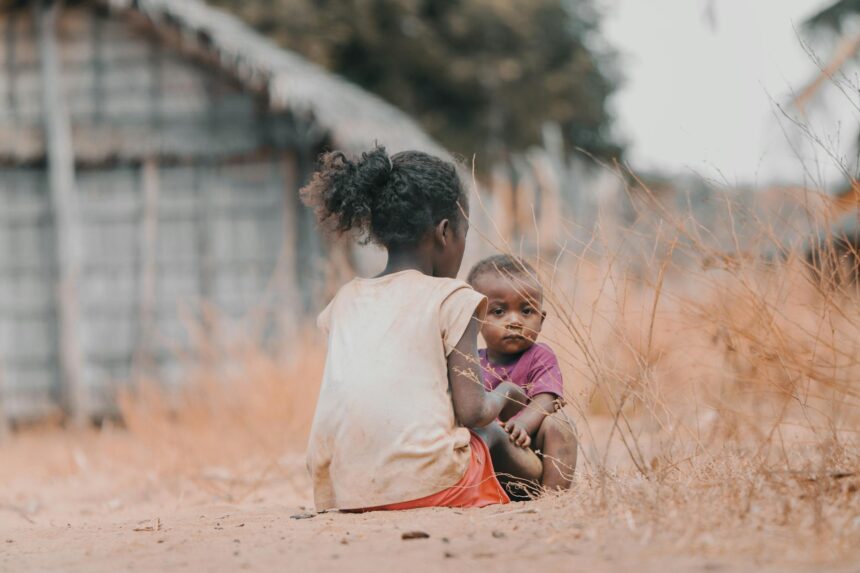
Map showing malaria prevention coverage across sub-Saharan African countries
Analysis of 17 sub-Saharan African countries reveals dramatic disparities in malaria protection for children under 5. Rural children from poor families face up to three times higher infection rates than urban counterparts. — Photo: Chrystopher Huyghensnot / Pexels
SHARE
1 min read|126 words

A major analysis of malaria protection across 17 sub-Saharan African nations identifies three critical insights for public health practitioners. First, rural children face dramatically elevated malaria risk compared to urban populations, suggesting that distribution models must account for geographic barriers to program implementation and healthcare access. Second, household wealth and socioeconomic status powerfully predict outcomes, indicating that prevention strategies cannot ignore underlying inequality drivers.

Third, simply distributing bed nets—a cornerstone malaria intervention—does not guarantee protection; several countries with high distribution achieved minimal prevalence reductions, pointing to critical gaps in community engagement and sustained utilization. These findings demand a paradigm shift from supply-focused toward equity-focused approaches that address structural barriers and ensure interventions reach the most vulnerable populations effectively.

Read the full article on GMJ Newsroom.

Was this article helpful?

Related reference
  • Malaria · Condition
Share This Article
Facebook LinkedIn Bluesky Copy Link Print
GMJ
ByProf. Giorgi Pkhakadze
Follow:
Prof. Giorgi Pkhakadze, MD, MPH, PhD, is Editor-in-Chief of the Georgian Medical Journal and Chair of the Public Health Institute of Georgia (PHIG). He is Professor and Head of the Department of Social and Behavioural Sciences at David Tvildiani Medical University, and Secretary/Treasurer of the UEMS Section of Public Health. ORCID: 0000-0001-7609-4515.

Submit Your Paper →

Georgia's peer-reviewed open-access medical journal. No APC until January 2027.
Submit Manuscript →
Trump Administration Removes Job Protections for Thousands of Federal Health Workers

Thousands of federal health workers at HHS agencies including CDC, FDA, and…

Rare Lymphatic-Urinary Fistula Causes Milky Urine in NEJM Case Report

A rare case of chyluria caused by a lymphatic-urinary fistula demonstrates how…

Gene Therapy Shows Promise for Inherited Cholesterol Disorder in First-in-Human Trial

First-in-human gene therapy trial shows preliminary safety and efficacy for treating homozygous…

Submit Your Paper to GMJ

No APC until January 2027.
Submit Manuscript →

You Might Also Like

Healthcare cost reduction chart showing potential savings from medically tailored meal interventions

Announcement: Medically Tailored Meals Show Promise in Reducing Healthcare Costs, Nature Medicine Reports

By
Prof. Giorgi Pkhakadze
13/06/2026
Sudanese students in classroom setting representing educational access challenges

UNICEF Advocates for Universal Exam Access as Sudan’s Educational Crisis Deepens

By
Prof. Giorgi Pkhakadze
03/07/2026
Medical chart showing beta blocker outcomes data from international heart attack study

Women Show Alarming Risk Elevation: Beta Blockers Associated With 46% Higher Adverse Event Rate

By
Prof. Giorgi Pkhakadze
03/07/2026
Global HealthPolicy & Systems

Ebola Bundibugyo Outbreak Spreads to 25 Health Zones Across DRC and Uganda

By
Prof. Giorgi Pkhakadze
15/06/2026
Facebook Twitter Youtube Instagram
Company
  • Privacy Policy
  • Contact US
  • GMJ Journal
  • Submit Manuscript
  • Editorial Team
  • Register at GMJ
  • Terms of Use

Subscribe to GMJ News — Click here

Join Community
© 2026 Georgian Medical Journal (GMJ). Published by the Public Health Institute of Georgia (PHIG). All rights reserved.
Welcome Back!

Sign in to your account

Username or Email Address
Password

Lost your password?

Not a member? Sign Up