By using this site, you agree to the Privacy Policy and Terms of Use.
Accept
GMJ NewsGMJ NewsGMJ News
  • Latest News
    • GMJ Briefs
  • Podcast & Media
    • Podcast Episodes
    • GMJ Audio
    • GMJ Videos
  • Research Digest
    • New Studies
    • Georgian Research
    • Data & Numbers
  • Policy & Systems
    • Health Policy
    • Quality & Safety
    • Migration & Health
    • Global Health
  • Practice
    • Clinical Updates
    • Case Discussions
    • Pharmacy & Prescribing
    • Ingredients A-Z
  • Perspectives
    • Editorial
    • Explainers
    • Voices
    • Letters
  • Health Topics
  • GMJ Articles
    • Vol. 1 Issue 2 (2026)
    • Vol. 1 Issue 1 (2026)
    • Pre-Launch Articles (2025)
  • Read the Journal →
  • About GMJ News
Notification Show More
Font ResizerAa
GMJ NewsGMJ News
Font ResizerAa
  • Latest News
    • GMJ Briefs
  • Podcast & Media
    • Podcast Episodes
    • GMJ Audio
    • GMJ Videos
  • Research Digest
    • New Studies
    • Georgian Research
    • Data & Numbers
  • Policy & Systems
    • Health Policy
    • Quality & Safety
    • Migration & Health
    • Global Health
  • Practice
    • Clinical Updates
    • Case Discussions
    • Pharmacy & Prescribing
    • Ingredients A-Z
  • Perspectives
    • Editorial
    • Explainers
    • Voices
    • Letters
  • Health Topics
  • GMJ Articles
    • Vol. 1 Issue 2 (2026)
    • Vol. 1 Issue 1 (2026)
    • Pre-Launch Articles (2025)
  • Read the Journal →
  • About GMJ News
Follow US
GMJ News > GMJ Briefs > What This Brain Discovery Means for Neurological Treatment: Three Key Clinical Implications

What This Brain Discovery Means for Neurological Treatment: Three Key Clinical Implications

GMJ
Last updated: 29/07/2026 18:43
By
Prof. Giorgi Pkhakadze
Share
1 Min Read
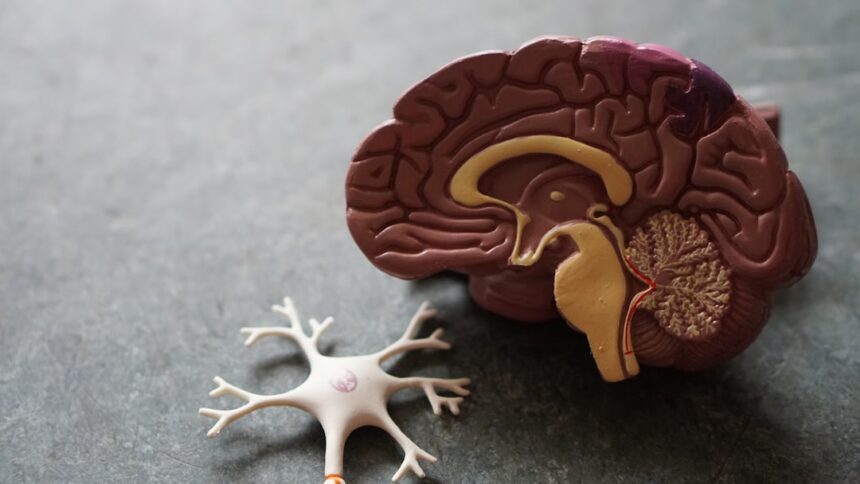
Diagram showing glutamate receptor subunits in brain ion channels with selective activation pattern
Scientists discover that brain glutamate receptors need only 2 of 4 subunits to function, revealing a hidden mechanism that could transform neurological treatments. The breakthrough challenges decades of assumptions about neural signaling. — Photo by Robina Weermeijer on Unsplash (Unsplash License)
SHARE
1 min read|157 words

A groundbreaking study from Ruhr University Bochum provides three essential insights for clinicians and researchers developing neurological therapies. First, the discovery that brain receptors function with only half their subunits active fundamentally changes how we conceptualize neural signaling. Second, this “hidden switch” mechanism explains why neural signal strength varies between individuals and across brain regions, offering a molecular basis for understanding treatment variability in neurological disorders.

Third, and most clinically relevant, these findings open pathways for more precise therapeutic interventions. Rather than targeting entire receptor complexes, future treatments could selectively modulate the specific subunit activation patterns—potentially reducing side effects while improving efficacy for epilepsy, Alzheimer’s disease, and other neurodegenerative conditions. Understanding this mechanism allows researchers to design drugs that work within the brain’s natural 50-percent efficiency threshold.

For clinicians, this research suggests that neurological treatment responses may be more predictable once we better understand individual variations in receptor dynamics. Read the full article on GMJ Newsroom.

Was this article helpful?
GMJ Brief · Takeaway

📰 Read the full article: Scientists Discover Hidden Mechanism in Brain Ion Channels That Could Transform Neurological Treatment →

Related reference
  • Epilepsy · Condition
Share This Article
Facebook LinkedIn Bluesky Copy Link Print
GMJ
ByProf. Giorgi Pkhakadze
Follow:
Prof. Giorgi Pkhakadze, MD, MPH, PhD, is Editor-in-Chief of the Georgian Medical Journal and Chair of the Public Health Institute of Georgia (PHIG). He is Professor and Head of the Department of Social and Behavioural Sciences at David Tvildiani Medical University, and Secretary/Treasurer of the UEMS Section of Public Health. ORCID: 0000-0001-7609-4515.

Submit Your Paper →

Georgia's peer-reviewed open-access medical journal. No APC until January 2027.
Submit Manuscript →
Creatine and Kidney Damage: What the Evidence Actually Shows

A 2025 systematic review of 21 studies and analysis of 685 clinical…

How neurotransmitters orchestrate mood, sleep, and cognition: a biochemical primer

Brain function depends on chemical communication between neurons through neurotransmitters. Twelve major…

Vitamin D’s Role in Alzheimer’s Tau Accumulation: New Evidence from Framingham Heart Study

A 16-year analysis from the Framingham Heart Study finds that higher vitamin…

Submit Your Paper to GMJ

No APC until January 2027.
Submit Manuscript →

You Might Also Like

Clinical UpdatesGlobal HealthPolicy & SystemsPractice

UN-backed Ebola Treatment Centres Launch in DRC as Cases Surge to Record Levels

By
Prof. Giorgi Pkhakadze
04/08/2026
Medical illustration showing multiple myeloma cells and treatment timeline concepts

13% of Multiple Myeloma Patients Experience Early Relapse—But Should Timing Define Treatment?

By
Prof. Giorgi Pkhakadze
14/06/2026
Wegovy oral tablets and injectable pens showing new UK-approved weight loss treatment options

What UK Patients Need to Know About the New Oral Weight Loss Pill

By
Prof. Giorgi Pkhakadze
28/07/2026
Athletes competing at Enhanced Games event in Las Vegas with medical safety warnings overlay

Three Critical Risks Athletes Face at Enhanced Games Competition

By
Prof. Giorgi Pkhakadze
19/07/2026
Facebook Twitter Youtube Instagram
Company
  • Privacy Policy
  • Contact US
  • GMJ Journal
  • Submit Manuscript
  • Editorial Team
  • Register at GMJ
  • Terms of Use

Subscribe to GMJ News — Click here

Join Community
© 2026 Georgian Medical Journal (GMJ). Published by the Public Health Institute of Georgia (PHIG). All rights reserved.
Welcome Back!

Sign in to your account

Username or Email Address
Password

Lost your password?

Not a member? Sign Up