By using this site, you agree to the Privacy Policy and Terms of Use.
Accept
GMJ NewsGMJ NewsGMJ News
  • Latest News
    • GMJ Briefs
  • Podcast & Media
    • Podcast Episodes
    • GMJ Audio
    • GMJ Videos
  • Research Digest
    • New Studies
    • Georgian Research
    • Data & Numbers
  • Policy & Systems
    • Health Policy
    • Quality & Safety
    • Migration & Health
    • Global Health
  • Practice
    • Clinical Updates
    • Case Discussions
    • Pharmacy & Prescribing
    • Ingredients A-Z
  • Perspectives
    • Editorial
    • Explainers
    • Voices
    • Letters
  • GMJ Articles
    • Vol. 1 Issue 2 (2026)
    • Vol. 1 Issue 1 (2026)
    • Pre-Launch Articles (2025)
  • Read the Journal →
  • About GMJ News
Notification Show More
Font ResizerAa
GMJ NewsGMJ News
Font ResizerAa
  • Latest News
    • GMJ Briefs
  • Podcast & Media
    • Podcast Episodes
    • GMJ Audio
    • GMJ Videos
  • Research Digest
    • New Studies
    • Georgian Research
    • Data & Numbers
  • Policy & Systems
    • Health Policy
    • Quality & Safety
    • Migration & Health
    • Global Health
  • Practice
    • Clinical Updates
    • Case Discussions
    • Pharmacy & Prescribing
    • Ingredients A-Z
  • Perspectives
    • Editorial
    • Explainers
    • Voices
    • Letters
  • GMJ Articles
    • Vol. 1 Issue 2 (2026)
    • Vol. 1 Issue 1 (2026)
    • Pre-Launch Articles (2025)
  • Read the Journal →
  • About GMJ News
Follow US
GMJ News > GMJ Briefs > What You Need to Know: Climate Change and the Education Crisis in Vulnerable Communities

What You Need to Know: Climate Change and the Education Crisis in Vulnerable Communities

GMJ
Last updated: 12/07/2026 04:11
By
Prof. Giorgi Pkhakadze
Share
1 Min Read
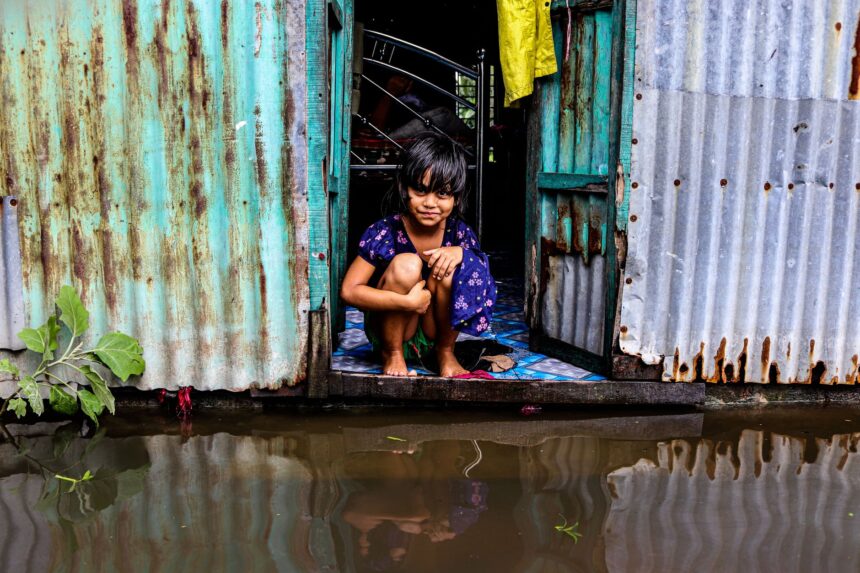
Children walking to damaged school building after climate disaster, symbolizing educational disruption
Climate change is systematically disrupting education for 617 million children worldwide, with those living in poverty experiencing the most severe learning impacts. New research reveals how extreme weather creates lasting educational inequities. — Photo: Najmul Hasan Mahedi / Pexels
SHARE
1 min read|157 words

Climate change poses a significant threat to educational outcomes globally, and understanding the scope of this crisis is essential for policymakers and health professionals. Three critical facts emerge from recent research: 617 million children worldwide already lack basic literacy and numeracy skills, and climate impacts are systematically widening these educational gaps. Children from low-income households are 3.4 times more likely to drop out of school permanently following climate-related disruptions such as floods, droughts, and heat waves.

Moreover, an alarming 78% of schools in climate-vulnerable areas lack basic resilience infrastructure to protect students from environmental stressors. This infrastructure gap directly translates to compromised cognitive development, interrupted learning, and limited future economic mobility. For health and education sectors, these findings highlight an urgent need for integrated climate adaptation strategies, particularly investments in school infrastructure, heat-mitigation technologies, and support systems for displaced students. Addressing this crisis requires coordinated action across healthcare, education, and environmental policy sectors.

Read the full article on GMJ Newsroom.

Was this article helpful?

GMJ Brief · Takeaway

📰 Read the full article: Climate Change Disrupts Education for 617 Million Children in Poverty Worldwide →

Related reference
  • Iron · Ingredient
Share This Article
Facebook LinkedIn Bluesky Copy Link Print
GMJ
ByProf. Giorgi Pkhakadze
Follow:
Prof. Giorgi Pkhakadze, MD, MPH, PhD, is Editor-in-Chief of the Georgian Medical Journal and Chair of the Public Health Institute of Georgia (PHIG). He is Professor and Head of the Department of Social and Behavioural Sciences at David Tvildiani Medical University, and Secretary/Treasurer of the UEMS Section of Public Health. ORCID: 0000-0001-7609-4515.

Submit Your Paper →

Georgia's peer-reviewed open-access medical journal. No APC until January 2027.
Submit Manuscript →
Beyond Neurons: How Brain’s Supporting Cells Drive Inflammation and Cognitive Resilience

The brain's health depends on more than neurons alone. A complex cellular…

How Your Immune System Learns and Remembers: The Dual Defence Strategy

Your immune system operates through two coordinated mechanisms: innate immunity provides immediate…

Why Normal Thyroid Tests Don’t Always Mean You’re Healthy: The Hashimoto’s Gap

Standard thyroid tests measure only hormone levels, missing the autoimmune component of…

Submit Your Paper to GMJ

No APC until January 2027.
Submit Manuscript →

You Might Also Like

Health PolicyPolicy & Systems

Hantavirus Outbreak Sparks COVID-Style Disinformation Wave, Study Reveals

By
Prof. Giorgi Pkhakadze
07/06/2026

PHEIC Declaration: Ebola Outbreak with Confirmed Cross-Border Transmission DRC-Uganda

By
Prof. Giorgi Pkhakadze
31/05/2026
Global HealthPolicy & Systems

WHO Declares Emergency as Ebola Crosses DRC-Uganda Border with Over 900 Suspected Cases

By
Prof. Giorgi Pkhakadze
31/05/2026
Stadium crowd at international sporting event showing dense gathering conditions

Beyond Ebola: Why Respiratory Diseases Pose the Real Threat at World Cup Events

By
Prof. Giorgi Pkhakadze
24/06/2026
Facebook Twitter Youtube Instagram
Company
  • Privacy Policy
  • Contact US
  • GMJ Journal
  • Submit Manuscript
  • Editorial Team
  • Register at GMJ
  • Terms of Use

Subscribe to GMJ News — Click here

Join Community
© 2026 Georgian Medical Journal (GMJ). Published by the Public Health Institute of Georgia (PHIG). All rights reserved.
Welcome Back!

Sign in to your account

Username or Email Address
Password

Lost your password?

Not a member? Sign Up