By using this site, you agree to the Privacy Policy and Terms of Use.
Accept
GMJ NewsGMJ NewsGMJ News
  • Latest News
    • GMJ Briefs
  • Podcast & Media
    • Podcast Episodes
    • GMJ Audio
    • GMJ Videos
  • Research Digest
    • New Studies
    • Georgian Research
    • Data & Numbers
  • Policy & Systems
    • Health Policy
    • Quality & Safety
    • Migration & Health
    • Global Health
  • Practice
    • Clinical Updates
    • Case Discussions
    • Pharmacy & Prescribing
    • Ingredients A-Z
  • Perspectives
    • Editorial
    • Explainers
    • Voices
    • Letters
  • GMJ Articles
    • Vol. 1 Issue 2 (2026)
    • Vol. 1 Issue 1 (2026)
    • Pre-Launch Articles (2025)
  • Read the Journal →
  • About GMJ News
Notification Show More
Font ResizerAa
GMJ NewsGMJ News
Font ResizerAa
  • Latest News
    • GMJ Briefs
  • Podcast & Media
    • Podcast Episodes
    • GMJ Audio
    • GMJ Videos
  • Research Digest
    • New Studies
    • Georgian Research
    • Data & Numbers
  • Policy & Systems
    • Health Policy
    • Quality & Safety
    • Migration & Health
    • Global Health
  • Practice
    • Clinical Updates
    • Case Discussions
    • Pharmacy & Prescribing
    • Ingredients A-Z
  • Perspectives
    • Editorial
    • Explainers
    • Voices
    • Letters
  • GMJ Articles
    • Vol. 1 Issue 2 (2026)
    • Vol. 1 Issue 1 (2026)
    • Pre-Launch Articles (2025)
  • Read the Journal →
  • About GMJ News
Follow US
GMJ News > GMJ Briefs > WHO Data Shows Landmark Achievement: 2.3 Billion Malaria Cases Averted Since 2000

WHO Data Shows Landmark Achievement: 2.3 Billion Malaria Cases Averted Since 2000

GMJ
Last updated: 29/06/2026 10:47
By
Prof. Giorgi Pkhakadze
Share
1 Min Read
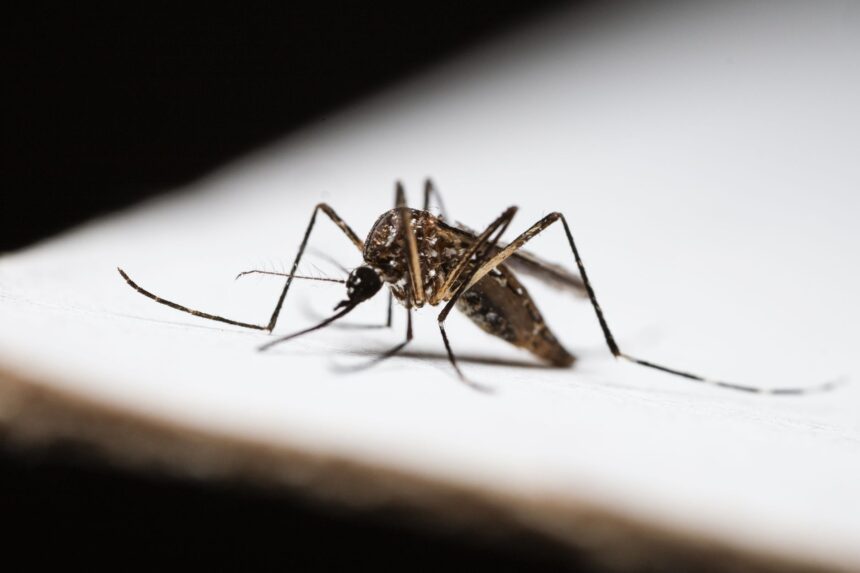
Map showing malaria elimination progress in Africa with Eswatini highlighted
Eswatini targets malaria elimination by 2028 as WHO reports 2.3 billion cases averted globally since 2000. The country has reduced transmission to very low levels, with most cases now imported. — Photo by Ignacio Vazquez on Pexels (Pexels License)
SHARE
1 min read|130 words

The World Health Organization has released striking data underscoring the dramatic impact of global malaria control efforts over the past two decades. Since 2000, coordinated international interventions have averted 2.3 billion malaria cases and prevented 14 million deaths worldwide—numbers that illustrate the transformative potential of sustained public health investment.

The momentum continues accelerating, with 37 countries reporting fewer than 1,000 malaria cases in 2024 alone, indicating rapid progress toward elimination thresholds. This statistical foundation provides compelling evidence that evidence-based interventions—including vector control, diagnostic testing, and effective antimalarial treatments—can achieve measurable disease reduction across diverse populations and geographic settings. As 47 countries have already achieved certified malaria-free status, the data suggests that elimination is not merely theoretical but increasingly achievable for nations with committed resources and strategic planning.

Read the full article on GMJ Newsroom.

Was this article helpful?

GMJ Brief · Key Finding

📰 Read the full article: Eswatini Targets Malaria Elimination by 2028 as WHO Reports 2.3 Billion Cases Averted Since 2000 →

Related reference
  • Malaria · Condition
Share This Article
Facebook LinkedIn Bluesky Copy Link Print
GMJ
ByProf. Giorgi Pkhakadze
Follow:
Prof. Giorgi Pkhakadze, MD, MPH, PhD, is Editor-in-Chief of the Georgian Medical Journal and Chair of the Public Health Institute of Georgia (PHIG). He is Professor and Head of the Department of Social and Behavioural Sciences at David Tvildiani Medical University, and Secretary/Treasurer of the UEMS Section of Public Health. ORCID: 0000-0001-7609-4515.

Submit Your Paper →

Georgia's peer-reviewed open-access medical journal. No APC until January 2027.
Submit Manuscript →
Trump Administration Removes Job Protections for Thousands of Federal Health Workers

Thousands of federal health workers at HHS agencies including CDC, FDA, and…

Rare Lymphatic-Urinary Fistula Causes Milky Urine in NEJM Case Report

A rare case of chyluria caused by a lymphatic-urinary fistula demonstrates how…

Gene Therapy Shows Promise for Inherited Cholesterol Disorder in First-in-Human Trial

First-in-human gene therapy trial shows preliminary safety and efficacy for treating homozygous…

Submit Your Paper to GMJ

No APC until January 2027.
Submit Manuscript →

You Might Also Like

UK pharmaceutical manufacturing facility with MHRA regulatory approval documentation

Largest Approval Batch in 18 Months: UK MHRA Grants 47 Pharmaceutical Licences

By
Prof. Giorgi Pkhakadze
26/06/2026
Advanced PET imaging system providing real-time surgical guidance for osteosarcoma tumor resection

Three Game-Changing Advances in Osteosarcoma Surgery: What Clinicians Need to Know

By
Prof. Giorgi Pkhakadze
06/07/2026
Nurse speaking compassionately with psychiatric patient in hospital setting

Relationship-Centered Care Transforms Psychiatric Outcomes: Major NHS Study Reveals 30% Reduction in Hospital Stays

By
Prof. Giorgi Pkhakadze
17/06/2026
Infographic showing global mental health disability statistics with rising trend line

Mental Health Now Tops Global Disability Rankings, Affecting 1.2 Billion Worldwide

By
Prof. Giorgi Pkhakadze
08/06/2026
Facebook Twitter Youtube Instagram
Company
  • Privacy Policy
  • Contact US
  • GMJ Journal
  • Submit Manuscript
  • Editorial Team
  • Register at GMJ
  • Terms of Use

Subscribe to GMJ News — Click here

Join Community
© 2026 Georgian Medical Journal (GMJ). Published by the Public Health Institute of Georgia (PHIG). All rights reserved.
Welcome Back!

Sign in to your account

Username or Email Address
Password

Lost your password?

Not a member? Sign Up