By using this site, you agree to the Privacy Policy and Terms of Use.
Accept
GMJ NewsGMJ NewsGMJ News
  • Latest News
    • GMJ Briefs
  • Podcast & Media
    • Podcast Episodes
    • GMJ Audio
    • GMJ Videos
  • Research Digest
    • New Studies
    • Georgian Research
    • Data & Numbers
  • Policy & Systems
    • Health Policy
    • Quality & Safety
    • Migration & Health
    • Global Health
  • Practice
    • Clinical Updates
    • Case Discussions
    • Pharmacy & Prescribing
    • Ingredients A-Z
  • Perspectives
    • Editorial
    • Explainers
    • Voices
    • Letters
  • GMJ Articles
    • Vol. 1 Issue 2 (2026)
    • Vol. 1 Issue 1 (2026)
    • Pre-Launch Articles (2025)
  • Read the Journal →
  • About GMJ News
Notification Show More
Font ResizerAa
GMJ NewsGMJ News
Font ResizerAa
  • Latest News
    • GMJ Briefs
  • Podcast & Media
    • Podcast Episodes
    • GMJ Audio
    • GMJ Videos
  • Research Digest
    • New Studies
    • Georgian Research
    • Data & Numbers
  • Policy & Systems
    • Health Policy
    • Quality & Safety
    • Migration & Health
    • Global Health
  • Practice
    • Clinical Updates
    • Case Discussions
    • Pharmacy & Prescribing
    • Ingredients A-Z
  • Perspectives
    • Editorial
    • Explainers
    • Voices
    • Letters
  • GMJ Articles
    • Vol. 1 Issue 2 (2026)
    • Vol. 1 Issue 1 (2026)
    • Pre-Launch Articles (2025)
  • Read the Journal →
  • About GMJ News
Follow US
GMJ News > GMJ Briefs > What This Anxiety Breakthrough Means for Future Treatment Development

What This Anxiety Breakthrough Means for Future Treatment Development

GMJ
Last updated: 08/07/2026 04:17
By
Prof. Giorgi Pkhakadze
Share
1 Min Read
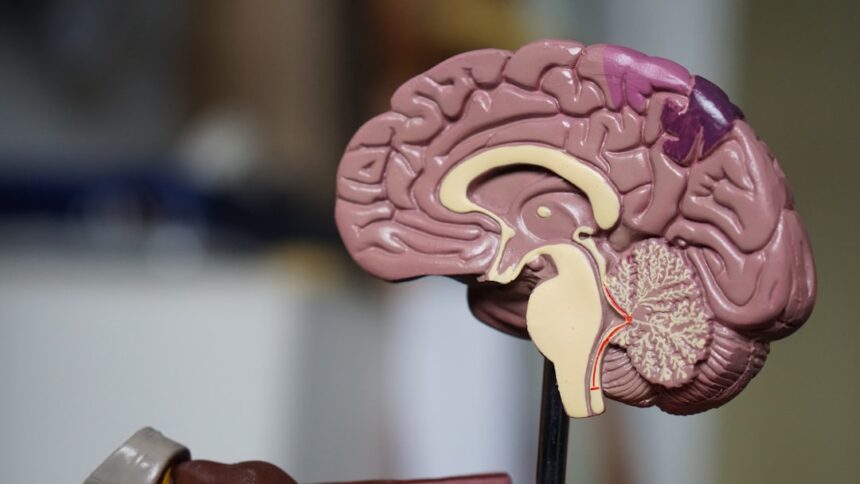
Scientific illustration of amygdala brain circuits involved in anxiety processing
Researchers successfully reversed anxiety in mice by targeting a specific group of amygdala neurons. The breakthrough identifies a promising new target for developing more precise anxiety treatments. — Photo: Robina Weermeijer / Pexels
SHARE
1 min read|136 words

Recent neuroscience research has identified three critical insights that may reshape anxiety treatment strategies. First, a specific group of amygdala neurons has been shown to directly control both anxiety responses and social behavior, establishing a clear neurobiological target. Second, restoring normal function in these neurons completely reversed anxiety symptoms in experimental models, demonstrating the causal relationship between circuit dysfunction and anxiety disorders.

Third, and perhaps most clinically relevant, this discovery identifies a precise anatomical target for developing next-generation anxiety therapies. Rather than broadly affecting multiple neurotransmitter systems, precision approaches targeting this specific neural circuit could offer improved therapeutic outcomes with reduced side effects.

For patients and clinicians, this research suggests that future anxiety treatments may move toward circuit-specific interventions, potentially offering more effective and tolerable options than current medications. Read the full article on GMJ Newsroom.

Was this article helpful?

GMJ Brief · Takeaway

📰 Read the full article: Scientists Reverse Anxiety in Mice by Targeting Tiny Amygdala Circuit →

Share This Article
Facebook LinkedIn Bluesky Copy Link Print
GMJ
ByProf. Giorgi Pkhakadze
Follow:
Prof. Giorgi Pkhakadze, MD, MPH, PhD, is Editor-in-Chief of the Georgian Medical Journal and Chair of the Public Health Institute of Georgia (PHIG). He is Professor and Head of the Department of Social and Behavioural Sciences at David Tvildiani Medical University, and Secretary/Treasurer of the UEMS Section of Public Health. ORCID: 0000-0001-7609-4515.

Submit Your Paper →

Georgia's peer-reviewed open-access medical journal. No APC until January 2027.
Submit Manuscript →
PFAS ‘Forever Chemicals’ Persist in Ski Wax Rooms Despite Regulatory Bans

New research reveals PFAS 'forever chemicals' persist in ski wax facilities years…

Community Walking Groups Show Mental Health Benefits for Bereaved Adults

A community walking group in Darwen demonstrates how peer-supported physical activity provides…

Ebola outbreak in DRC and Uganda spreads to new regions; CDC updates response strategy

The Democratic Republic of the Congo and Uganda report active Ebola transmission…

Submit Your Paper to GMJ

No APC until January 2027.
Submit Manuscript →

You Might Also Like

WHO World Health Assembly meeting hall during historic fatty liver disease resolution vote

One in Five Adults Affected: The Staggering Global Burden of Fatty Liver Disease

By
Prof. Giorgi Pkhakadze
30/06/2026
Medical chart showing tuberculosis screening effectiveness in prison settings across Latin America

Smart TB Screening: Why Entry-Exit Protocols Offer the Best Value for Prison Health Programs

By
Prof. Giorgi Pkhakadze
06/07/2026
WOAH laboratory network showing digital monitoring systems and global connectivity

WOAH Global Laboratory Network Expands to 182 Countries, Up 26 Members Since 2015

By
Prof. Giorgi Pkhakadze
04/07/2026
Global map showing youth mortality rates by region with data visualization

Global Youth Mortality Plateau: 2.1 Million Deaths in 2024 Signal Need for Renewed Focus

By
Prof. Giorgi Pkhakadze
12/06/2026
Facebook Twitter Youtube Instagram
Company
  • Privacy Policy
  • Contact US
  • GMJ Journal
  • Submit Manuscript
  • Editorial Team
  • Register at GMJ
  • Terms of Use

Subscribe to GMJ News — Click here

Join Community
© 2026 Georgian Medical Journal (GMJ). Published by the Public Health Institute of Georgia (PHIG). All rights reserved.
Welcome Back!

Sign in to your account

Username or Email Address
Password

Lost your password?

Not a member? Sign Up