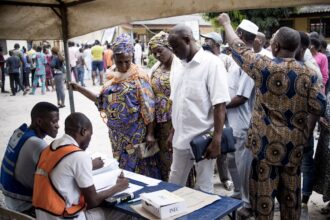
The International Organization for Migration (IOM) has strengthened its global research network to address critical knowledge gaps in migration studies, focusing on evidence-based policy development and health outcomes for displaced populations worldwide.
Global Migration Research Priorities
Key focus areas identified by IOM research network, 2024
Source: IOM Global Research Network, 2024 | Georgian Medical Journal News
Research Network Addresses Health Disparities
The International Organization for Migration has identified health disparities among migrant populations as a critical research priority. Studies conducted through the network examine barriers to healthcare access, infectious disease transmission patterns, and mental health outcomes in displacement settings.

Research partnerships with academic institutions focus on generating evidence for the Migration and Health agenda within the Global Compact for Safe, Orderly and Regular Migration framework. The network emphasizes interdisciplinary approaches combining epidemiological research with policy analysis.
Climate Migration Research Gains Priority
Environmental displacement has emerged as a major research focus within IOM’s expanded network. Scientists are documenting climate-induced migration patterns and their health implications across vulnerable regions, particularly in Small Island Developing States and sub-Saharan Africa.
The research initiative supports evidence generation for the WHO climate and health agenda, examining how environmental changes affect population mobility and health outcomes. Studies track displacement patterns linked to extreme weather events and slow-onset environmental degradation.
Evidence-Based Policy Development
IOM’s research network operates through partnerships with universities, think tanks, and government research institutes globally. The initiative aims to bridge the gap between migration research and policy implementation at national and regional levels.
Research outputs inform health policy development for migrant populations, particularly in areas of universal health coverage and cross-border health coordination. The network produces evidence reviews and policy briefs for government decision-makers.
Migration research requires sustained investment in interdisciplinary approaches to address complex health and social challenges facing displaced populations worldwide.
— IOM Global Research Network, Strategic Framework (2024)
Key takeaways
- IOM has expanded its global research network to address critical knowledge gaps in migration studies
- Health disparities and climate migration represent top research priorities for evidence-based policy
- Research partnerships focus on generating evidence for universal health coverage for migrant populations
Frequently asked questions
What are the main focus areas of IOM’s migration research?
The network prioritizes health and healthcare access, climate migration, labour migration, integration policies, and return migration. Health-related research receives the highest priority at 92% of network activities.
How does migration research inform health policy?
Research outputs provide evidence for universal health coverage policies, cross-border health coordination, and targeted interventions for migrant populations. The network produces policy briefs and evidence reviews for government decision-makers.
Why is climate migration research increasingly important?
Environmental displacement affects millions globally, with climate-induced migration patterns requiring urgent documentation. Research examines health implications of environmental displacement, particularly in vulnerable regions like Small Island Developing States.
The expansion of IOM’s research network represents a significant step toward evidence-based migration governance. As global displacement continues to increase, robust research infrastructure will prove essential for developing effective policies that protect migrant health and promote integration. The network’s emphasis on interdisciplinary collaboration positions it to address the complex challenges facing mobile populations in an era of climate change and economic uncertainty.
Source: Migration research
Was this article helpful?
Disclaimer. This article is health journalism intended for general information and education. It is not medical advice and is not a substitute for professional diagnosis or treatment. Always consult a qualified healthcare provider about your individual circumstances. Full disclaimer →
Related Coverage




Medically reviewed by Prof. Giorgi Pkhakadze, MD, MPH, PhD. Spotted an error? Contact the editorial team.