By using this site, you agree to the Privacy Policy and Terms of Use.
Accept
GMJ NewsGMJ NewsGMJ News
  • Latest News
    • GMJ Briefs
  • Podcast & Media
    • Podcast Episodes
    • GMJ Audio
    • GMJ Videos
  • Research Digest
    • New Studies
    • Georgian Research
    • Data & Numbers
  • Policy & Systems
    • Health Policy
    • Quality & Safety
    • Migration & Health
    • Global Health
  • Practice
    • Clinical Updates
    • Case Discussions
    • Pharmacy & Prescribing
    • Ingredients A-Z
  • Perspectives
    • Editorial
    • Explainers
    • Voices
    • Letters
  • GMJ Articles
    • Vol. 1 Issue 2 (2026)
    • Vol. 1 Issue 1 (2026)
    • Pre-Launch Articles (2025)
  • Read the Journal →
  • About GMJ News
Notification Show More
Font ResizerAa
GMJ NewsGMJ News
Font ResizerAa
  • Latest News
    • GMJ Briefs
  • Podcast & Media
    • Podcast Episodes
    • GMJ Audio
    • GMJ Videos
  • Research Digest
    • New Studies
    • Georgian Research
    • Data & Numbers
  • Policy & Systems
    • Health Policy
    • Quality & Safety
    • Migration & Health
    • Global Health
  • Practice
    • Clinical Updates
    • Case Discussions
    • Pharmacy & Prescribing
    • Ingredients A-Z
  • Perspectives
    • Editorial
    • Explainers
    • Voices
    • Letters
  • GMJ Articles
    • Vol. 1 Issue 2 (2026)
    • Vol. 1 Issue 1 (2026)
    • Pre-Launch Articles (2025)
  • Read the Journal →
  • About GMJ News
Follow US
GMJ News > Policy & Systems > Global Health > WOAH Introduces Simplified Laboratory Reconfirmation Process for Veterinary Standards
Global HealthPolicy & Systems

WOAH Introduces Simplified Laboratory Reconfirmation Process for Veterinary Standards

GMJ
Last updated: 20/06/2026 01:14
By
GMJ Policy Desk
Share
4 Min Read
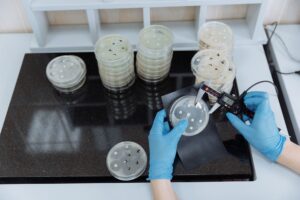
WOAH laboratory network showing digital monitoring systems and global connectivityIllustrative image · Photo by Mehul Patel on Pexels (Pexels License)
WOAH introduces streamlined laboratory reconfirmation procedures, reducing documentation by 30% while maintaining scientific standards for global animal health surveillance. Digital platforms enhance oversight across 182 participating countries. — Photo by Mehul Patel on Pexels (Pexels License)
SHARE
🎧 Listen to this article3:35 min · 500 words · GMJ Audio
3 min read|500 words

The World Organisation for Animal Health (WOAH) has introduced new procedures to streamline laboratory reconfirmation processes while maintaining rigorous international veterinary standards. The reforms address growing concerns from member countries about administrative burden while preserving the scientific credibility essential for global animal health surveillance.

Contents
      • WOAH Laboratory Network Growth
  • Streamlined Assessment Framework
  • Enhanced Digital Infrastructure
  • Global Health Security Implications
    • Key takeaways
  • Frequently asked questions
    • How does the simplified process maintain laboratory standards?
    • Which laboratories are eligible for the streamlined reconfirmation?
    • What role does digital infrastructure play in the new system?
182 countries
participate in WOAH’s global laboratory network for animal health monitoring

WOAH Laboratory Network Growth

Number of participating countries and territories, 2015-2024

182
current
participants
156
in 2015
baseline
26
new members
added

1501651752015201820212024

Source: WOAH Global Laboratory Network, 2024 | Georgian Medical Journal News

Streamlined Assessment Framework

The World Organisation for Animal Health has developed new assessment criteria that reduce documentation requirements by approximately 30% while strengthening core competency evaluations. The revised framework focuses on essential technical capabilities rather than administrative processes, according to WOAH’s Laboratory and Research Department.

Submit Your Paper
GMJ_Submit_Banner

Member laboratories can now demonstrate continued compliance through targeted proficiency testing and peer review mechanisms. This approach aligns with quality assurance standards used in human health laboratory networks globally.

🎙️ Related Podcast Episodes
🎬 GMJ Academy AG-00: Introduction & Navigation Guide
🎧 #29 | GMJ Podcast | GMJ Research: From Manuscript to Publication – How Medical Evidence Becomes Scientific Knowledge · 15m
🎧 #18 | WHO Updates HIV Clinical Management Guidelines to Improve Global Treatment · 17m
🎧 #11 | WHO Urges Schools Worldwide to Promote Healthy Eating for Children · 20m
🎧 #8 | WHO Food Safety Surveillance: Strengthening Global Systems to Detect and Prevent Foodborne Diseases · 19m

Enhanced Digital Infrastructure

WOAH has implemented digital platforms to facilitate real-time monitoring of laboratory performance and certification status. The new system enables automated data collection and analysis, reducing the administrative burden on participating laboratories while improving oversight capabilities.

The digital infrastructure supports One Health initiatives by enabling better coordination between veterinary and human health surveillance systems. This integration is particularly crucial for monitoring zoonotic diseases and antimicrobial resistance patterns across species.

Global Health Security Implications

The streamlined reconfirmation process aims to encourage broader participation in international animal health networks, particularly from developing countries where administrative capacity may be limited. Enhanced laboratory participation strengthens global surveillance capabilities for emerging infectious diseases that cross species boundaries.

According to FAO estimates, approximately 75% of emerging infectious diseases affecting humans originate from animals. Robust veterinary laboratory networks are therefore essential components of pandemic preparedness and response systems globally.

The simplified reconfirmation process maintains scientific rigor while reducing administrative burden by 30%, enabling broader global participation in veterinary surveillance networks.

— WOAH Laboratory and Research Department (WOAH Technical Guidelines, 2024)

Key takeaways

  • WOAH’s 182-country laboratory network adopts streamlined reconfirmation procedures
  • Documentation requirements reduced by 30% while strengthening technical assessments
  • Digital platforms enable real-time monitoring and automated compliance tracking
  • Enhanced participation expected from developing countries with limited administrative capacity

Frequently asked questions

How does the simplified process maintain laboratory standards?

The revised framework emphasizes core technical competencies through targeted proficiency testing and peer review rather than extensive documentation. Scientific rigor is preserved while reducing administrative overhead.

Which laboratories are eligible for the streamlined reconfirmation?

All WOAH reference laboratories and collaborating centres can participate in the new process. The system particularly benefits laboratories in developing countries where administrative resources are limited.

What role does digital infrastructure play in the new system?

Digital platforms enable automated data collection, real-time performance monitoring, and streamlined reporting. This reduces manual administrative tasks while improving oversight and coordination capabilities.

The implementation of WOAH’s simplified reconfirmation process represents a significant evolution in international veterinary laboratory governance. By reducing administrative barriers while preserving scientific standards, the initiative has potential to strengthen global animal health surveillance networks and enhance pandemic preparedness capabilities worldwide.

Source: Making Reconfirmation Easier Without Compromising Credibility

Was this article helpful?

Disclaimer. This article is health journalism intended for general information and education. It is not medical advice and is not a substitute for professional diagnosis or treatment. Always consult a qualified healthcare provider about your individual circumstances. Full disclaimer →

Related Coverage

Sri Lanka deploys military to combat surging dengue epidemic as hospitals reach capacityAug 5, 2026
Wide disparities in congenital heart disease detection across Argentina revealed by national registry dataAug 5, 2026
Early sexual initiation in Zambia: New data reveals age 17 median, literacy as protective factorAug 5, 2026
Decision Models Show Community Health Workers Remain Cost-Effective, But Quality Gaps Threaten ReliabilityAug 5, 2026
PG
Written by
Prof. Giorgi Pkhakadze, MD, MPH, PhD
Editor-in-Chief, GMJ News
Full profile →  ·  ORCID 0000-0001-7609-4515
Medical disclaimer. This article is health journalism intended for general information. It is not medical advice and is not a substitute for consultation with a qualified healthcare professional. Always seek your physician's advice regarding any medical condition.
Medically reviewed by Prof. Giorgi Pkhakadze, MD, MPH, PhD. Spotted an error? Contact the editorial team.

Get the GMJ News digest
Evidence-based health journalism in your inbox. No spam; unsubscribe anytime.
TAGGED:animal healthglobal-healthlaboratory certificationveterinary standardsWOAH
Share This Article
Facebook LinkedIn Bluesky Copy Link Print
GMJ
ByGMJ Policy Desk
Follow:
GMJ Policy Desk is part of GMJ News, the newsroom of the Georgian Medical Journal (gmj.ge), published by the Public Health Institute of Georgia. Every article is editorially reviewed before publication.
Leave a Comment Leave a Comment

Leave a Reply Cancel reply

Your email address will not be published. Required fields are marked *

Submit Your Paper →

Georgia's peer-reviewed open-access medical journal. No APC until January 2027.
Submit Manuscript →
Beyond Minimum Requirements: New Evidence Suggests Higher Protein Intake Supports Healthy Aging

A new review of aging and nutrition research suggests that protein intake…

Sri Lanka deploys military to combat surging dengue epidemic as hospitals reach capacity

Sri Lanka has deployed military forces to contain a rapidly escalating dengue…

Five Foods Cardiologists Recommend for Men’s Heart Health: Evidence from Clinical Practice

Cardiologists recommend five evidence-based foods—fatty fish, nuts, whole grains, legumes, and leafy…

Submit Your Paper to GMJ

No APC until January 2027.
Submit Manuscript →

You Might Also Like

Global Antimicrobial Resistance Investment Falls Short of UN Commitments

By
GMJ Policy Desk
28/05/2026
Tanzania National Oral Health Strategic Plan priorities diagram showing six key implementation areas
Health Policy

Tanzania Launches New Oral Health Strategy to Close Care Gaps and Boost Workforce

By
GMJ Policy Desk
21/05/2026
UN medical personnel deploying emergency supplies for Ebola response in Democratic Republic of Congo
Global HealthPolicy & Systems

UN Agencies Mobilize Emergency Response to New Ebola Outbreak in Eastern DRC

By
GMJ Policy Desk
24/05/2026
Map showing Ebola outbreak regions in Central Africa with travel restriction indicators
Global HealthPolicy & Systems

US Travel Restrictions on Ebola-Exposed Regions Draw Human Rights Concerns

By
GMJ Policy Desk
25/05/2026
Facebook Twitter Youtube Instagram
Company
  • Privacy Policy
  • Contact US
  • GMJ Journal
  • Submit Manuscript
  • Editorial Team
  • Register at GMJ
  • Terms of Use

Subscribe to GMJ News — Click here

Join Community
© 2026 Georgian Medical Journal (GMJ). Published by the Public Health Institute of Georgia (PHIG). All rights reserved.
Welcome Back!

Sign in to your account

Username or Email Address
Password

Lost your password?

Not a member? Sign Up