By using this site, you agree to the Privacy Policy and Terms of Use.
Accept
GMJ NewsGMJ NewsGMJ News
  • Latest News
    • GMJ Briefs
  • Podcast & Media
    • Podcast Episodes
    • GMJ Audio
    • GMJ Videos
  • Research Digest
    • New Studies
    • Georgian Research
    • Data & Numbers
  • Policy & Systems
    • Health Policy
    • Quality & Safety
    • Migration & Health
    • Global Health
  • Practice
    • Clinical Updates
    • Case Discussions
    • Pharmacy & Prescribing
    • Ingredients A-Z
  • Perspectives
    • Editorial
    • Explainers
    • Voices
    • Letters
  • GMJ Articles
    • Vol. 1 Issue 2 (2026)
    • Vol. 1 Issue 1 (2026)
    • Pre-Launch Articles (2025)
  • Read the Journal →
  • About GMJ News
Notification Show More
Font ResizerAa
GMJ NewsGMJ News
Font ResizerAa
  • Latest News
    • GMJ Briefs
  • Podcast & Media
    • Podcast Episodes
    • GMJ Audio
    • GMJ Videos
  • Research Digest
    • New Studies
    • Georgian Research
    • Data & Numbers
  • Policy & Systems
    • Health Policy
    • Quality & Safety
    • Migration & Health
    • Global Health
  • Practice
    • Clinical Updates
    • Case Discussions
    • Pharmacy & Prescribing
    • Ingredients A-Z
  • Perspectives
    • Editorial
    • Explainers
    • Voices
    • Letters
  • GMJ Articles
    • Vol. 1 Issue 2 (2026)
    • Vol. 1 Issue 1 (2026)
    • Pre-Launch Articles (2025)
  • Read the Journal →
  • About GMJ News
Follow US
GMJ News > Policy & Systems > Global Health > Mental health interventions show promise amid active armed conflict, scoping review finds
Global HealthPolicy & Systems

Mental health interventions show promise amid active armed conflict, scoping review finds

GMJ
Last updated: 20/06/2026 11:06
By
GMJ Policy Desk
Share
5 Min Read
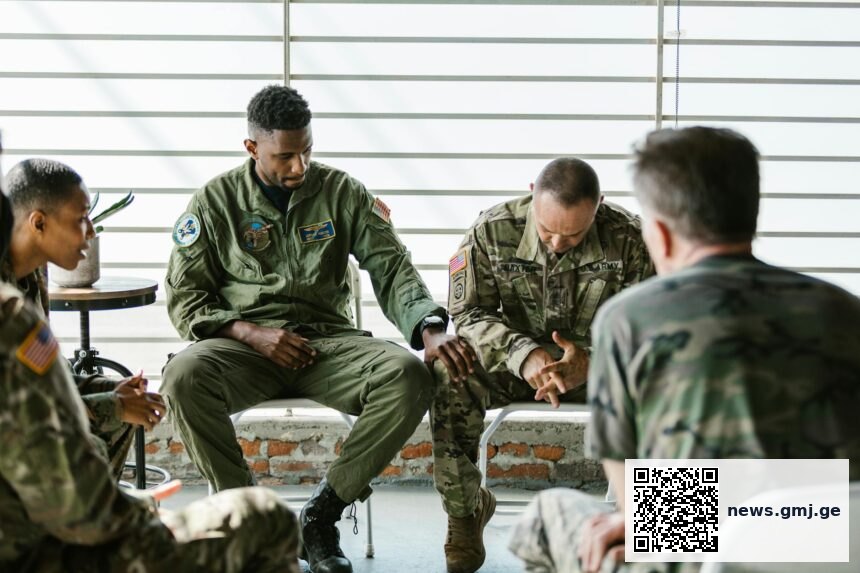
Healthcare workers providing mental health support in conflict zone settingIllustrative image · Photo by RDNE Stock project on Pexels (Pexels License)
A comprehensive review of 47 studies reveals that mental health interventions can effectively reduce trauma symptoms in populations affected by active armed conflicts. The research highlights significant benefits for adults while calling for improved research standards. — Photo by RDNE Stock project on Pexels (Pexels License)
SHARE
🎧 Listen to this article4:38 min · 649 words · GMJ Audio
3 min read|649 words

Mental health and psychosocial support interventions can effectively reduce trauma symptoms among populations caught in ongoing armed conflicts, according to a comprehensive scoping review published in BMJ Global Health. The analysis of 47 studies reveals significant gaps in research standards while highlighting promising outcomes for both civilians and ex-combatants receiving targeted psychological support during active warfare.

Contents
      • Mental health intervention studies by population group
  • Significant symptom reduction in adult populations
  • Mixed outcomes for younger populations
  • Research quality concerns highlighted
    • Key takeaways
  • Frequently asked questions
    • What types of mental health support work best during active conflicts?
    • Are mental health interventions effective for children in conflict zones?
    • How many people are affected by ongoing armed conflicts globally?
2 billion
people worldwide affected by ongoing armed conflict

Mental health intervention studies by population group

Distribution of 47 studies examining psychosocial support during active conflict

Children/adolescents only
40%
Adults only
30%
Mixed age groups
30%
Trauma-focused interventions

26%

Source: BMJ Global Health, 2024 | Georgian Medical Journal News

Significant symptom reduction in adult populations

The review, conducted by researchers following WHO guidelines for systematic analysis, found that adult civilians and ex-combatants showed statistically significant improvements across multiple mental health indicators. Studies consistently reported decreased post-traumatic stress disorder symptoms, reduced depression and anxiety levels, and improved psychosocial functioning among participants receiving structured mental health interventions.

Submit Your Paper
GMJ_Submit_Banner

The research team analysed interventions targeting three distinct groups: civilians, internally displaced persons, and veterans or ex-combatants affected by ongoing armed conflict. For more insights on global health challenges, recent evidence suggests that early intervention during active conflict periods may prevent long-term psychological complications.

🎙️ Related Podcast Episodes
🎧 #37 | GMJ Podcast | NAD⁺ Injections and “NAD Boosters” — Public Health Risks and Regulatory Implications · 20m
🎧 #25 | WHO Warns: Childhood Hearing Loss Must Be Addressed Early · 19m
🎧 #20 | WHO: Conflict and Instability Make Pregnancy More Dangerous · 18m
🎧 #17 | WHO: Global Population Requiring Trachoma Interventions Falls Below 100 Million · 16m
🎧 #53 | GMJ Podcast | Palliative Care in Georgia — Health System Gaps, Access Barriers, and Policy Implications · 16m

Mixed outcomes for younger populations

While adult populations demonstrated clear benefits, results for children and adolescents were less consistent across the 19 studies examining younger age groups. The review found mixed outcomes when evaluating trauma-focused interventions specifically designed for minors experiencing ongoing conflict exposure, according to the published analysis.

Ex-combatants showed variable responses to interventions targeting aggression, substance dependence, and social skills development. The heterogeneity in treatment approaches and measurement tools across studies made it difficult to draw definitive conclusions about optimal intervention strategies for this population, researchers noted. Clinical teams working in migration and displacement settings may find these findings relevant for program design.

Research quality concerns highlighted

The scoping review revealed significant methodological inconsistencies across the 47 included studies, with researchers calling for improved standards in evaluating mental health interventions during active conflicts. Study designs varied widely, as did the clinical instruments used to assess psychological outcomes, making comparative analysis challenging.

Only 12 papers across all population groups specifically investigated trauma-focused interventions, despite trauma exposure being a primary concern in conflict settings. This gap suggests that evidence-based trauma treatments may be underutilized or inadequately studied in active conflict zones, the authors concluded.

Many studies reported statistically significant positive outcomes in both adult civilians and ex-combatants with respect to decreased post-traumatic stress disorder, depression and anxiety symptomatology and improved psychosocial functioning, well-being and quality of life.

— Research team, BMJ Global Health (2024)

Key takeaways

  • Mental health interventions can effectively reduce trauma symptoms in adults during active armed conflict
  • Only 26% of studies (12 of 47) focused specifically on trauma-focused interventions despite high trauma exposure
  • Research standards need improvement with standardized measurement tools and study designs

Frequently asked questions

What types of mental health support work best during active conflicts?

The review found that structured psychosocial interventions consistently improved PTSD, depression, and anxiety symptoms in adults. However, trauma-focused approaches were understudied, appearing in only 12 of 47 reviewed papers.

Are mental health interventions effective for children in conflict zones?

Results were mixed for children and adolescents across 19 studies. While some interventions showed promise, the heterogeneity in approaches and measurement tools made it difficult to identify the most effective strategies for younger populations.

How many people are affected by ongoing armed conflicts globally?

According to the research, over 2 billion people worldwide are currently affected by ongoing armed conflict, highlighting the urgent need for effective mental health support systems in these settings.

The findings underscore the urgent need for standardized research protocols and evidence-based treatment guidelines for mental health interventions in active conflict settings. As global conflict continues to affect billions of people, establishing robust evaluation frameworks for psychosocial support programs becomes increasingly critical for both immediate care and long-term population health outcomes.

Source: Mental health and psychosocial support interventions for populations affected by ongoing armed conflict: a scoping review

Was this article helpful?

Disclaimer. This article is health journalism intended for general information and education. It is not medical advice and is not a substitute for professional diagnosis or treatment. Always consult a qualified healthcare provider about your individual circumstances. Full disclaimer →

Related Coverage

Birth Complications in Kenya Leave Lasting Impact on Families Beyond Hospital DischargeJun 23, 2026
Montana Accelerates Medicaid Work Requirements Amid Growing Budget CrisisJun 23, 2026
Healthcare Workers Face Critical Shortages as Mental Health Crisis DeepensJun 23, 2026
WHO Launches Third Cohort of Women Leaders Programme for Neglected Tropical DiseasesJun 23, 2026
PG
Written by
Prof. Giorgi Pkhakadze, MD, MPH, PhD
Editor-in-Chief, GMJ News
Full profile →  ·  ORCID 0000-0001-7609-4515
Medical disclaimer. This article is health journalism intended for general information. It is not medical advice and is not a substitute for consultation with a qualified healthcare professional. Always seek your physician's advice regarding any medical condition.
Medically reviewed by Prof. Giorgi Pkhakadze, MD, MPH, PhD. Spotted an error? Contact the editorial team.

Get the GMJ News digest
Evidence-based health journalism in your inbox. No spam; unsubscribe anytime.
TAGGED:armed conflictglobal-healthMental Healthpsychosocial supportPTSD
Share This Article
Facebook LinkedIn Bluesky Copy Link Print
GMJ
ByGMJ Policy Desk
Follow:
GMJ Policy Desk is part of GMJ News, the newsroom of the Georgian Medical Journal (gmj.ge), published by the Public Health Institute of Georgia. Every article is editorially reviewed before publication.
Leave a Comment Leave a Comment

Leave a Reply Cancel reply

Your email address will not be published. Required fields are marked *

Submit Your Paper →

Georgia's peer-reviewed open-access medical journal. No APC until January 2027.
Submit Manuscript →
Birth Complications in Kenya Leave Lasting Impact on Families Beyond Hospital Discharge

New research from Kenya reveals that 73% of mothers who experience birth…

Air pollution linked to 37% increase in healthcare costs across Iranian industrial cities

Study of 10 Iranian cities over 14 years finds PM2.5 pollution drives…

Montana Accelerates Medicaid Work Requirements Amid Growing Budget Crisis

Montana accelerates Medicaid work requirements six months ahead of federal deadline amid…

Submit Your Paper to GMJ

No APC until January 2027.
Submit Manuscript →

You Might Also Like

Map showing malaria elimination progress in Africa with Eswatini highlightedIllustrative image · Photo by Ignacio Vazquez on Pexels (Pexels License)
Global HealthPolicy & Systems

Eswatini Targets Malaria Elimination by 2028 as WHO Reports 2.3 Billion Cases Averted Since 2000

By
GMJ Policy Desk
15/06/2026
Patient reviewing medical bills and legal documents showing healthcare debt crisis
Health PolicyPolicy & Systems

Medical Debt Lawsuits Create ‘Baffling’ Patient Experiences in US Healthcare System

By
GMJ Policy Desk
05/06/2026
Children walking to damaged school building after climate disaster, symbolizing educational disruption
Global HealthPolicy & Systems

Climate Change Disrupts Education for 617 Million Children in Poverty Worldwide

By
GMJ Policy Desk
12/06/2026
Medical records and vaccine research concept illustrationIllustrative image · Photo by Tima Miroshnichenko on Pexels (Pexels License)
Health PolicyPolicy & Systems

RFK Jr. Seeks Access to Americans’ Medical Records to Research Vaccine-Autism Link

By
GMJ Policy Desk
16/06/2026
Facebook Twitter Youtube Instagram
Company
  • Privacy Policy
  • Contact US
  • GMJ Journal
  • Submit Manuscript
  • Editorial Team
  • Register at GMJ
  • Terms of Use

Subscribe to GMJ News — Click here

Join Community
© 2026 Georgian Medical Journal (GMJ). Published by the Public Health Institute of Georgia (PHIG). All rights reserved.
Welcome Back!

Sign in to your account

Username or Email Address
Password

Lost your password?

Not a member? Sign Up