Updated 13/09/2026
🟠 Moderate Evidence
Your body operates on a precisely timed 24-hour schedule controlled by a tiny neural structure buried deep in your brain called the suprachiasmatic nucleus (SCN). This “master clock,” located in the hypothalamus, synchronizes virtually every physiological function—from sleep and hunger to hormone release and organ metabolism—by detecting light entering your eyes and broadcasting timing signals throughout your body. Understanding how this system works is increasingly important for public health, as disruptions to circadian rhythm are now linked to obesity, metabolic disease, mood disorders, and cardiovascular illness.
Key takeaways
- The suprachiasmatic nucleus (SCN) in the hypothalamus acts as your body’s master clock, synchronising sleep, hormone release, and metabolism across a 24-hour cycle
- Light exposure is the primary signal: morning light triggers cortisol release and alertness; darkness at night prompts melatonin production and sleep preparation
- Artificial light exposure after sunset can suppress melatonin and disrupt circadian timing, affecting sleep quality and metabolic health
- Every major organ—muscle, liver, pancreas, fat tissue—has its own “clock genes” that follow SCN signals, meaning the timing of food intake and activity affects metabolic efficiency
- Irregular sleep schedules, shift work, and inconsistent light exposure can desynchronise peripheral clocks, contributing to metabolic and mental health problems
The SCN: Your Brain’s Master Pacemaker
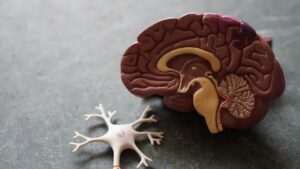
The suprachiasmatic nucleus is a small cluster of approximately 20,000 neurons located directly above the optic chiasm in the hypothalamus, positioning it to receive direct light signals from the retina before any other brain region. This anatomical arrangement makes the SCN exquisitely sensitive to photoperiod—the length and intensity of daylight—which it uses to entrain (synchronise) the body’s internal clock to the external 24-hour day. Research published in the Physiological Reviews by Reppert and Weaver (2002) describes how the SCN generates its own intrinsic rhythm even in isolation, but requires light input to maintain precise synchronisation with the environment.

When light enters your eyes in the morning, specialised retinal cells containing the photopigment melanopsin send signals directly to the SCN via the retinohypothalamic tract. This light signal triggers the SCN to suppress melatonin production and increase cortisol release, raising body temperature and promoting wakefulness and alertness. Conversely, as daylight fades and darkness falls, the absence of light signals allows melatonin production to rise, core body temperature to drop, and sleep drive to build. This daily oscillation is not a response to fatigue, but an active timing programme orchestrated by the SCN.
Circadian Hormone and Metabolic Rhythm Across the 24-Hour Day
Key hormonal and metabolic shifts controlled by the suprachiasmatic nucleus (SCN) as it responds to light-dark cycles
Data synthesised from circadian physiology literature | Georgian Medical Journal News
Light, Melatonin, and the Pineal Gland
The pineal gland, a pea-sized endocrine organ located in the centre of the brain, is responsible for producing melatonin—the hormone that drives sleep timing and quality. However, the pineal gland does not independently decide when to make melatonin; instead, it receives timing instructions from the SCN. When the SCN detects darkness, it sends a chemical signal (primarily through noradrenaline release from sympathetic nerve terminals) that activates the enzyme aralkylamine N-acetyltransferase (AANAT) in the pineal gland, which catalyses melatonin synthesis. Light directly inhibits this pathway, which is why even brief light exposure at night—from phone screens, televisions, or bright LEDs—can suppress melatonin and delay sleep onset.
Studies using light spectral analysis have shown that blue light (wavelengths 460–480 nm) is particularly potent at suppressing melatonin, more so than other visible wavelengths. This is because melanopsin in retinal cells is most sensitive to blue light. A landmark study published in the Proceedings of the National Academy of Sciences by Gooley et al. (2011) demonstrated that even dim blue light exposure for 2 hours in the evening suppressed melatonin by approximately 50%, and delayed melatonin onset by 1.5 hours. This has profound implications for sleep timing in modern societies where evening screen use is ubiquitous.
Peripheral Clocks: Every Organ Keeps Time
While the SCN is the master clock, research over the past two decades has revealed that virtually every cell and tissue in the body contains circadian “clock genes”—genes that oscillate with a roughly 24-hour period independently of the SCN. The core clock genes include Period (Per1, Per2, Per3), Cryptochrome (Cry1, Cry2), Clock, and Bmal1. These genes encode proteins that form self-sustaining feedback loops, allowing each tissue to generate its own circadian rhythm. However, these peripheral clocks are normally synchronised to the master SCN clock through hormonal signals (primarily melatonin and cortisol) and neural signals, ensuring that all tissues tick in unison.
The practical consequence is that metabolic function is not constant across the day. Research in Nature Metabolism and related journals has documented time-of-day-dependent variations in glucose metabolism, lipid synthesis, muscle protein turnover, and hormone secretion. For example, studies show that insulin secretion and glucose tolerance are highest in the morning and decline progressively through the day—a phenomenon called “glucose tolerance rhythm.” Muscle strength and endurance peak in late afternoon. Liver gluconeogenesis and fat oxidation are elevated at night. These rhythms exist in part because clock genes in the pancreas, muscle, and liver directly regulate the expression of metabolic enzymes.
Disruption of circadian synchrony between the SCN and peripheral tissues is associated with increased risk of obesity, type 2 diabetes, cardiovascular disease, and depression, according to a growing body of epidemiological and experimental research.
— Based on findings from multiple circadian research programmes at universities and research institutes worldwide
Food Timing, Shift Work, and Circadian Desynchrony
While light is the dominant signal for entraining the SCN, food intake and physical activity are important “secondary clocks” that can shift peripheral tissue rhythms. Eating late at night, or consuming meals at irregular times, can gradually shift the phase of peripheral clocks in the liver and digestive tract while the SCN remains anchored to the light-dark cycle. This internal desynchronisation—misalignment between the master clock and peripheral clocks—is thought to contribute to metabolic dysfunction. Research in the American Journal of Physiology by Arble et al. (2009) showed that mice fed exclusively during the light phase (their inactive period) gained significantly more weight than mice fed during the dark phase (their active period), despite identical calorie intake, and this effect was mediated by circadian desynchronisation.
Shift workers experience an even more severe form of circadian disruption. Those working overnight shifts face a fundamental conflict: the SCN remains entrained to the external light-dark cycle (daytime), but the forced activity and feeding schedule of shift work attempt to entrain peripheral tissues to the opposite cycle. This leaves shift workers in a state of chronic internal desynchronisation. Studies have consistently linked shift work to increased incidence of metabolic syndrome, cardiovascular disease, and certain cancers. A review in the Occupational Medicine by Vyas et al. (2012) found that shift workers had a 40% increased risk of metabolic syndrome and a 30% increased risk of cardiovascular disease, in part due to chronic circadian disruption.
What this means
Frequently asked questions
What is the suprachiasmatic nucleus, and why does it matter?
The suprachiasmatic nucleus (SCN) is a cluster of roughly 20,000 neurons in the hypothalamus that acts as your body’s master clock. It receives light signals from your eyes and uses them to synchronise circadian rhythms across your entire body, controlling sleep, hormone release, metabolism, and mood. Without a functioning SCN, circadian rhythms become desynchronised, leading to poor sleep, metabolic dysfunction, and mood disorders.
Why does blue light from phones and screens disrupt sleep?
Melanopsin, a light-sensitive pigment in the retina, is most sensitive to blue light (wavelengths 460–480 nm). When you view a bright screen emitting blue light in the evening, this signal reaches the SCN and suppresses melatonin production, delaying sleep onset by 1–2 hours. Even dim blue light exposure for a few hours in the evening can suppress melatonin by roughly 50%, according to peer-reviewed research.
Can eating late at night really affect weight and metabolism?
Yes. Eating at times misaligned with your circadian rhythm (e.g., large meals late at night when your digestive system is normally inactive) can shift the phase of peripheral metabolic clocks in the liver and pancreas, creating internal desynchronisation. Animal studies show that identical calorie intake consumed during the inactive phase leads to greater weight gain than the same intake during the active phase, because metabolic efficiency is lower when feeding is circadian-misaligned.
As societies become increasingly aware of the health consequences of irregular sleep and shift work, circadian science is moving from the laboratory into clinical practice and public health policy. The recognition that the body is not metabolically or physiologically constant across the 24-hour day—and that light, food timing, and activity schedules are powerful modulators of health—opens new avenues for prevention and treatment of metabolic and neuropsychiatric disease. Simple interventions aligned with circadian biology, such as consistent sleep schedules, morning light exposure, and time-restricted eating, may offer outsized benefits for both individual and population health.
Source: Your body has a master clock hidden deep in the brain — circadian physiology synthesis
🗺️ Find certified Georgian healthcare providers: sheniekimi.ge — Georgia Health Map · 998 clinics · 6,600+ doctors · 2,296 pharmacies
Was this article helpful?
Disclaimer. This article is health journalism intended for general information and education. It is not medical advice and is not a substitute for professional diagnosis or treatment. Always consult a qualified healthcare provider about your individual circumstances. Full disclaimer →
Related Coverage


Editorial standards. This article was produced under the GMJ News editorial process, with oversight by the GMJ Editorial Board. Our editorial process. Spotted an error? Contact the editorial team.