


By using this site, you agree to the Privacy Policy and Terms of Use.
Accept
GMJ NewsGMJ NewsGMJ News
  • Latest News
    • GMJ Briefs
  • Podcast & Media
    • Podcast Episodes
    • GMJ Audio
    • GMJ Videos
  • Research Digest
    • New Studies
    • Georgian Research
    • Data & Numbers
  • Policy & Systems
    • Health Policy
    • Quality & Safety
    • Migration & Health
    • Global Health
  • Practice
    • Clinical Updates
    • Case Discussions
    • Pharmacy & Prescribing
    • Ingredients A-Z
  • Perspectives
    • Editorial
    • Explainers
    • Voices
    • Letters
  • GMJ Articles
    • Vol. 1 Issue 2 (2026)
    • Vol. 1 Issue 1 (2026)
    • Pre-Launch Articles (2025)
  • Read the Journal →
  • About GMJ News
Notification Show More
Font ResizerAa
GMJ NewsGMJ News
Font ResizerAa
  • Latest News
    • GMJ Briefs
  • Podcast & Media
    • Podcast Episodes
    • GMJ Audio
    • GMJ Videos
  • Research Digest
    • New Studies
    • Georgian Research
    • Data & Numbers
  • Policy & Systems
    • Health Policy
    • Quality & Safety
    • Migration & Health
    • Global Health
  • Practice
    • Clinical Updates
    • Case Discussions
    • Pharmacy & Prescribing
    • Ingredients A-Z
  • Perspectives
    • Editorial
    • Explainers
    • Voices
    • Letters
  • GMJ Articles
    • Vol. 1 Issue 2 (2026)
    • Vol. 1 Issue 1 (2026)
    • Pre-Launch Articles (2025)
  • Read the Journal →
  • About GMJ News
Follow US
GMJ News > GMJ Briefs > Johns Hopkins Study Uncovers Synergistic Driving Impairment Risk from Cannabis-Alcohol Combinations

Johns Hopkins Study Uncovers Synergistic Driving Impairment Risk from Cannabis-Alcohol Combinations

GMJ
Last updated: 17/06/2026 08:08
By
Prof. Giorgi Pkhakadze
Share
1 Min Read
Scientific diagram showing increased driving impairment levels when cannabis edibles are combined with alcohol
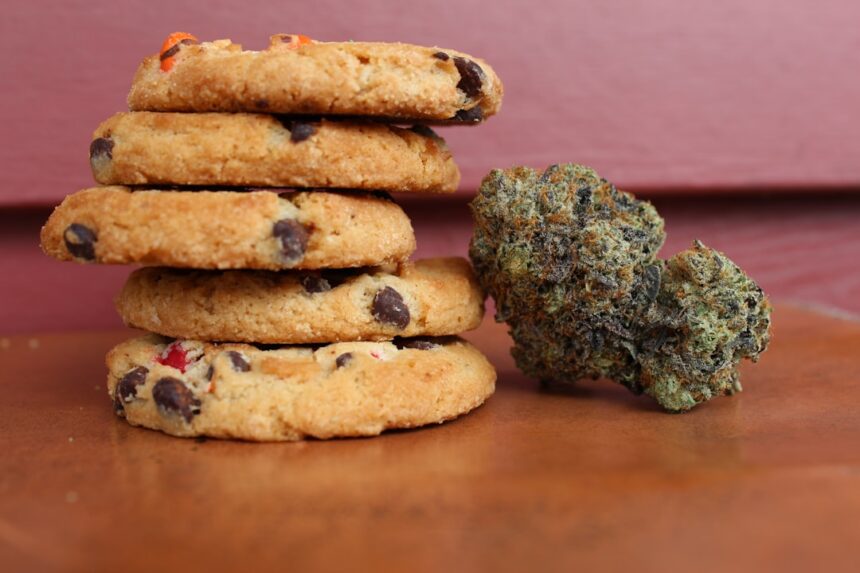
New Johns Hopkins research reveals that combining cannabis edibles with alcohol increases driving impairment 2.8 times beyond alcohol alone. Standard field sobriety tests fail to detect this hidden impairment risk. — Photo: Margo Amala / Pexels
SHARE
1 min read|133 words

A groundbreaking study from Johns Hopkins Bloomberg School of Public Health has identified a critical road safety concern: combining cannabis edibles with alcohol produces driving impairment levels 2.8 times greater than alcohol consumption alone. Led by Dr. Ryan Vandrey, the controlled research examined 22 participants through driving simulations after consuming various substance combinations, revealing that cannabis and alcohol interact synergistically rather than additively. Participants using both substances demonstrated increased lane weaving, slower reaction times, and compromised vehicle control. The findings carry significant implications as cannabis legalization expands across multiple jurisdictions. Perhaps most alarming, standard field sobriety tests—the primary assessment tool for law enforcement—consistently failed to detect impairment from cannabis edibles. This detection gap presents a substantial public health challenge for traffic safety enforcement and prevention strategies. Read the full article on GMJ Newsroom.

Was this article helpful?

GMJ Brief · Announcement

📰 Read the full article: Cannabis Edibles and Alcohol Create Hidden Impairment Risk for Drivers, Johns Hopkins Study Reveals →

Share This Article
Facebook LinkedIn Bluesky Copy Link Print
GMJ
ByProf. Giorgi Pkhakadze
Follow:
Prof. Giorgi Pkhakadze, MD, MPH, PhD, is Editor-in-Chief of the Georgian Medical Journal and Chair of the Public Health Institute of Georgia (PHIG). He is Professor and Head of the Department of Social and Behavioural Sciences at David Tvildiani Medical University, and Secretary/Treasurer of the UEMS Section of Public Health. ORCID: 0000-0001-7609-4515.

Submit Your Paper →

Georgia's peer-reviewed open-access medical journal. No APC until January 2027.
Submit Manuscript →
Immune Changes and RNA Patterns Predict Early Colorectal Cancer Risk in Precancerous Lesions

New research reveals immune system changes and RNA patterns that predict colorectal…

Oxford Study Unravels Inflammatory Bowel Disease as Multiple Distinct Conditions

Oxford-led research reveals IBD comprises multiple distinct diseases with different mechanisms. Discovery…

Surgical Menopause Linked to Severe Urogenital Symptoms Compared to Natural Menopause

New research shows surgical menopause leads to more severe genitourinary symptoms than…

Submit Your Paper to GMJ

No APC until January 2027.
Submit Manuscript →

You Might Also Like

Infographic showing global foodborne disease statistics with focus on children's health risks

WHO Warns: Young Children Face Triple Risk from Contaminated Food

By
Prof. Giorgi Pkhakadze
18/06/2026

Ebola Outbreak in Eastern Congo Surpasses 1,000 Confirmed Cases

By
Prof. Giorgi Pkhakadze
23/06/2026

SITUATION BRIEF: Bundibugyo Ebola Outbreak, Democratic Republic of Congo

By
Prof. Giorgi Pkhakadze
31/05/2026
Global HealthPolicy & Systems

WHO declares new Ebola outbreak international emergency as displacement crisis fuels transmission

By
Prof. Giorgi Pkhakadze
26/05/2026
Facebook Twitter Youtube Instagram
Company
  • Privacy Policy
  • Contact US
  • GMJ Journal
  • Submit Manuscript
  • Editorial Team
  • Register at GMJ
  • Terms of Use

Subscribe to GMJ News — Click here

Join Community
© 2026 Georgian Medical Journal (GMJ). Published by the Public Health Institute of Georgia (PHIG). All rights reserved.
Welcome Back!

Sign in to your account

Username or Email Address
Password

Lost your password?

Not a member? Sign Up
