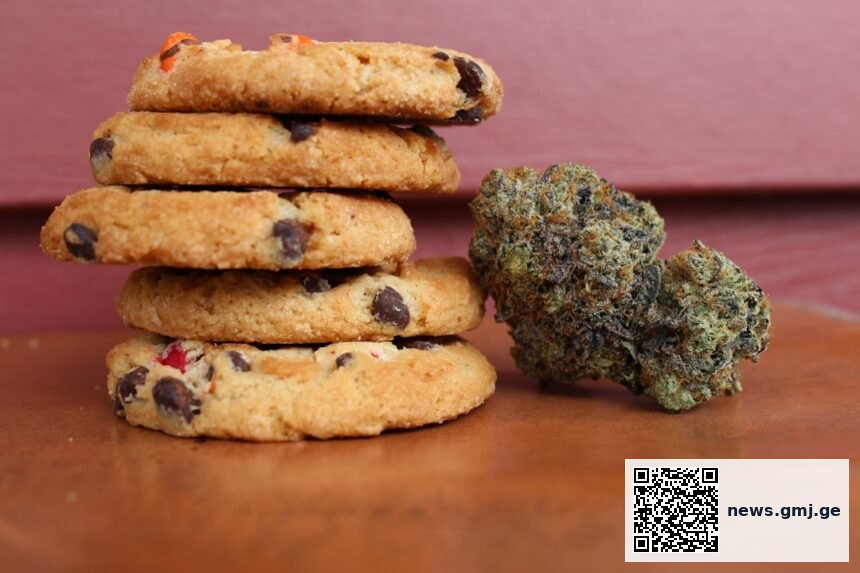
A new study from Johns Hopkins Bloomberg School of Public Health reveals that combining cannabis edibles with alcohol significantly increases driving impairment beyond what either substance causes alone, creating a hidden road safety risk that standard field sobriety tests often fail to detect.
Driving Impairment Levels by Substance Combination
Mean driving composite scores, higher numbers indicate greater impairment
Source: Johns Hopkins Bloomberg School of Public Health, 2026 | Georgian Medical Journal News
Combined Substances Create Amplified Risk
The research, published in Drug and Alcohol Dependence, examined 22 participants who completed driving simulations after consuming different combinations of alcohol and THC edibles. Dr. Ryan Vandrey, professor of psychiatry and behavioral sciences at Johns Hopkins University School of Medicine, led the controlled study that measured precise impairment levels across multiple scenarios.

Participants who consumed both a 15mg THC edible and alcohol showed dramatically worse driving performance than those who used either substance alone. The combination led to increased weaving, slower reaction times, and difficulty maintaining lane position during the 90-minute driving simulation.
“We found that the effects of cannabis and alcohol are not simply additive—they appear to interact in ways that significantly amplify impairment,” according to the study authors. This finding challenges assumptions about substance interaction effects and has immediate implications for road safety policy.
Field Sobriety Tests Miss Cannabis Impairment
Perhaps most concerning for law enforcement and public safety, standard field sobriety tests failed to reliably detect impairment when participants had used cannabis edibles. The National Highway Traffic Safety Administration currently relies on these tests as primary tools for roadside impairment assessment.
While participants showed clear impairment on driving simulators after consuming THC edibles, their performance on walk-and-turn and one-leg-stand tests remained largely normal. This detection gap creates a significant challenge for identifying impaired drivers who have consumed cannabis, particularly when no obvious signs of alcohol use are present.
The research team measured blood THC levels and found they poorly correlated with actual driving impairment, unlike alcohol where blood concentration provides reliable impairment indicators. This finding aligns with previous research from the University of Colorado that documented similar detection challenges with cannabis-impaired drivers.
Rising Cannabis Use Amplifies Safety Concerns
The study’s findings come as cannabis legalization continues expanding across the United States, with 38 states now permitting medical use and 21 allowing recreational consumption. Centers for Disease Control and Prevention data shows cannabis use among adults has doubled in the past decade, making drug-impaired driving an increasingly urgent public health issue.
Cannabis edibles present particular challenges because they take 30-90 minutes to produce peak effects, leading some users to consume additional doses before feeling the initial impact. This delayed onset can result in unexpectedly high THC blood levels hours after consumption, precisely when individuals might decide to drive.
The Johns Hopkins research also examined how long impairment persists after edible consumption. Participants showed measurable driving deficits up to 4 hours after consuming 15mg THC edibles, well beyond the timeframe many users expect. This extended impairment window significantly increases the risk of drug-involved traffic accidents as cannabis becomes more socially acceptable and widely available.
Law Enforcement Adapts to New Detection Challenges
Police departments nationwide are implementing new training programs and technologies to address cannabis-impaired driving detection gaps. Drug Recognition Expert (DRE) programs, endorsed by the International Association of Chiefs of Police, provide specialized training to identify signs of drug impairment beyond alcohol.
Some states are piloting oral fluid testing devices that can detect recent cannabis use, though these tools measure presence rather than impairment level. The challenge remains establishing scientifically-validated impairment thresholds for THC similar to the 0.08% blood alcohol standard for drunk driving prosecutions.
Research from the University of Düsseldorf suggests that unlike alcohol, THC impairment varies significantly based on individual tolerance, consumption method, and recent use patterns, making standardized limits particularly challenging to establish.
“Participants who used both cannabis edibles and alcohol showed 2.8 times greater driving impairment than those using alcohol alone, yet performed normally on standard field sobriety tests.”
— Dr. Ryan Vandrey, Johns Hopkins University School of Medicine (Drug and Alcohol Dependence, 2026)
Key takeaways
- Cannabis edibles combined with alcohol increase driving impairment 2.8 times beyond alcohol alone
- Standard field sobriety tests fail to detect cannabis-related driving impairment reliably
- Driving deficits from 15mg THC edibles persist up to 4 hours after consumption
- Blood THC levels correlate poorly with actual impairment, unlike alcohol concentrations
- 38 US states now permit medical cannabis use, with 21 allowing recreational consumption
Frequently asked questions
How long should someone wait to drive after consuming cannabis edibles?
The Johns Hopkins study found measurable driving impairment up to 4 hours after consuming a 15mg THC edible. Higher doses or individual sensitivity differences could extend this timeframe significantly.
Why don’t field sobriety tests detect cannabis impairment?
Cannabis affects the brain differently than alcohol, impairing reaction time and decision-making while leaving physical coordination relatively intact. Standard tests focus on balance and coordination rather than cognitive processing speed.
Can police still arrest drivers impaired by cannabis?
Yes, driving under the influence of any substance that impairs ability remains illegal in all states. However, prosecution can be challenging without reliable roadside detection methods or established impairment thresholds for THC.
As cannabis legalization continues expanding and edible products become more potent and accessible, the Johns Hopkins findings highlight an urgent need for improved impairment detection methods and public education about combination risks. Law enforcement agencies, policymakers, and public health officials must collaborate to develop evidence-based approaches that protect road safety while accommodating evolving cannabis policies across the United States.
Source: Hidden driving danger when edible cannabis and alcohol mix
Was this article helpful?
Disclaimer. This article is health journalism intended for general information and education. It is not medical advice and is not a substitute for professional diagnosis or treatment. Always consult a qualified healthcare provider about your individual circumstances. Full disclaimer →
Related Coverage




Editorial standards. This article was produced under the GMJ News editorial process, with oversight by the GMJ Editorial Board. Our editorial process. Spotted an error? Contact the editorial team.