By using this site, you agree to the Privacy Policy and Terms of Use.
Accept
GMJ NewsGMJ NewsGMJ News
  • Latest News
    • GMJ Briefs
  • Podcast & Media
    • Podcast Episodes
    • GMJ Audio
    • GMJ Videos
  • Research Digest
    • New Studies
    • Georgian Research
    • Data & Numbers
  • Policy & Systems
    • Health Policy
    • Quality & Safety
    • Migration & Health
    • Global Health
  • Practice
    • Clinical Updates
    • Case Discussions
    • Pharmacy & Prescribing
    • Ingredients A-Z
  • Perspectives
    • Editorial
    • Explainers
    • Voices
    • Letters
  • Health Topics
  • GMJ Articles
    • Vol. 1 Issue 2 (2026)
    • Vol. 1 Issue 1 (2026)
    • Pre-Launch Articles (2025)
  • Read the Journal →
  • About GMJ News
Notification Show More
Font ResizerAa
GMJ NewsGMJ News
Font ResizerAa
  • Latest News
    • GMJ Briefs
  • Podcast & Media
    • Podcast Episodes
    • GMJ Audio
    • GMJ Videos
  • Research Digest
    • New Studies
    • Georgian Research
    • Data & Numbers
  • Policy & Systems
    • Health Policy
    • Quality & Safety
    • Migration & Health
    • Global Health
  • Practice
    • Clinical Updates
    • Case Discussions
    • Pharmacy & Prescribing
    • Ingredients A-Z
  • Perspectives
    • Editorial
    • Explainers
    • Voices
    • Letters
  • Health Topics
  • GMJ Articles
    • Vol. 1 Issue 2 (2026)
    • Vol. 1 Issue 1 (2026)
    • Pre-Launch Articles (2025)
  • Read the Journal →
  • About GMJ News
Follow US
GMJ News > GMJ Briefs > By the Numbers: The Scale of Yemen’s Food Security Crisis

By the Numbers: The Scale of Yemen’s Food Security Crisis

GMJ
Last updated: 25/06/2026 12:07
By
Prof. Giorgi Pkhakadze
Share
1 Min Read
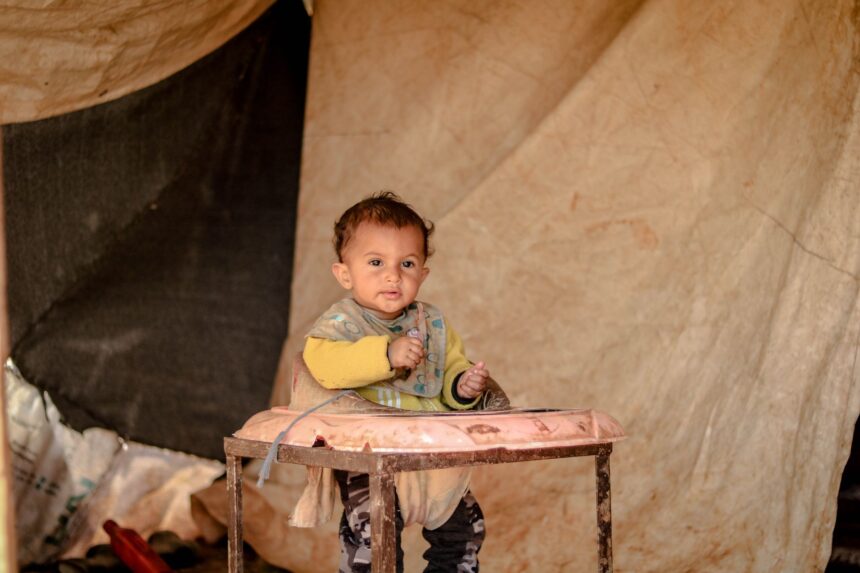
Children receiving nutrition assistance at a Yemen healthcare facility
Nearly 11.2 million Yemenis face severe acute food insecurity as international humanitarian funding drops 60% below 2025 levels. Child malnutrition rates exceed WHO emergency thresholds in 12 governorates, threatening generational health impacts. — Photo: Ahmed akacha / Pexels
SHARE
1 min read|126 words

The scope of Yemen’s humanitarian emergency is staggering. According to the June 2026 Integrated Food Security Phase Classification analysis, 11.2 million people in government-controlled areas cannot access adequate food without external assistance. Breaking down the severity: 7.3 million face stressed conditions (IPC Phase 2), 6.2 million are in crisis (IPC Phase 3), and 5 million are in emergency phase (IPC Phase 4). This crisis has deepened dramatically due to a 60% reduction in international humanitarian funding since 2025. The UN Office for the Coordination of Humanitarian Affairs reports that Yemen’s 2026 Humanitarian Response Plan has received only 28% of its required $4.3 billion funding. Consequently, 127 health facilities have closed and nutrition programs serving 2.8 million children have been suspended. These statistics underscore the urgent need for sustained international support to prevent further deterioration. Read the full article on GMJ Newsroom.

Was this article helpful?

GMJ Brief · Key Finding

📰 Read the full article: Yemen Food Crisis: 11.2 Million Face Acute Hunger as International Aid Funding Cuts Continue →

Share This Article
Facebook LinkedIn Bluesky Copy Link Print
GMJ
ByProf. Giorgi Pkhakadze
Follow:
Prof. Giorgi Pkhakadze, MD, MPH, PhD, is Editor-in-Chief of the Georgian Medical Journal and Chair of the Public Health Institute of Georgia (PHIG). He is Professor and Head of the Department of Social and Behavioural Sciences at David Tvildiani Medical University, and Secretary/Treasurer of the UEMS Section of Public Health. ORCID: 0000-0001-7609-4515.

Submit Your Paper →

Georgia's peer-reviewed open-access medical journal. No APC until January 2027.
Submit Manuscript →
Coffee’s Dose-Response Puzzle: Why 2–3 Cups Daily May Shield Against Dementia

Moderate coffee consumption—2 to 3 cups daily—is associated with the lowest dementia…

Bedroom Light at Night Linked to Metabolic Harm: What the Evidence Shows

Moderate bedroom light exposure triggers measurable metabolic harm within a single night…

Creatine and Kidney Damage: What the Evidence Actually Shows

A 2025 systematic review of 21 studies and analysis of 685 clinical…

Submit Your Paper to GMJ

No APC until January 2027.
Submit Manuscript →

You Might Also Like

Brain lipid profiles in women and men with and without Alzheimer's disease

Optimal Omega-3 Dosing for Brain Health: New Meta-Analysis Clarifies Prevention Over Treatment

By
Prof. Giorgi Pkhakadze
08/08/2026
Diphtheria prevention through DTP vaccine coverage assessment chart showing vaccination effectiveness across population groups

DTP Vaccine 95% Effective, Yet Americas Fall Short of Protective Coverage

By
Prof. Giorgi Pkhakadze
24/07/2026
Medical illustration showing prostate gland anatomy and common symptoms of prostate cancer

Key Finding: Prostate Cancer Affects One in Eight Men: Early Symptoms and Detection Guidelines

By
Prof. Giorgi Pkhakadze
28/06/2026
Medical chart showing STI prevalence rates among HIV-positive patients in China

Landmark 14-Year Study Exposes Critical Gaps in HIV-STI Integrated Care

By
Prof. Giorgi Pkhakadze
31/05/2026
Facebook Twitter Youtube Instagram
Company
  • Privacy Policy
  • Contact US
  • GMJ Journal
  • Submit Manuscript
  • Editorial Team
  • Register at GMJ
  • Terms of Use

Subscribe to GMJ News — Click here

Join Community
© 2026 Georgian Medical Journal (GMJ). Published by the Public Health Institute of Georgia (PHIG). All rights reserved.
Welcome Back!

Sign in to your account

Username or Email Address
Password

Lost your password?

Not a member? Sign Up