By using this site, you agree to the Privacy Policy and Terms of Use.
Accept
GMJ NewsGMJ NewsGMJ News
  • Latest News
    • GMJ Briefs
  • Podcast & Media
    • Podcast Episodes
    • GMJ Audio
    • GMJ Videos
  • Research Digest
    • New Studies
    • Georgian Research
    • Data & Numbers
  • Policy & Systems
    • Health Policy
    • Quality & Safety
    • Migration & Health
    • Global Health
  • Practice
    • Clinical Updates
    • Case Discussions
    • Pharmacy & Prescribing
    • Ingredients A-Z
  • Perspectives
    • Editorial
    • Explainers
    • Voices
    • Letters
  • Health Topics
  • GMJ Articles
    • Vol. 1 Issue 2 (2026)
    • Vol. 1 Issue 1 (2026)
    • Pre-Launch Articles (2025)
  • Read the Journal →
  • About GMJ News
Notification Show More
Font ResizerAa
GMJ NewsGMJ News
Font ResizerAa
  • Latest News
    • GMJ Briefs
  • Podcast & Media
    • Podcast Episodes
    • GMJ Audio
    • GMJ Videos
  • Research Digest
    • New Studies
    • Georgian Research
    • Data & Numbers
  • Policy & Systems
    • Health Policy
    • Quality & Safety
    • Migration & Health
    • Global Health
  • Practice
    • Clinical Updates
    • Case Discussions
    • Pharmacy & Prescribing
    • Ingredients A-Z
  • Perspectives
    • Editorial
    • Explainers
    • Voices
    • Letters
  • Health Topics
  • GMJ Articles
    • Vol. 1 Issue 2 (2026)
    • Vol. 1 Issue 1 (2026)
    • Pre-Launch Articles (2025)
  • Read the Journal →
  • About GMJ News
Follow US
GMJ News > Practice > Clinical Updates > Bedroom Light at Night Linked to Metabolic Harm: What the Evidence Shows
Clinical UpdatesNew StudiesPracticeResearch Digest

Bedroom Light at Night Linked to Metabolic Harm: What the Evidence Shows

GMJ
Last updated: 12/07/2026 13:29
By
GMJ Practice Desk
Share
9 Min Read
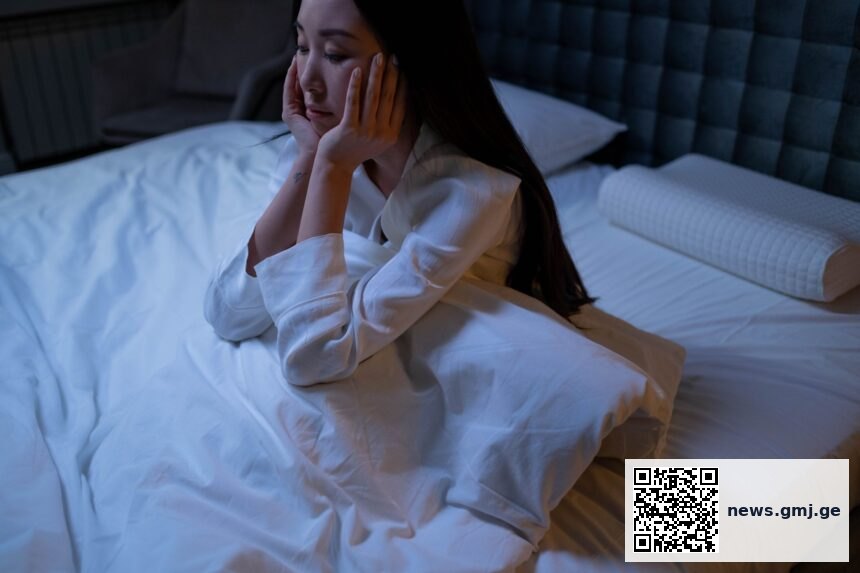
Comparison of light intensity levels (lux) in common environments and their metabolic risk thresholds for sleepIllustrative image · Photo by cottonbro studio on Pexels (Pexels License)
Moderate bedroom light exposure triggers measurable metabolic harm within a single night and may triple type 2 diabetes risk over years, according to controlled laboratory and population cohort studies. Evidence suggests most people's sleep environments exceed the light threshold where measurable cardiometabolic effects occur. — Photo by cottonbro studio on Pexels (Pexels License)
SHARE
6 min read|1,135 words
✓ Reviewed by GMJ News Editorial Team

🟠 Moderate Evidence

Contents
    • Key takeaways
      • Study at a Glance
      • Bedroom Light Intensity: Context and Risk Thresholds
  • Single-Night Effect: The Immediate Metabolic Response
  • Population Evidence: Long-Term Diabetes Risk
  • The Gap Between Perception and Measurement
    • What this means
  • Frequently asked questions
    • Is the light effect stronger in older adults than younger people?
    • Does blue light matter differently than other wavelengths?
    • Can someone achieve too-dark sleeping conditions?

A single night of moderate ambient light in the bedroom—equivalent to a hallway nightlight or bedside lamp—triggers measurable changes in insulin sensitivity and heart rate variability, according to research published in the Proceedings of the National Academy of Sciences. Population-level evidence suggests that cumulative bedroom light exposure over years may increase type 2 diabetes risk threefold in older adults, raising questions about how standard home environments affect cardiometabolic health.

Key takeaways

  • Moderate bedroom light (100 lux) disrupts insulin sensitivity, heart rate, and autonomic nervous system balance after a single night
  • Long-term bedroom light exposure of 5 lux or more was associated with a 3.74-fold increased diabetes incidence in a 42-month Japanese cohort study
  • Most people believe their bedrooms are dark enough, but metabolic evidence suggests the threshold for measurable harm is substantially lower than typical home lighting

Study at a Glance

Primary source Proceedings of the National Academy of Sciences
Study design Controlled laboratory experiment + population cohort follow-up
Laboratory sample N = 20 healthy adults (one night each condition)
Cohort sample N = 678 elderly Japanese adults without baseline diabetes
Follow-up duration Median 42 months
3.74×
Increased diabetes incidence rate in participants with bedroom light averaging 5 lux or more, compared to those below 5 lux (Obayashi cohort, 42-month follow-up)

Bedroom Light Intensity: Context and Risk Thresholds

Light levels in common environments and diabetes risk thresholds, lux scale

Direct sunlight
50,000
Bright office
500
Evening living room
50
Hallway nightlight
~5
Lab ‘dark’ condition
<3

Source: Mason et al., PNAS 2022; Obayashi et al., Sleep Medicine 2020 | Georgian Medical Journal News

Submit Your Paper
GMJ_Submit_Banner

Single-Night Effect: The Immediate Metabolic Response

Researchers at Northwestern University conducted a controlled laboratory study in which 20 healthy adults slept under two different light conditions on separate nights, according to Mason and colleagues’ 2022 publication in the Proceedings of the National Academy of Sciences. One night involved sleeping in a dimly lit room (less than 3 lux—essentially darkness), while the other involved sleeping under moderate ambient light equivalent to approximately 100 lux, roughly the brightness of a hallway nightlight or a bedside lamp left on.

🎙️ Related Podcast Episodes
🎧 #39 | GMJ Podcast | Acne and Metabolic Dysfunction — Insulin Resistance, IGF-1, and Clinical Implications · 15m
🎧 #38 | GMJ Podcast | Acne and Metabolic Dysfunction — Insulin Resistance, IGF-1, and Clinical Implications · 21m
🎧 #32 | GMJ Podcast | Launch of the Georgian Medical Journal — A New International Platform for Medical Science · 5m
🎬 GMJ Video Series | Rare Case: Lung Cancer & Tuberculosis Coexistence
🎧 #53 | GMJ Podcast | Palliative Care in Georgia — Health System Gaps, Access Barriers, and Policy Implications · 16m

The results were striking for a single night of exposure. The 100 lux condition produced measurable unfavorable changes by the next morning: insulin resistance increased, nighttime heart rate elevated, and heart rate variability decreased—a sign of heightened sympathetic nervous system activation, which indicates a stressed physiological state. These findings suggest that even one night of moderately lit sleep disrupts metabolic regulation and autonomic nervous system balance in ways typically associated with cardiovascular risk.

Population Evidence: Long-Term Diabetes Risk

Whether single-night metabolic disturbances translate into chronic disease risk remained an open question—until population-level data provided an answer. Obayashi and colleagues examined the HEIJO-KYO cohort of 678 elderly Japanese adults with no diabetes at baseline, according to their 2020 study published in Sleep Medicine. Bedroom light intensity was measured objectively over consecutive nights, and participants were followed for a median of 42 months.

Over that period, 19 participants developed type 2 diabetes. The 128 participants whose bedrooms averaged 5 lux or more had an incidence rate ratio of 3.74 (95% confidence interval 1.55 to 9.05) compared with the 550 participants whose bedrooms averaged below 5 lux. When the risk threshold was lowered to 3 lux, the relationship remained statistically significant at 2.74 times increased incidence. This suggests a dose-response relationship: even modest ambient light during sleep accumulates metabolic consequences over years.

The Gap Between Perception and Measurement

A critical observation underlies these findings: most people subjectively believe their bedrooms are dark enough. Yet objective light measurement reveals a discrepancy between perception and reality. A hallway nightlight registers approximately 5 lux—the threshold at which the Obayashi cohort showed significantly elevated diabetes risk. Most standard bedroom environments, including those with door gaps, window light leakage, or devices left on, easily exceed this level.

For clinical and public health contexts, this raises a practical question about sleep environment standards. Current sleep hygiene guidance often emphasizes darkness but may not quantify the precise light intensity that triggers measurable metabolic harm. The evidence suggests that thresholds below what most people consider adequately dark already produce detectable adverse effects on cardiometabolic markers—both acutely and chronically.

A single night under 100 lux (nightlight brightness) produces measurable insulin resistance, elevated heart rate, and reduced heart rate variability. Over 42 months, cumulative bedroom light exposure of 5 lux or more was associated with a 3.74-fold increase in type 2 diabetes incidence in older Japanese adults without baseline diabetes.

— Mason et al., Northwestern University (Proceedings of the National Academy of Sciences, 2022) and Obayashi et al. (Sleep Medicine, 2020)

What this means

For patients: Consider objective assessment of bedroom light levels, particularly if you have family history of diabetes or metabolic dysfunction. Simple interventions—blackout curtains, removing LED indicators from devices, securing door gaps—may have metabolic benefit. This is especially relevant for older adults, who show increased sensitivity to light-induced metabolic disruption.
For clinicians: Sleep environment assessment could be incorporated into cardiometabolic risk evaluation and diabetes prevention counseling, particularly for patients with prediabetes or metabolic syndrome. Objective light measurement is now inexpensive and feasible for research and clinical settings.
For policymakers: Sleep environment standards—including quantified light thresholds—merit consideration in building codes, care facility design, and public health guidance on noncommunicable disease prevention. Bedroom light exposure represents a modifiable environmental risk factor with documented metabolic consequences.

Frequently asked questions

Is the light effect stronger in older adults than younger people?

The Obayashi cohort consisted of elderly Japanese participants (average age approximately 68 years). The Mason laboratory study was conducted in 20 healthy younger adults. The metabolic effects appeared consistent across both groups, but age-stratified comparisons were not explicitly reported. Older adults may have increased vulnerability due to age-related changes in circadian regulation and metabolic control.

Does blue light matter differently than other wavelengths?

Neither study explicitly distinguished between blue light and other wavelengths. The Mason study used standard room lighting without spectral analysis; the Obayashi study measured total light intensity. Blue light has been shown in other research to have stronger circadian suppression effects, but the metabolic impact of specific wavelengths during sleep remains understudied in population samples.

Can someone achieve too-dark sleeping conditions?

There is no evidence of harm from sleeping in complete darkness. The relevant comparison in both studies was between dim light (below 3 lux) and moderate light (100 lux or 5 lux). Complete darkness (0 lux) did not appear in either study and has no documented metabolic downsides for sleep quality or circadian health.

The evidence linking bedroom light to cardiometabolic disruption bridges laboratory physiology and population epidemiology—a design combination that strengthens confidence in the finding. Future research should examine whether light-reduction interventions prevent diabetes and other metabolic disease in at-risk populations, and whether effects vary by age, sex, and genetic susceptibility. In the meantime, the threshold for ‘dark enough’ appears to be darker than most people’s current sleep environments—with measurable health consequences for those who sleep under ambient light.

Source: Mason et al., Proceedings of the National Academy of Sciences, 2022 and Obayashi et al., Sleep Medicine, 2020

Was this article helpful?

Disclaimer. This article is health journalism intended for general information and education. It is not medical advice and is not a substitute for professional diagnosis or treatment. Always consult a qualified healthcare provider about your individual circumstances. Full disclaimer →

Related Coverage

Creatine and Kidney Damage: What the Evidence Actually ShowsAug 14, 2026
How neurotransmitters orchestrate mood, sleep, and cognition: a biochemical primerAug 14, 2026
Vitamin D's Role in Alzheimer's Tau Accumulation: New Evidence from Framingham Heart StudyAug 14, 2026
Whey protein triggers substantial insulin response despite low carbohydrate content, research showsAug 14, 2026
Explore more on this topic:🧭 Diabetes hub🧭 Cardiovascular Disease hub🧭 Systemic Lupus Erythematosus (SLE) hub
🔥 Most read this week
1Creatine Kidney Damage Myth Debunked by Major Safety Review of 26,000 Participants
2Why High-Dose Vitamin B12 Supplements Work Despite Poor Absorption
3Magnesium Form May Not Matter for Cognitive Benefits, New Meta-Analysis Suggests
4How Coffee Brewing Method Affects Cholesterol: The Science Behind Diterpenes and Filters
Related reference
  • Type 2 Diabetes · Condition
  • Insulin · Drug
  • Iron · Ingredient
PG
Editorial oversight
Prof. Giorgi Pkhakadze, MD, MPH, PhD
Editor-in-Chief, GMJ News
Full profile →  ·  ORCID 0000-0001-7609-4515
Medical disclaimer. This article is health journalism intended for general information. It is not medical advice and is not a substitute for consultation with a qualified healthcare professional. Always seek your physician's advice regarding any medical condition.
Editorial standards. This article was produced under the GMJ News editorial process, with oversight by the GMJ Editorial Board. Our editorial process. Spotted an error? Contact the editorial team.

📬 GMJ Health Digest
Evidence-based medical news, once a week. Free, no spam, unsubscribe anytime.
TAGGED:circadian rhythmlight exposuremetabolic healthsleeptype 2 diabetes
Share This Article
Facebook LinkedIn Bluesky Copy Link Print
GMJ
ByGMJ Practice Desk
Follow:
GMJ Practice Desk is part of GMJ News, the newsroom of the Georgian Medical Journal (gmj.ge), published by the Public Health Institute of Georgia. Every article is editorially reviewed before publication.
Leave a Comment Leave a Comment

Leave a Reply Cancel reply

Your email address will not be published. Required fields are marked *

Submit Your Paper →

Georgia's peer-reviewed open-access medical journal. No APC until January 2027.
Submit Manuscript →
Creatine and Kidney Damage: What the Evidence Actually Shows

A 2025 systematic review of 21 studies and analysis of 685 clinical…

How neurotransmitters orchestrate mood, sleep, and cognition: a biochemical primer

Brain function depends on chemical communication between neurons through neurotransmitters. Twelve major…

Vitamin D’s Role in Alzheimer’s Tau Accumulation: New Evidence from Framingham Heart Study

A 16-year analysis from the Framingham Heart Study finds that higher vitamin…

Submit Your Paper to GMJ

No APC until January 2027.
Submit Manuscript →

You Might Also Like

Medical researchers reviewing data charts showing registration requirements across different study types
New StudiesResearch Digest

Cohort Studies of Interventions Face Critical Outcome Reporting Gaps, BMJ Analysis Reveals

By
GMJ Research Desk
03/06/2026
Child using miniature toy MRI scanner with stuffed animal during medical preparation sessionIllustrative image · Photo by Max Mishin on Pexels (Pexels License)
Clinical UpdatesPractice

Toy MRI Scanner Reduces Children’s Anxiety Before Medical Scans

By
GMJ Practice Desk
04/07/2026
Brain scan images showing cognitive changes during perimenopause transitionIllustrative image · Photo by Anna Shvets on Pexels (Pexels License)
Clinical UpdatesPractice

Clinical Evidence Links Perimenopause Brain Fog to Measurable Cognitive Decline

By
GMJ Practice Desk
19/06/2026
FDA approval document for teplizumab pediatric diabetes treatmentIllustrative image · Photo by Pavel Danilyuk on Pexels (Pexels License)
Clinical UpdatesPractice

FDA Approves Sanofi’s Teplizumab for Children with Stage 3 Type 1 Diabetes

By
GMJ Practice Desk
29/06/2026
Facebook Twitter Youtube Instagram
Company
  • Privacy Policy
  • Contact US
  • GMJ Journal
  • Submit Manuscript
  • Editorial Team
  • Register at GMJ
  • Terms of Use

Subscribe to GMJ News — Click here

Join Community
© 2026 Georgian Medical Journal (GMJ). Published by the Public Health Institute of Georgia (PHIG). All rights reserved.
Welcome Back!

Sign in to your account

Username or Email Address
Password

Lost your password?

Not a member? Sign Up