By using this site, you agree to the Privacy Policy and Terms of Use.
Accept
GMJ NewsGMJ NewsGMJ News
  • Latest News
    • GMJ Briefs
  • Podcast & Media
    • Podcast Episodes
    • GMJ Audio
    • GMJ Videos
  • Research Digest
    • New Studies
    • Georgian Research
    • Data & Numbers
  • Policy & Systems
    • Health Policy
    • Quality & Safety
    • Migration & Health
    • Global Health
  • Practice
    • Clinical Updates
    • Case Discussions
    • Pharmacy & Prescribing
    • Ingredients A-Z
  • Perspectives
    • Editorial
    • Explainers
    • Voices
    • Letters
  • Health Topics
  • GMJ Articles
    • Vol. 1 Issue 2 (2026)
    • Vol. 1 Issue 1 (2026)
    • Pre-Launch Articles (2025)
  • Read the Journal →
  • About GMJ News
Notification Show More
Font ResizerAa
GMJ NewsGMJ News
Font ResizerAa
  • Latest News
    • GMJ Briefs
  • Podcast & Media
    • Podcast Episodes
    • GMJ Audio
    • GMJ Videos
  • Research Digest
    • New Studies
    • Georgian Research
    • Data & Numbers
  • Policy & Systems
    • Health Policy
    • Quality & Safety
    • Migration & Health
    • Global Health
  • Practice
    • Clinical Updates
    • Case Discussions
    • Pharmacy & Prescribing
    • Ingredients A-Z
  • Perspectives
    • Editorial
    • Explainers
    • Voices
    • Letters
  • Health Topics
  • GMJ Articles
    • Vol. 1 Issue 2 (2026)
    • Vol. 1 Issue 1 (2026)
    • Pre-Launch Articles (2025)
  • Read the Journal →
  • About GMJ News
Follow US
GMJ News > GMJ Briefs > Finerenone Expands Cardiovascular Protection Beyond Diabetic Kidney Disease

Finerenone Expands Cardiovascular Protection Beyond Diabetic Kidney Disease

GMJ
Last updated: 22/06/2026 22:26
By
Prof. Giorgi Pkhakadze
Share
1 Min Read
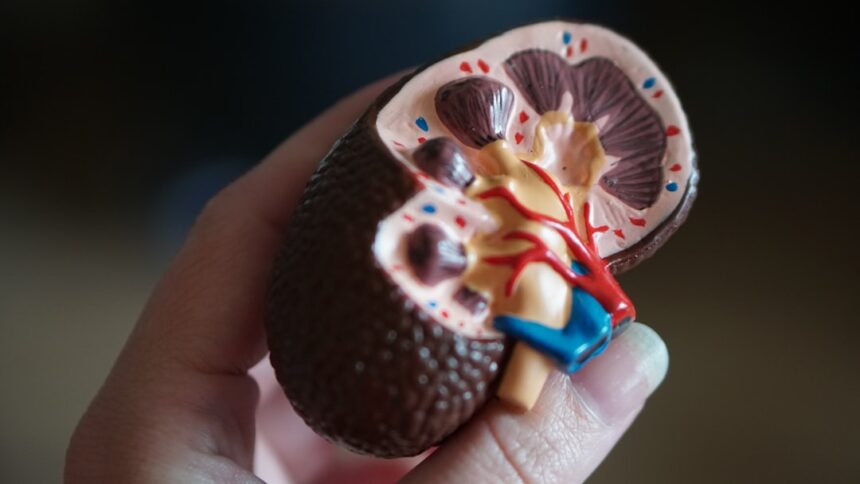
Medical illustration showing kidney and heart protection with finerenone treatment
Finerenone significantly reduces cardiovascular events by 14% in non-diabetic chronic kidney disease patients, according to landmark NEJM trial. The drug offers new cardiovascular protection for millions of previously underserved patients. — Photo by Robina Weermeijer on Unsplash (Unsplash License)
SHARE
1 min read|131 words

A landmark randomized controlled trial published in The New England Journal of Medicine has demonstrated that finerenone, a non-steroidal mineralocorticoid receptor antagonist, provides significant cardiovascular benefits in non-diabetic chronic kidney disease patients. The FIND-CKD trial enrolled 5,674 patients across international centers and found that finerenone reduced major cardiovascular events by 14% compared to placebo, with benefits observed consistently across multiple kidney disease stages and etiologies. This represents a substantial expansion of finerenone’s clinical utility, previously established only in diabetic kidney disease populations. Importantly, the medication maintained a favorable safety profile with manageable hyperkalemia risk through appropriate monitoring. These findings suggest that millions of non-diabetic patients with chronic kidney disease worldwide could benefit from this therapeutic approach, potentially transforming standard treatment protocols in nephrology and cardiology practice.

Read the full article on GMJ Newsroom.

Was this article helpful?

GMJ Brief · Announcement

📰 Read the full article: Finerenone Shows Cardiovascular Benefits in Non-Diabetic Chronic Kidney Disease Patients →

Related reference
  • Chronic Kidney Disease · Condition
Share This Article
Facebook LinkedIn Bluesky Copy Link Print
GMJ
ByProf. Giorgi Pkhakadze
Follow:
Prof. Giorgi Pkhakadze, MD, MPH, PhD, is Editor-in-Chief of the Georgian Medical Journal and Chair of the Public Health Institute of Georgia (PHIG). He is Professor and Head of the Department of Social and Behavioural Sciences at David Tvildiani Medical University, and Secretary/Treasurer of the UEMS Section of Public Health. ORCID: 0000-0001-7609-4515.

Submit Your Paper →

Georgia's peer-reviewed open-access medical journal. No APC until January 2027.
Submit Manuscript →
Vitamin D’s Role in Alzheimer’s Tau Accumulation: New Evidence from Framingham Heart Study

A 16-year analysis from the Framingham Heart Study finds that higher vitamin…

Whey protein triggers substantial insulin response despite low carbohydrate content, research shows

Whey protein consumed on an empty stomach triggers insulin secretion 90% higher…

What makes prostate cancer aggressive? Biology, genetics, and clinical grading explained

Prostate cancer aggressiveness is determined by histological grade (Gleason score), genetic mutations…

Submit Your Paper to GMJ

No APC until January 2027.
Submit Manuscript →

You Might Also Like

Comparison of fish oil oxidation levels and safety testing standards across commercial supplement products

Quality Control Concern: 40–50% of Fish Oil Supplements Fail Oxidation Standards

By
Prof. Giorgi Pkhakadze
08/08/2026
FDA safety communication document about Boston Scientific Accolade pacemaker battery concerns

What Clinicians Need to Know About the Accolade Pacemaker Safety Alert

By
Prof. Giorgi Pkhakadze
04/08/2026
Global HealthHealth PolicyPolicy & Systems

England and Wales recorded 346 legionellosis cases in 2025, UK health surveillance data shows

By
Prof. Giorgi Pkhakadze
25/06/2026
Medical illustration of HER2-positive cancer cells being targeted by bispecific antibody therapy

Zanidatamab Emerges as Promising Alternative to Standard HER2-Targeted Therapy in Gastric Cancer

By
Prof. Giorgi Pkhakadze
04/06/2026
Facebook Twitter Youtube Instagram
Company
  • Privacy Policy
  • Contact US
  • GMJ Journal
  • Submit Manuscript
  • Editorial Team
  • Register at GMJ
  • Terms of Use

Subscribe to GMJ News — Click here

Join Community
© 2026 Georgian Medical Journal (GMJ). Published by the Public Health Institute of Georgia (PHIG). All rights reserved.
Welcome Back!

Sign in to your account

Username or Email Address
Password

Lost your password?

Not a member? Sign Up