By using this site, you agree to the Privacy Policy and Terms of Use.
Accept
GMJ NewsGMJ NewsGMJ News
  • Latest News
    • GMJ Briefs
  • Podcast & Media
    • Podcast Episodes
    • GMJ Audio
    • GMJ Videos
  • Research Digest
    • New Studies
    • Georgian Research
    • Data & Numbers
  • Policy & Systems
    • Health Policy
    • Quality & Safety
    • Migration & Health
    • Global Health
  • Practice
    • Clinical Updates
    • Case Discussions
    • Pharmacy & Prescribing
    • Ingredients A-Z
  • Perspectives
    • Editorial
    • Explainers
    • Voices
    • Letters
  • GMJ Articles
    • Vol. 1 Issue 2 (2026)
    • Vol. 1 Issue 1 (2026)
    • Pre-Launch Articles (2025)
  • Read the Journal →
  • About GMJ News
Notification Show More
Font ResizerAa
GMJ NewsGMJ News
Font ResizerAa
  • Latest News
    • GMJ Briefs
  • Podcast & Media
    • Podcast Episodes
    • GMJ Audio
    • GMJ Videos
  • Research Digest
    • New Studies
    • Georgian Research
    • Data & Numbers
  • Policy & Systems
    • Health Policy
    • Quality & Safety
    • Migration & Health
    • Global Health
  • Practice
    • Clinical Updates
    • Case Discussions
    • Pharmacy & Prescribing
    • Ingredients A-Z
  • Perspectives
    • Editorial
    • Explainers
    • Voices
    • Letters
  • GMJ Articles
    • Vol. 1 Issue 2 (2026)
    • Vol. 1 Issue 1 (2026)
    • Pre-Launch Articles (2025)
  • Read the Journal →
  • About GMJ News
Follow US
GMJ News > GMJ Briefs > Mobile Screening Achieves Record Early-Stage Lung Cancer Detection Rates

Mobile Screening Achieves Record Early-Stage Lung Cancer Detection Rates

GMJ
Last updated: 02/07/2026 20:25
By
Prof. Giorgi Pkhakadze
Share
1 Min Read
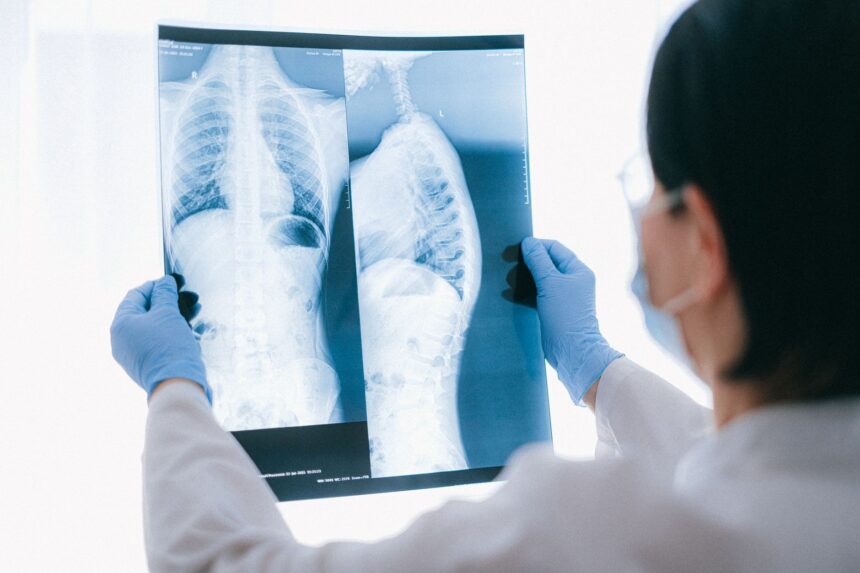
NHS mobile screening truck parked in supermarket car park providing lung cancer screening services
NHS mobile screening trucks in supermarket car parks have detected over 10,000 lung cancers, with 77% caught at early stages when treatment is most effective. The community-based programme targets high-risk individuals aged 55-74 and demonstrates significant cost savings compared to advanced-stage cancer treatment. — Photo by Anna Shvets on Pexels (Pexels License)
SHARE
1 min read|120 words

New data from NHS England demonstrates the remarkable clinical impact of mobile lung screening technology. Mobile units have achieved a 77% early-stage detection rate—substantially higher than traditional hospital-based screening where most cancers are identified only after symptom onset at advanced stages.

Since programme launch, 10,678 lung cancers have been detected through the mobile screening initiative. The data reveals that 45% were identified at Stage 1 and 32% at Stage 2, representing a significant departure from conventional detection patterns. This early-stage dominance translates to markedly improved survival rates and treatment efficacy. The mobile approach specifically targets individuals aged 55-74 with smoking histories using low-dose CT scans, enabling preclinical detection of suspicious nodules. These outcomes underscore how accessible, community-focused screening infrastructure can measurably improve population health outcomes.

Was this article helpful?

GMJ Brief · Key Finding

📰 Read the full article: NHS Mobile Lung Screening Trucks Detect Over 10,000 Cancers in Supermarket Car Parks →

Related reference
  • Lung Cancer · Condition
Share This Article
Facebook LinkedIn Bluesky Copy Link Print
GMJ
ByProf. Giorgi Pkhakadze
Follow:
Prof. Giorgi Pkhakadze, MD, MPH, PhD, is Editor-in-Chief of the Georgian Medical Journal and Chair of the Public Health Institute of Georgia (PHIG). He is Professor and Head of the Department of Social and Behavioural Sciences at David Tvildiani Medical University, and Secretary/Treasurer of the UEMS Section of Public Health. ORCID: 0000-0001-7609-4515.

Submit Your Paper →

Georgia's peer-reviewed open-access medical journal. No APC until January 2027.
Submit Manuscript →
New AI Model Strips Personal Data From ECGs While Preserving Heart Risk Information

Artificial intelligence can extract age, sex, race, and individual identity from standard…

AI-Guided Ultrasound Predicts Bubble Collapse to Improve Brain Barrier Opening

Researchers at Georgia Institute of Technology have developed an AI system that…

Orforglipron Shows Clinically Significant HbA1c Reductions in Type 2 Diabetes

Two phase III randomised controlled trials presented at the American Diabetes Association…

Submit Your Paper to GMJ

No APC until January 2027.
Submit Manuscript →

You Might Also Like

Dexcom G7 continuous glucose monitoring sensor with FDA safety alert overlay

Manufacturing Breach Alert: Stolen Dexcom G7 Sensors Flagged by FDA

By
Prof. Giorgi Pkhakadze
14/06/2026
Medical illustration showing immune system intervention preventing rheumatoid arthritis development

Single Year of Abatacept Offers Four-Year Protection Against Rheumatoid Arthritis

By
Prof. Giorgi Pkhakadze
10/06/2026

PHEIC Declaration: Ebola Cross-Border Transmission DRC-Uganda

By
Prof. Giorgi Pkhakadze
31/05/2026
Pharmacy & PrescribingPractice

MHRA Recalls ChloraPrep Antiseptic Applicators Over Sterility Breach

By
Prof. Giorgi Pkhakadze
02/06/2026
Facebook Twitter Youtube Instagram
Company
  • Privacy Policy
  • Contact US
  • GMJ Journal
  • Submit Manuscript
  • Editorial Team
  • Register at GMJ
  • Terms of Use

Subscribe to GMJ News — Click here

Join Community
© 2026 Georgian Medical Journal (GMJ). Published by the Public Health Institute of Georgia (PHIG). All rights reserved.
Welcome Back!

Sign in to your account

Username or Email Address
Password

Lost your password?

Not a member? Sign Up