By using this site, you agree to the Privacy Policy and Terms of Use.
Accept
GMJ NewsGMJ NewsGMJ News
  • Latest News
    • GMJ Briefs
  • Podcast & Media
    • Podcast Episodes
    • GMJ Audio
    • GMJ Videos
  • Research Digest
    • New Studies
    • Georgian Research
    • Data & Numbers
  • Policy & Systems
    • Health Policy
    • Quality & Safety
    • Migration & Health
    • Global Health
  • Practice
    • Clinical Updates
    • Case Discussions
    • Pharmacy & Prescribing
    • Ingredients A-Z
  • Perspectives
    • Editorial
    • Explainers
    • Voices
    • Letters
  • GMJ Articles
    • Vol. 1 Issue 2 (2026)
    • Vol. 1 Issue 1 (2026)
    • Pre-Launch Articles (2025)
  • Read the Journal →
  • About GMJ News
Notification Show More
Font ResizerAa
GMJ NewsGMJ News
Font ResizerAa
  • Latest News
    • GMJ Briefs
  • Podcast & Media
    • Podcast Episodes
    • GMJ Audio
    • GMJ Videos
  • Research Digest
    • New Studies
    • Georgian Research
    • Data & Numbers
  • Policy & Systems
    • Health Policy
    • Quality & Safety
    • Migration & Health
    • Global Health
  • Practice
    • Clinical Updates
    • Case Discussions
    • Pharmacy & Prescribing
    • Ingredients A-Z
  • Perspectives
    • Editorial
    • Explainers
    • Voices
    • Letters
  • GMJ Articles
    • Vol. 1 Issue 2 (2026)
    • Vol. 1 Issue 1 (2026)
    • Pre-Launch Articles (2025)
  • Read the Journal →
  • About GMJ News
Follow US
GMJ News > Practice > Clinical Updates > Sepsis AI Algorithms Fail When Trained on Future Data, Study Reveals Critical Flaws
Clinical UpdatesPractice

Sepsis AI Algorithms Fail When Trained on Future Data, Study Reveals Critical Flaws

GMJ
Last updated: 06/07/2026 02:06
By
GMJ Practice Desk
Share
5 Min Read
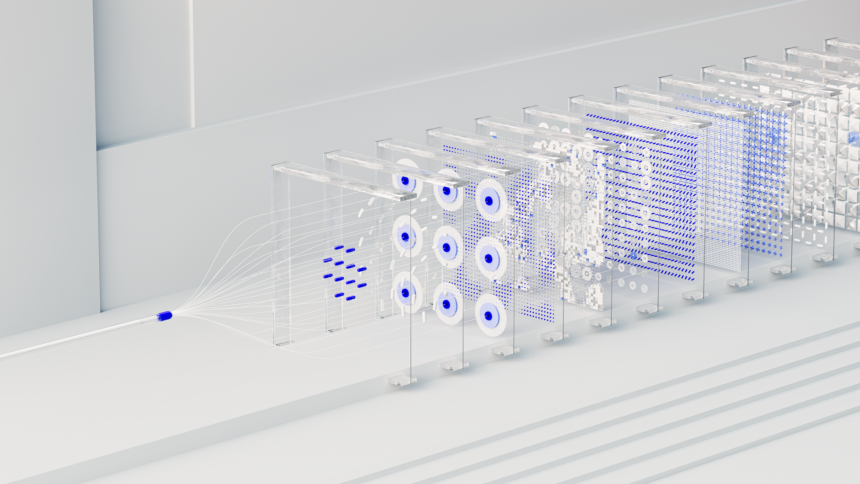
Medical AI algorithm interface showing sepsis prediction with temporal data warningIllustrative image · Photo by Google DeepMind on Pexels (Pexels License)
AI algorithms for sepsis prediction may be fundamentally flawed due to training on future data unavailable at diagnosis time. This temporal contamination could explain poor real-world performance of promising sepsis prediction tools. — Photo by Google DeepMind on Pexels (Pexels License)
SHARE
3 min read|594 words
✓ Medically reviewed by Prof. Giorgi Pkhakadze, MD, MPH, PhD · ORCID 0000-0001-7609-4515

🟠 Moderate Evidence

Contents
    • Key takeaways
      • The Time Machine Problem in Medical AI
  • When AI Algorithms Peek Into the Future
  • Real-World Performance Gap
    • Industry Response and Solutions
    • What this means
  • Frequently asked questions
    • What is temporal data leakage in medical AI?
    • How common is this problem in sepsis AI tools?
    • Can these algorithms be fixed?

Artificial intelligence algorithms designed to predict sepsis may be fundamentally flawed due to training on future data that wouldn’t be available at the time of diagnosis, according to new analysis from STAT. This “time machine” problem could explain why promising sepsis AI tools often fail in real-world clinical settings.

Key takeaways

  • Sepsis AI algorithms may be trained on data that includes future information not available at diagnosis time
  • This temporal data leakage could explain poor real-world performance of sepsis prediction tools
  • Medical AI development needs stricter temporal validation to ensure clinical utility
Multiple algorithms
affected by temporal data leakage in sepsis prediction

The Time Machine Problem in Medical AI

How future data contamination affects algorithm performance

Training
Uses future data
Reality
Only past data available
Result
Performance gap

Source: STAT Analysis, 2026 | Georgian Medical Journal News

Submit Your Paper
GMJ_Submit_Banner

When AI Algorithms Peek Into the Future

The fundamental issue lies in how sepsis prediction algorithms are trained and validated. Many systems inadvertently use laboratory results, vital signs, or medication data that would only become available hours or days after the initial prediction point, according to the STAT investigation.

🎙️ Related Podcast Episodes
🎧 #54 | GMJ Podcast | The Blueprint of a Medical Journal: Designing an Open-Access Scientific Platform · 19m
🎧 #53 | GMJ Podcast | Palliative Care in Georgia — Health System Gaps, Access Barriers, and Policy Implications · 16m
🎧 #45 | GMJ Podcast | Tskaltubo Mineral Baths in Osteoarthritis — Microcirculation, Erythrocytes, and Clinical Effects · 18m
🎧 #44 | GMJ Podcast | Infant Formula Contamination — Global Food Safety Failure and the Cereulide Outbreak · 21m
🎧 #29 | GMJ Podcast | GMJ Research: From Manuscript to Publication – How Medical Evidence Becomes Scientific Knowledge · 15m

This temporal contamination creates an illusion of accuracy during development that disappears when the algorithm faces real-time clinical scenarios. Healthcare institutions investing in these tools may discover significant performance degradation when deployed in actual patient care settings.

Real-World Performance Gap

Sepsis remains one of the leading causes of hospital mortality, making accurate early prediction crucial for patient outcomes. However, the gap between laboratory performance and clinical reality has frustrated both developers and clinicians, according to reports from clinical implementation studies.

The FDA and other regulatory bodies are increasingly scrutinizing AI validation methodologies to address these temporal validation issues. Healthcare systems need robust testing protocols that mirror real-world data availability constraints.

Industry Response and Solutions

Medical AI companies are beginning to implement stricter temporal validation protocols, ensuring training data reflects the actual information available at prediction time. This includes developing new evaluation frameworks that better simulate clinical decision-making scenarios.

Some institutions are partnering with research organizations to create more rigorous testing environments that prevent future data leakage during algorithm development.

Temporal data leakage represents a critical flaw in medical AI validation that can lead to dangerous overconfidence in algorithm performance during real clinical deployment.

— STAT Analysis Team, Healthcare AI Investigation (STAT, 2026)

What this means

For patients: Sepsis prediction tools may be less reliable than advertised, requiring continued vigilance from healthcare teams
For clinicians: AI sepsis alerts should be interpreted cautiously, with clinical judgment remaining paramount in diagnosis
For policymakers: Stricter AI validation standards needed to ensure medical algorithms perform as promised in real-world settings

Frequently asked questions

What is temporal data leakage in medical AI?

It occurs when AI algorithms are trained using information that would not be available at the actual time of prediction in clinical practice. This creates artificially inflated performance metrics that don’t translate to real-world use.

How common is this problem in sepsis AI tools?

The analysis suggests multiple sepsis prediction algorithms may be affected, though specific numbers weren’t disclosed. The issue appears widespread enough to warrant systematic investigation.

Can these algorithms be fixed?

Yes, through proper temporal validation during development and testing with data constraints that mirror real clinical scenarios. However, this may require rebuilding existing systems.

The revelation of temporal data contamination in sepsis AI highlights broader challenges in medical algorithm validation. As healthcare systems increasingly rely on AI-driven clinical decision support, ensuring these tools perform reliably under real-world constraints becomes essential for patient safety and clinical effectiveness.

Source: Your sepsis algorithm shouldn’t require a time machine

Was this article helpful?

Disclaimer. This article is health journalism intended for general information and education. It is not medical advice and is not a substitute for professional diagnosis or treatment. Always consult a qualified healthcare provider about your individual circumstances. Full disclaimer →

Related Coverage

Bacteriophage Therapy Saves Patient from Antibiotic-Resistant Skull InfectionJul 7, 2026
AI Drug Development Faces Reality Check as BigHat CEO Debunks Industry HypeJul 7, 2026
Gene Editing Trial Achieves 84% Cholesterol Reduction Using Single InjectionJul 7, 2026
Autism Spectrum Disorder and Comorbid Schizophrenia: Clinical Practice GuidelinesJul 7, 2026
Related reference
  • Iron · Ingredient
PG
Written by
Prof. Giorgi Pkhakadze, MD, MPH, PhD
Editor-in-Chief, GMJ News
Full profile →  ·  ORCID 0000-0001-7609-4515
Medical disclaimer. This article is health journalism intended for general information. It is not medical advice and is not a substitute for consultation with a qualified healthcare professional. Always seek your physician's advice regarding any medical condition.
Medically reviewed by Prof. Giorgi Pkhakadze, MD, MPH, PhD. Spotted an error? Contact the editorial team.
Get the GMJ News digest
Evidence-based health journalism in your inbox. No spam; unsubscribe anytime.
TAGGED:artificial intelligenceclinical decision supporthealthcare AImedical algorithmssepsis
Share This Article
Facebook LinkedIn Bluesky Copy Link Print
GMJ
ByGMJ Practice Desk
Follow:
GMJ Practice Desk is part of GMJ News, the newsroom of the Georgian Medical Journal (gmj.ge), published by the Public Health Institute of Georgia. Every article is editorially reviewed before publication.
Leave a Comment Leave a Comment

Leave a Reply Cancel reply

Your email address will not be published. Required fields are marked *

Submit Your Paper →

Georgia's peer-reviewed open-access medical journal. No APC until January 2027.
Submit Manuscript →
Climate Change May Turn North America and Europe into Chikungunya Hotspots by 2070

Climate modeling shows North America and Europe could become chikungunya transmission zones…

Therapeutic Food Saves 7 Million Children in 30 Years, Yet 45 Million Still Lack Access

UNICEF analysis reveals therapeutic food has saved 7 million children over 30…

Bacteriophage Therapy Saves Patient from Antibiotic-Resistant Skull Infection

French physicians successfully used bacteriophage therapy to cure a life-threatening antibiotic-resistant skull…

Submit Your Paper to GMJ

No APC until January 2027.
Submit Manuscript →

You Might Also Like

Medical diagram showing five mechanisms of hypertension including fluid retention and vascular changes
Clinical Updates

Five Key Mechanisms Drive Hypertension Beyond Simple Blood Pressure Numbers

By
GMJ Practice Desk
22/05/2026
Smartphone displaying health intervention text messages for cannabis use reductionIllustrative image · Photo by RDNE Stock project on Pexels (Pexels License)
Clinical UpdatesNew StudiesPracticeResearch Digest

Mobile Text Messages Help Young Adults Reduce Cannabis Use, Trial Shows

By
GMJ Practice Desk
30/06/2026
Medical illustration showing CAR-T cells targeting lupus-causing B cells in the immune systemIllustrative image · Photo by Roger Brown on Pexels (Pexels License)
Clinical UpdatesNew StudiesPracticeResearch Digest

CAR-T Cell Therapy Achieves Drug-Free Lupus Remission in German Trial

By
GMJ Practice Desk
03/07/2026
Scientific illustration showing CD4+ T cells attacking MHC I-deficient cancer cells
Clinical UpdatesNew StudiesPracticeResearch Digest

Cancer’s Stealth Strategy Backfires, Creating New Therapeutic Target

By
GMJ Practice Desk
11/06/2026
Facebook Twitter Youtube Instagram
Company
  • Privacy Policy
  • Contact US
  • GMJ Journal
  • Submit Manuscript
  • Editorial Team
  • Register at GMJ
  • Terms of Use

Subscribe to GMJ News — Click here

Join Community
© 2026 Georgian Medical Journal (GMJ). Published by the Public Health Institute of Georgia (PHIG). All rights reserved.
Welcome Back!

Sign in to your account

Username or Email Address
Password

Lost your password?

Not a member? Sign Up