By using this site, you agree to the Privacy Policy and Terms of Use.
Accept
GMJ NewsGMJ NewsGMJ News
  • Latest News
    • GMJ Briefs
  • Podcast & Media
    • Podcast Episodes
    • GMJ Audio
    • GMJ Videos
  • Research Digest
    • New Studies
    • Georgian Research
    • Data & Numbers
  • Policy & Systems
    • Health Policy
    • Quality & Safety
    • Migration & Health
    • Global Health
  • Practice
    • Clinical Updates
    • Case Discussions
    • Pharmacy & Prescribing
    • Ingredients A-Z
  • Perspectives
    • Editorial
    • Explainers
    • Voices
    • Letters
  • GMJ Articles
    • Vol. 1 Issue 2 (2026)
    • Vol. 1 Issue 1 (2026)
    • Pre-Launch Articles (2025)
  • Read the Journal →
  • About GMJ News
Notification Show More
Font ResizerAa
GMJ NewsGMJ News
Font ResizerAa
  • Latest News
    • GMJ Briefs
  • Podcast & Media
    • Podcast Episodes
    • GMJ Audio
    • GMJ Videos
  • Research Digest
    • New Studies
    • Georgian Research
    • Data & Numbers
  • Policy & Systems
    • Health Policy
    • Quality & Safety
    • Migration & Health
    • Global Health
  • Practice
    • Clinical Updates
    • Case Discussions
    • Pharmacy & Prescribing
    • Ingredients A-Z
  • Perspectives
    • Editorial
    • Explainers
    • Voices
    • Letters
  • GMJ Articles
    • Vol. 1 Issue 2 (2026)
    • Vol. 1 Issue 1 (2026)
    • Pre-Launch Articles (2025)
  • Read the Journal →
  • About GMJ News
Follow US
GMJ News > Practice > Clinical Updates > Gene Editing Trial Achieves 84% Cholesterol Reduction Using Single Injection
Clinical UpdatesPractice

Gene Editing Trial Achieves 84% Cholesterol Reduction Using Single Injection

GMJ
Last updated: 06/07/2026 02:06
By
GMJ Practice Desk
Share
6 Min Read
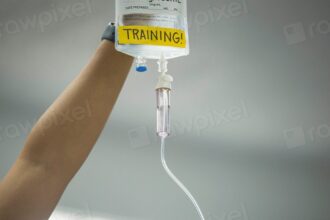
Medical illustration showing gene editing process for cholesterol reduction therapyIllustrative image · Photo by MJH SHIKDER on Unsplash (Unsplash License)
A groundbreaking clinical trial shows that a single injection of gene editing therapy VERVE-102 can reduce LDL cholesterol by up to 84% in patients with severe hypercholesterolemia. The phase 1 study represents the first successful human trial of in vivo base editing to treat cardiovascular disease. — Photo by MJH SHIKDER on Unsplash (Unsplash License)
SHARE
4 min read|779 words

A groundbreaking clinical trial has demonstrated that a single injection of the gene editing therapy VERVE-102 can reduce LDL cholesterol by up to 84% in patients with severe hypercholesterolemia. The phase 1 study, published in The New England Journal of Medicine, represents the first successful human trial of in vivo base editing to treat cardiovascular disease.

Contents
      • VERVE-102 Cholesterol Reduction by Dose
  • Revolutionary Base Editing Technology Shows Promise
  • Safety Profile and Participant Response
  • Implications for Cardiovascular Disease Prevention
  • Next Steps and Regulatory Pathway
    • Key takeaways
  • Frequently asked questions
    • How does VERVE-102 differ from existing cholesterol medications?
    • Who would be eligible for VERVE-102 treatment?
    • What are the potential long-term risks of genetic modification?
84%
maximum LDL cholesterol reduction achieved with VERVE-102 gene editing therapy

VERVE-102 Cholesterol Reduction by Dose

Percentage reduction in LDL cholesterol at 180 days, by treatment group

High dose (0.6 mg/kg)
84%
Medium dose (0.45 mg/kg)
55%
Low dose (0.3 mg/kg)
39%
Placebo

2%

Source: NEJM, 2024 | Georgian Medical Journal News

Revolutionary Base Editing Technology Shows Promise

VERVE-102 uses CRISPR-Cas base editing to permanently modify the PCSK9 gene in liver cells, effectively turning off production of a protein that normally prevents cholesterol removal from the blood. The therapy consists of lipid nanoparticles containing guide RNA and base editor components delivered through a single intravenous infusion.

Submit Your Paper
GMJ_Submit_Banner

Dr. Sekar Kathiresan, chief executive of Verve Therapeutics and co-corresponding author of the study, noted that this approach could potentially provide lifelong cholesterol reduction with a one-time treatment. The clinical implications extend far beyond current statin therapy, which requires daily medication adherence.

🎙️ Related Podcast Episodes
🎧 #31 | GMJ Podcast | Daily Multivitamins and Biological Ageing — COSMOS Trial · 21m

Safety Profile and Participant Response

The study enrolled 10 participants with heterozygous familial hypercholesterolemia and established atherosclerotic cardiovascular disease. All participants had baseline LDL cholesterol levels exceeding 70 mg/dL despite maximum tolerated lipid-lowering therapy, according to the New England Journal of Medicine publication.

No serious adverse events were attributed to VERVE-102 during the 180-day follow-up period. Mild infusion-related symptoms occurred in some participants but resolved within 24-48 hours. Laboratory monitoring showed no significant changes in liver function tests or other safety markers, suggesting the therapy was well-tolerated at all dose levels.

Implications for Cardiovascular Disease Prevention

The dramatic cholesterol reductions achieved with VERVE-102 could transform prevention strategies for cardiovascular disease, particularly in patients with genetic forms of hypercholesterolemia who struggle to achieve target levels with conventional therapy. The World Health Organization estimates that cardiovascular diseases cause 17.9 million deaths annually worldwide.

Current guidelines recommend LDL cholesterol targets below 55 mg/dL for patients at very high cardiovascular risk. In this trial, participants receiving the highest dose of VERVE-102 achieved mean LDL levels of 33 mg/dL at 180 days, well below recommended targets. This level of reduction typically requires combination therapy with multiple medications and is difficult to maintain long-term due to adherence challenges.

Next Steps and Regulatory Pathway

Based on these promising results, Verve Therapeutics plans to initiate phase 2 studies in 2025 with larger patient populations and longer follow-up periods. The company is also developing VERVE-101, a similar therapy for patients with homozygous familial hypercholesterolemia, a more severe genetic condition.

The FDA’s guidance for gene and cell therapy products will likely require extensive safety data before approval, given the permanent nature of the genetic modification. Long-term follow-up studies tracking participants for potential off-target effects will be crucial for regulatory review.

VERVE-102 achieved dose-dependent reductions in LDL cholesterol ranging from 39% to 84% at 180 days, with the highest dose producing sustained effects below target levels recommended for high-risk patients.

— Dr. Sekar Kathiresan, Verve Therapeutics (New England Journal of Medicine, 2024)

Key takeaways

  • Single injection of VERVE-102 reduced LDL cholesterol by up to 84% in patients with severe hypercholesterolemia
  • Base editing technology permanently modifies PCSK9 gene to enhance cholesterol removal from blood
  • No serious adverse events were observed during 180-day follow-up period in phase 1 trial
  • Results could transform cardiovascular disease prevention for patients unable to achieve targets with conventional therapy

Frequently asked questions

How does VERVE-102 differ from existing cholesterol medications?

Unlike statins or PCSK9 inhibitors that require ongoing treatment, VERVE-102 permanently modifies the PCSK9 gene with a single injection. This base editing approach could provide lifelong cholesterol reduction without daily medication adherence requirements.

Who would be eligible for VERVE-102 treatment?

The current trial focused on patients with familial hypercholesterolemia and established cardiovascular disease who cannot achieve target cholesterol levels despite maximum conventional therapy. Future studies may expand eligibility criteria based on safety and efficacy data.

What are the potential long-term risks of genetic modification?

While no serious adverse events occurred in the 180-day study period, long-term safety data are still being collected. Regulatory approval will likely require extensive follow-up to monitor for any off-target genetic effects or unintended consequences of permanently reducing PCSK9 function.

The successful demonstration of in vivo base editing for cardiovascular disease represents a paradigm shift toward precision genetic therapies that could address root causes rather than managing symptoms. As longer-term safety data emerge and manufacturing processes scale, VERVE-102 may offer hope for millions of patients worldwide who struggle to control cholesterol levels despite existing treatments, potentially preventing countless heart attacks and strokes through a single therapeutic intervention.

Source: In Vivo Base Editing of PCSK9 with VERVE-102 for Hypercholesterolemia

Was this article helpful?

Disclaimer. This article is health journalism intended for general information and education. It is not medical advice and is not a substitute for professional diagnosis or treatment. Always consult a qualified healthcare provider about your individual circumstances. Full disclaimer →

Related Coverage

Autism Spectrum Disorder and Comorbid Schizophrenia: Clinical Practice GuidelinesJul 7, 2026
New RSV Vaccines Transform Prevention Strategies for Older AdultsJul 7, 2026
Fatal Tapeworm Disease Spreads to Pacific Northwest Wild Animals for First TimeJul 7, 2026
Sepsis AI Algorithms Fail When Trained on Future Data, Study Reveals Critical FlawsJul 6, 2026
Related reference
  • Stroke · Condition
PG
Written by
Prof. Giorgi Pkhakadze, MD, MPH, PhD
Editor-in-Chief, GMJ News
Full profile →  ·  ORCID 0000-0001-7609-4515
Medical disclaimer. This article is health journalism intended for general information. It is not medical advice and is not a substitute for consultation with a qualified healthcare professional. Always seek your physician's advice regarding any medical condition.
Medically reviewed by Prof. Giorgi Pkhakadze, MD, MPH, PhD. Spotted an error? Contact the editorial team.

Get the GMJ News digest
Evidence-based health journalism in your inbox. No spam; unsubscribe anytime.
TAGGED:cardiovascular diseasecholesterolgene editingPCSK9VERVE-102
Share This Article
Facebook LinkedIn Bluesky Copy Link Print
GMJ
ByGMJ Practice Desk
Follow:
GMJ Practice Desk is part of GMJ News, the newsroom of the Georgian Medical Journal (gmj.ge), published by the Public Health Institute of Georgia. Every article is editorially reviewed before publication.
Leave a Comment Leave a Comment

Leave a Reply Cancel reply

Your email address will not be published. Required fields are marked *

Submit Your Paper →

Georgia's peer-reviewed open-access medical journal. No APC until January 2027.
Submit Manuscript →
Pharmaceutical companies exploit ‘innovation’ claims to extend drug monopolies, new analysis reveals

New analysis reveals how pharmaceutical companies exploit 'innovation' claims to extend drug…

Legume consumption reduces hypertension risk by 16%, major analysis reveals

Major meta-analysis reveals legume consumption reduces hypertension risk by 16%, with soy…

Acting NIAID Chief Steps Down as Lab Safety Concerns Mount

Dr. Jeffery Taubenberger has resigned as acting NIAID director after 13 months,…

Submit Your Paper to GMJ

No APC until January 2027.
Submit Manuscript →

You Might Also Like

Medical professional discussing cannabis sleep dependency risks with patientIllustrative image · Photo by Nataliya Vaitkevich on Pexels (Pexels License)
Clinical UpdatesPractice

Cannabis for Sleep Creates Dependency Cycle, Neurologist Warns

By
GMJ Practice Desk
27/06/2026
Medical illustration showing CRISPR gene editing process for hereditary angioedema treatmentIllustrative image · Photo by Warren Umoh on Unsplash (Unsplash License)
New StudiesResearch Digest

First In Vivo CRISPR Gene Editing Treatment Shows Promise for Rare Blood Disorder

By
GMJ Research Desk
04/07/2026
Medical illustration showing weight loss medication injection and clinical trial resultsIllustrative image · Photo by SHVETS production on Pexels (Pexels License)
Clinical UpdatesNew StudiesPracticeResearch Digest

Survodutide Weekly Injection Shows 17.5% Weight Loss in Phase 3 Obesity Trial

By
GMJ Practice Desk
17/06/2026
Medical illustration showing hepatitis B virus and treatment breakthrough concept
Clinical UpdatesPractice

Experimental GSK drug achieves functional hepatitis B cure in 1 in 5 patients

By
GMJ Practice Desk
28/05/2026
Facebook Twitter Youtube Instagram
Company
  • Privacy Policy
  • Contact US
  • GMJ Journal
  • Submit Manuscript
  • Editorial Team
  • Register at GMJ
  • Terms of Use

Subscribe to GMJ News — Click here

Join Community
© 2026 Georgian Medical Journal (GMJ). Published by the Public Health Institute of Georgia (PHIG). All rights reserved.
Welcome Back!

Sign in to your account

Username or Email Address
Password

Lost your password?

Not a member? Sign Up