Updated 13/09/2026
🟡 Preliminary Evidence
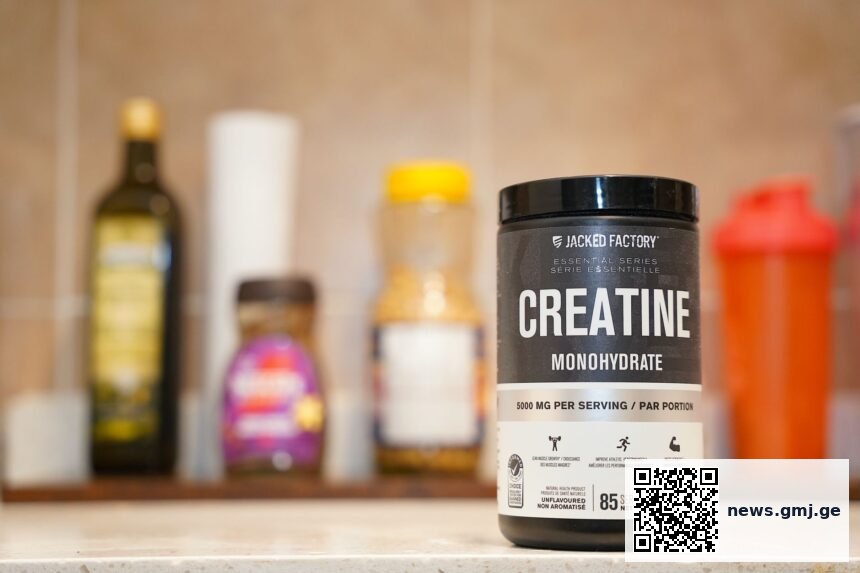
Creatine supplementation is widely misunderstood. Most athletes and fitness enthusiasts believe it works by increasing water retention in muscle cells or providing energy like caffeine. Neither explanation captures the actual mechanism. According to research published in Clinical Science, creatine functions as the critical raw material for the fastest ATP (adenosine triphosphate) regeneration system in muscle tissue—a process that operates on a millisecond timescale and requires no oxygen.
Key takeaways
- Phosphocreatine supplies approximately 70% of ATP regeneration during the first 3 seconds of maximal muscle contraction, according to research by Harris et al. (1992, Clinical Science)
- Creatine acts not as a simple energy buffer but as a phosphate shuttle between mitochondria (where ATP is produced) and the contractile site (where it is consumed)
- Phosphocreatine stores deplete by 50–70% within 10 seconds of all-out effort, and nearly completely by 30 seconds, after which glycolysis and oxidative metabolism become the primary ATP sources
ATP Regeneration Systems by Time Window During Maximal Effort
Relative contribution of phosphocreatine, glycolysis, and oxidative phosphorylation to ATP supply across different contraction durations

Source: Harris et al., 1992 | Georgian Medical Journal News
The Creatine Kinase Shuttle: Two Isoforms, One Purpose
The mechanism behind creatine’s efficacy lies not in simple chemical buffering but in a sophisticated two-enzyme transport system. Muscle tissue expresses two isoforms of creatine kinase: CK-M, which is anchored directly to the myofibril (the contractile protein structure where ATP is actively consumed during muscle contraction), and CK-mit, located in the mitochondrial membrane where ATP is synthesised. This anatomical arrangement is not arbitrary—it creates an efficient energy shuttle.
When muscle contraction begins, ATP at the myofibril is rapidly depleted. Rather than waiting for free ATP to diffuse through the crowded cytoplasm from the mitochondria, phosphocreatine transfers its high-energy phosphate group to ADP via creatine kinase, regenerating ATP in milliseconds. The depleted creatine molecule then returns to the mitochondria to be recharged by CK-mit, completing the cycle. This is functionally a transport system for high-energy phosphate, not merely a passive buffer. Studies cited in Journal of Applied Physiology (Hultman et al., 1996) confirm that phosphocreatine transport operates faster than free ATP diffusion across the cytoplasm.
Energy Depletion Timeline: Why Performance Drops
The phosphocreatine system has a finite capacity. During the first 3 seconds of maximal effort—a heavy barbell squat, a 40-meter sprint, a vertical jump—phosphocreatine provides roughly 70% of the ATP regenerated, according to Harris et al. (1992). At 10 seconds of continuous maximal contraction, phosphocreatine stores are already 50–70% depleted. By 30 seconds of all-out effort, phosphocreatine is nearly exhausted.
Once phosphocreatine stores decline, the body must rely on glycolysis (anaerobic breakdown of glucose) and oxidative phosphorylation (aerobic ATP production in mitochondria). Both pathways are metabolically complex and cannot match the ATP regeneration rate that phosphocreatine provided. Research published in Nutrition Reviews (Rae et al., 2003) documents this transition and its effect on power output. This explains why sprinters cannot maintain maximal power beyond 10–15 seconds: not because they lack motivation, but because their creatine phosphate buffer is depleted and glycolytic ATP production cannot compensate for the lost flux.
What Supplementation Actually Changes
Oral creatine monohydrate supplementation increases intramuscular creatine and phosphocreatine concentrations above baseline. The evidence base, established by Harris et al. (1992) in Clinical Science, shows that this increase enhances the capacity of the phosphocreatine shuttle system. More intramuscular creatine means the shuttle can operate at higher flux for slightly longer before depletion. This translates to a modest but measurable improvement in repeated sprinting performance, power output in the 6–30 second window, and recovery between high-intensity efforts.
The water retention observed in some users is a secondary effect: creatine draws water intracellularly due to osmotic pressure, which increases total muscle water content by approximately 1–2 kg in the short term. But this is not the mechanism by which creatine improves performance. The primary effect is enhanced phosphocreatine availability and turnover. This distinction matters for athletes and clinical practitioners, as it clarifies what creatine can and cannot do: it benefits high-intensity, short-duration efforts (6–30 seconds), not endurance or long-duration aerobic performance. Links to Clinical Updates and New Studies on sports nutrition are available for further reading.
Phosphocreatine supplies approximately 70% of ATP regeneration during maximal muscle contraction in the first 3 seconds, with stores depleting 50–70% by 10 seconds and becoming nearly exhausted by 30 seconds of all-out effort.
— Harris et al., 1992, Clinical Science
What this means
Frequently asked questions
Does creatine make muscles bigger?
Creatine does not directly increase muscle protein synthesis. However, by improving power output and recovery during resistance training, it allows athletes to perform more total training volume, which indirectly supports muscle growth. The water retention effect (1–2 kg intracellular water) is temporary and creates an apparent increase in muscle size that is not due to new protein.
Is creatine safe for long-term use?
Research published in Journal of the International Society of Sports Nutrition indicates that creatine supplementation at standard doses (3–5 g daily) is safe in healthy individuals with normal renal function. However, individuals with existing kidney disease, those taking nephrotoxic medications, and those with a family history of renal disease should avoid supplementation or use it only under medical supervision.
Why doesn’t creatine help endurance athletes?
Endurance exercise (distance running, cycling, swimming) depends primarily on glycolysis and oxidative phosphorylation, which operate over minutes to hours. Phosphocreatine is depleted within 30 seconds. Supplementing creatine cannot extend the duration of the phosphocreatine system, so endurance performance is unaffected. Creatine is only beneficial when the limiting factor is ATP regeneration speed in the 6–30 second window, not total ATP availability.
The study of creatine metabolism has illuminated a fundamental principle of muscle physiology: that different cellular energy systems operate at different speeds and timescales, and that enhancing one system (phosphocreatine) does not enhance the others (glycolysis, oxidative phosphorylation). Future research may explore whether manipulating creatine kinase expression or subcellular localisation could extend the window in which phosphocreatine provides the bulk of ATP supply, potentially benefiting sports requiring efforts in the 10–60 second range. For now, the evidence from Harris et al. (1992) and subsequent studies remains clear: creatine works because phosphocreatine is the rate-limiting step in ATP regeneration during maximal short-duration efforts, and supplementation increases the available pool of this critical substrate. For related research on sports nutrition and performance, see New Studies and Data & Numbers sections.
Source: Harris et al., 1992, Clinical Science; Hultman et al., 1996; Rae et al., 2003
🗺️ Find certified Georgian healthcare providers: sheniekimi.ge — Georgia Health Map · 998 clinics · 6,600+ doctors · 2,296 pharmacies
Was this article helpful?
Disclaimer. This article is health journalism intended for general information and education. It is not medical advice and is not a substitute for professional diagnosis or treatment. Always consult a qualified healthcare provider about your individual circumstances. Full disclaimer →
Related Coverage




Editorial standards. This article was produced under the GMJ News editorial process, with oversight by the GMJ Editorial Board. Our editorial process. Spotted an error? Contact the editorial team.