By using this site, you agree to the Privacy Policy and Terms of Use.
Accept
GMJ NewsGMJ NewsGMJ News
  • Latest News
    • GMJ Briefs
  • Podcast & Media
    • Podcast Episodes
    • GMJ Audio
    • GMJ Videos
  • Research Digest
    • New Studies
    • Georgian Research
    • Data & Numbers
  • Policy & Systems
    • Health Policy
    • Quality & Safety
    • Migration & Health
    • Global Health
  • Practice
    • Clinical Updates
    • Case Discussions
    • Pharmacy & Prescribing
    • Ingredients A-Z
  • Perspectives
    • Editorial
    • Explainers
    • Voices
    • Letters
  • GMJ Articles
    • Vol. 1 Issue 2 (2026)
    • Vol. 1 Issue 1 (2026)
    • Pre-Launch Articles (2025)
  • Read the Journal →
  • About GMJ News
Notification Show More
Font ResizerAa
GMJ NewsGMJ News
Font ResizerAa
  • Latest News
    • GMJ Briefs
  • Podcast & Media
    • Podcast Episodes
    • GMJ Audio
    • GMJ Videos
  • Research Digest
    • New Studies
    • Georgian Research
    • Data & Numbers
  • Policy & Systems
    • Health Policy
    • Quality & Safety
    • Migration & Health
    • Global Health
  • Practice
    • Clinical Updates
    • Case Discussions
    • Pharmacy & Prescribing
    • Ingredients A-Z
  • Perspectives
    • Editorial
    • Explainers
    • Voices
    • Letters
  • GMJ Articles
    • Vol. 1 Issue 2 (2026)
    • Vol. 1 Issue 1 (2026)
    • Pre-Launch Articles (2025)
  • Read the Journal →
  • About GMJ News
Follow US
GMJ News > GMJ Briefs > Evidence Mounts for Psychological Interventions in Active Conflict Zones

Evidence Mounts for Psychological Interventions in Active Conflict Zones

GMJ
Last updated: 30/06/2026 11:07
By
Prof. Giorgi Pkhakadze
Share
1 Min Read
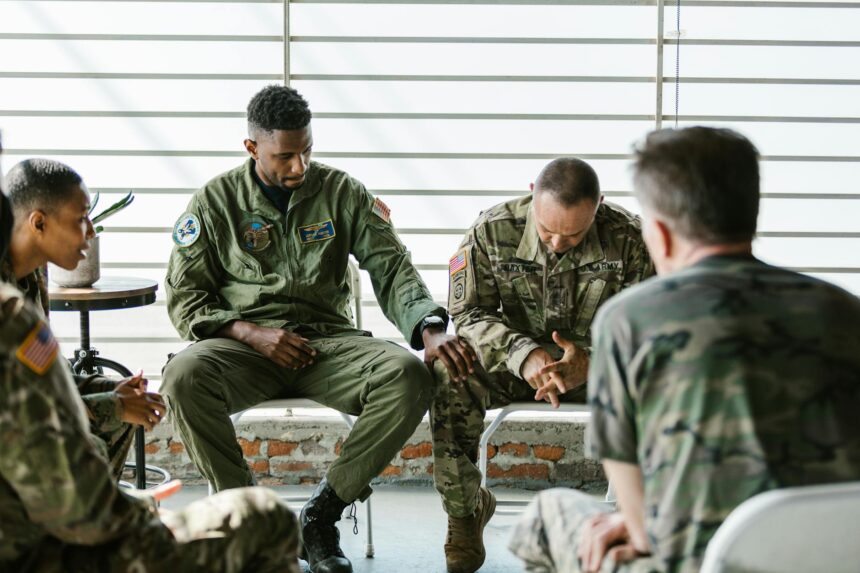
Healthcare workers providing mental health support in conflict zone setting
A comprehensive review of 47 studies reveals that mental health interventions can effectively reduce trauma symptoms in populations affected by active armed conflicts. The research highlights significant benefits for adults while calling for improved research standards. — Photo by RDNE Stock project on Pexels (Pexels License)
SHARE
1 min read|135 words

A comprehensive review of 47 studies published in BMJ Global Health demonstrates that structured mental health and psychosocial support interventions can meaningfully reduce trauma symptoms among populations living through armed conflict. Researchers analyzed outcomes across civilians, internally displaced persons, and ex-combatants, finding that adults receiving targeted psychological support showed statistically significant improvements in post-traumatic stress disorder symptoms, depression, and anxiety levels.

With approximately 2 billion people worldwide affected by ongoing armed conflicts, the capacity to deliver evidence-based mental health interventions during active warfare represents a critical public health priority. However, the analysis also revealed substantial gaps in research standards and methodology across existing studies. While adult populations demonstrated clear clinical benefits, outcomes for children and adolescents proved less consistent, underscoring the need for age-specific intervention development and rigorous evaluation protocols.

Read the full article on GMJ Newsroom.

Was this article helpful?

GMJ Brief · Announcement

📰 Read the full article: Mental health interventions show promise amid active armed conflict, scoping review finds →

Share This Article
Facebook LinkedIn Bluesky Copy Link Print
GMJ
ByProf. Giorgi Pkhakadze
Follow:
Prof. Giorgi Pkhakadze, MD, MPH, PhD, is Editor-in-Chief of the Georgian Medical Journal and Chair of the Public Health Institute of Georgia (PHIG). He is Professor and Head of the Department of Social and Behavioural Sciences at David Tvildiani Medical University, and Secretary/Treasurer of the UEMS Section of Public Health. ORCID: 0000-0001-7609-4515.

Submit Your Paper →

Georgia's peer-reviewed open-access medical journal. No APC until January 2027.
Submit Manuscript →
Functional Mushrooms: What the Evidence Actually Shows

Turkey Tail mushroom extract has rigorous clinical evidence and regulatory approval in…

Evidence-Based Hydration Protocol: How Much Fluid and Sodium Athletes Actually Need

An evidence-based hydration protocol establishes clear targets for fluid and electrolyte intake:…

Resistance Training Protects Brain Health Through Multiple Pathways, Research Shows

Resistance training activates seven biological pathways that protect brain health and reduce…

Submit Your Paper to GMJ

No APC until January 2027.
Submit Manuscript →

You Might Also Like

Traditional Chinese medicinal herbs and modern laboratory equipment representing convergence of ancient and contemporary medicine

Millennium of Traditional Use Now Supported by Modern Hair Follicle Research

By
Prof. Giorgi Pkhakadze
26/06/2026
Global map showing regions of high child vulnerability to multiple climate hazards

Data Alert: 1 Billion Children Exposed to Compounding Climate Hazards

By
Prof. Giorgi Pkhakadze
25/07/2026
Pharmacy & PrescribingPractice

UK Drug Recall: Ramipril Blood Pressure Medication Withdrawn Over Packaging Error

By
Prof. Giorgi Pkhakadze
30/05/2026
Diagram of AI-guided focused ultrasound opening blood-brain barrier with microbubble prediction

Milliseconds Matter: How AI Predicts Microbubble Collapse for Brain Safety

By
Prof. Giorgi Pkhakadze
23/07/2026
Facebook Twitter Youtube Instagram
Company
  • Privacy Policy
  • Contact US
  • GMJ Journal
  • Submit Manuscript
  • Editorial Team
  • Register at GMJ
  • Terms of Use

Subscribe to GMJ News — Click here

Join Community
© 2026 Georgian Medical Journal (GMJ). Published by the Public Health Institute of Georgia (PHIG). All rights reserved.
Welcome Back!

Sign in to your account

Username or Email Address
Password

Lost your password?

Not a member? Sign Up