🟡 Preliminary Evidence
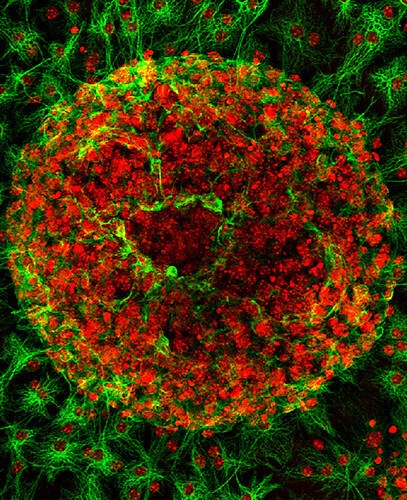
For decades, neuroscience treated neurons as the brain’s sole decision-makers, relegating astrocytes—star-shaped glial cells that comprise roughly 50% of brain cells—to a purely supportive role. This model is fundamentally shifting. Recent research now recognizes astrocytes as global regulators of brain state that actively tune neural network function through modulatory signalling and integration of activity across thousands of synapses, without directly encoding specific thoughts or actions.
Key takeaways
- Astrocytes regulate brain alertness, stress response, and motivation through global modulatory signals—not individual neural encoding
- These cells integrate activity across large neural populations and adjust network behaviour over time, functioning as metabolic and signalling hubs
- Astrocyte dysfunction is implicated in neurodevelopmental and neuropsychiatric conditions, suggesting therapeutic targets beyond neuronal interventions
- The brain operates via dual control: wired architecture (neurons) plus active regulation (astrocytes)
Astrocytes vs. Neurons: Complementary Roles in Brain Function
How astrocytes differ from neurons in terms of function and scope of influence
Source: Neuroscience literature review | Georgian Medical Journal News

The Paradigm Shift: From Support to Regulation
The classical model of brain function placed neurons at centre stage as information processors and decision-makers, while astrocytes were viewed as metabolic housekeepers—supplying glucose, clearing waste, and maintaining the extracellular environment. This picture has been challenged by mounting evidence showing that astrocytes actively modulate neural circuits through calcium signalling and release of neuroactive substances.
Unlike neurons, which transmit discrete signals via action potentials, astrocytes operate on slower timescales (seconds to minutes) and influence entire populations of neurons simultaneously. They track slow metabolic changes, detect shifts in extracellular ion concentration, and respond by releasing gliotransmitters—substances that alter how neurons fire and how synapses transmit signals. This represents a fundamentally different mode of brain control: tuning the neuronal environment rather than hardwiring specific circuits.
Three Dimensions of Brain State Astrocytes Control
Recent neuroscience literature identifies astrocytes as key regulators of three major dimensions of brain function. First, they influence alertness versus fatigue by modulating the release of neuromodulators such as adenosine and ATP, which affect arousal circuits. Second, they regulate stress versus calm through their interaction with the hypothalamic-pituitary-adrenal (HPA) axis and local modulation of corticotropin-releasing hormone. Third, they control motivation versus disengagement by influencing dopaminergic and glutamatergic signalling in reward circuits.
Critically, these shifts in brain state do not require structural rewiring of neural connections or formation of new synapses. Instead, astrocytes achieve functional reconfiguration through chemical signalling—a mechanism that is faster, more flexible, and potentially more reversible than permanent anatomical changes. This suggests that many variations in mood, attention, and motivation may reflect astrocyte regulation rather than fixed neuronal wiring.
Implications for Understanding Brain Disease
If astrocytes are central regulators of brain state, then their dysfunction should be implicated in disorders of consciousness, mood, and motivation. Emerging evidence supports this hypothesis. Studies examining astrocyte pathology in autism spectrum disorder, schizophrenia, and major depression have identified abnormalities in astrocyte calcium signalling, gliotransmitter release, and synaptic support. In neurodevelopmental conditions such as autism, altered astrocyte maturation during critical windows may disrupt the fine-tuning of neural networks, leading to lasting differences in sensory and social processing.
This reconceptualisation opens new therapeutic avenues. Rather than targeting neurons exclusively, clinicians and researchers may develop interventions that enhance astrocyte function—through pharmacological modulation of astrocyte signalling, genetic approaches to restore astrocyte health, or lifestyle interventions (sleep, exercise, stress management) known to support astrocyte-mediated brain regulation. Such approaches could complement existing neuronal-focused treatments and address aspects of neuropsychiatric disease that remain refractory to current therapies.
Astrocytes function as global regulators of brain state by integrating activity across thousands of synapses and releasing modulatory signals that adjust neural network behaviour over time—without directly encoding specific thoughts or actions. This dual-control model (wired neurons + regulatory astrocytes) fundamentally changes how neuroscientists understand brain function and disease.
— Neuroscience consensus model, derived from recent literature on glial regulation
What this means
Frequently asked questions
Are astrocytes neurons?
No. Astrocytes are a type of glial cell—non-neuronal brain cells that support neuronal function. However, unlike classical glial models, astrocytes are now understood to actively regulate neural circuits, not merely provide passive support. They have their own signalling capabilities and can influence large populations of neurons simultaneously.
Can astrocyte dysfunction explain psychiatric symptoms?
Emerging evidence suggests yes. Studies have documented astrocyte abnormalities in major depression, bipolar disorder, and schizophrenia, suggesting that altered glial regulation of brain state may contribute to mood, motivation, and cognitive symptoms. However, this does not replace the role of neuronal circuits; rather, it adds a complementary layer of disease mechanism.
Could astrocyte-targeted therapies become available?
This is an active area of clinical research. Promising preclinical approaches include selective modulation of astrocyte calcium signalling, enhancement of astrocyte metabolic support to neurons, and promotion of astrocyte maturation in developmental disorders. However, no astrocyte-specific drugs are yet in widespread clinical use; most candidate therapies remain in early-stage development.
The recognition of astrocytes as active regulators rather than passive support cells marks a maturation in neuroscience understanding. As research continues to map the molecular and cellular mechanisms by which astrocytes control brain state, clinicians and researchers will gain new tools to diagnose and treat disorders of consciousness, mood, and cognition. The brain, it turns out, is not just wired—it is actively regulated, and astrocytes are key to that regulation.
Source: Astrocyte-mediated brain regulation literature
Was this article helpful?
Disclaimer. This article is health journalism intended for general information and education. It is not medical advice and is not a substitute for professional diagnosis or treatment. Always consult a qualified healthcare provider about your individual circumstances. Full disclaimer →
Related Coverage




Medically reviewed by Prof. Giorgi Pkhakadze, MD, MPH, PhD. Spotted an error? Contact the editorial team.