By using this site, you agree to the Privacy Policy and Terms of Use.
Accept
GMJ NewsGMJ NewsGMJ News
  • Latest News
    • GMJ Briefs
  • Podcast & Media
    • Podcast Episodes
    • GMJ Audio
    • GMJ Videos
  • Research Digest
    • New Studies
    • Georgian Research
    • Data & Numbers
  • Policy & Systems
    • Health Policy
    • Quality & Safety
    • Migration & Health
    • Global Health
  • Practice
    • Clinical Updates
    • Case Discussions
    • Pharmacy & Prescribing
    • Ingredients A-Z
  • Perspectives
    • Editorial
    • Explainers
    • Voices
    • Letters
  • GMJ Articles
    • Vol. 1 Issue 2 (2026)
    • Vol. 1 Issue 1 (2026)
    • Pre-Launch Articles (2025)
  • Read the Journal →
  • About GMJ News
Notification Show More
Font ResizerAa
GMJ NewsGMJ News
Font ResizerAa
  • Latest News
    • GMJ Briefs
  • Podcast & Media
    • Podcast Episodes
    • GMJ Audio
    • GMJ Videos
  • Research Digest
    • New Studies
    • Georgian Research
    • Data & Numbers
  • Policy & Systems
    • Health Policy
    • Quality & Safety
    • Migration & Health
    • Global Health
  • Practice
    • Clinical Updates
    • Case Discussions
    • Pharmacy & Prescribing
    • Ingredients A-Z
  • Perspectives
    • Editorial
    • Explainers
    • Voices
    • Letters
  • GMJ Articles
    • Vol. 1 Issue 2 (2026)
    • Vol. 1 Issue 1 (2026)
    • Pre-Launch Articles (2025)
  • Read the Journal →
  • About GMJ News
Follow US
GMJ News > Practice > Clinical Updates > UK vaccine uptake reaches record 89% for childhood immunisations as new respiratory syncytial virus vaccine rollout begins
Clinical UpdatesHealth PolicyPolicy & SystemsPractice

UK vaccine uptake reaches record 89% for childhood immunisations as new respiratory syncytial virus vaccine rollout begins

GMJ
Last updated: 12/07/2026 13:29
By
GMJ Practice Desk
Share
8 Min Read
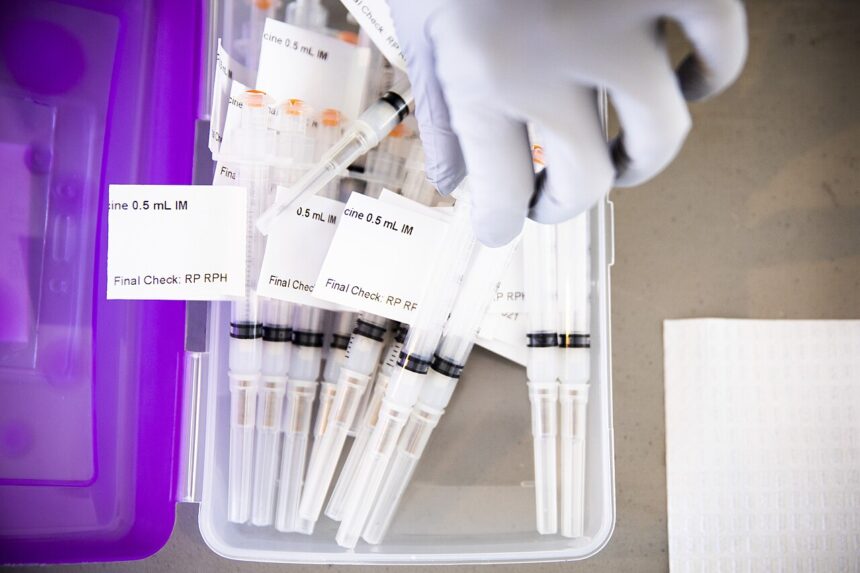
UK immunisation coverage milestones 2026: 89% primary schedule uptake and RSV vaccine introductionIllustrative image · Gov. Wolf Visits Drive-Thru Mass Vaccination Clinic, Discusses Vaccine Success - 51084764567.jpg by governortomwolf / CC BY 2.0 via Wikimedia Commons (CC BY 2.0)
The UK's National Immunisation Service has achieved record 89% coverage for childhood immunisation schedules whilst simultaneously introducing a new respiratory syncytial virus vaccine into routine programmes. This milestone reflects sustained public confidence in vaccination and represents a significant expansion of paediatric vaccine protection. — Gov. Wolf Visits Drive-Thru Mass Vaccination Clinic, Discusses Vaccine Success - 51084764567.jpg by governortomwolf / CC BY 2.0 via Wikimedia Commons (CC BY 2.0)
SHARE
5 min read|976 words
✓ Medically reviewed by Prof. Giorgi Pkhakadze, MD, MPH, PhD · ORCID 0000-0001-7609-4515

The United Kingdom’s National Immunisation Service (NIS) has documented record vaccination coverage rates across childhood immunisation programmes, with uptake reaching 89% for the primary schedule, according to the May 2026 Vaccine Update from the UK Department of Health and Social Care. Simultaneously, the NIS is preparing to introduce a new respiratory syncytial virus (RSV) vaccine into routine childhood immunisation schedules, marking a significant expansion of the paediatric vaccination portfolio.

Contents
    • Key takeaways
      • Vaccination programme expansion and coverage milestones
  • Record childhood immunisation coverage reflects sustained public confidence
  • RSV vaccine introduction addresses gap in respiratory pathogen prevention
  • Coordinated rollout across UK nations reflects integrated immunisation strategy
    • What this means
  • Frequently asked questions
    • What is RSV and why is a vaccine needed?
    • How will the RSV vaccine be administered in UK immunisation schedules?
    • Why has the UK achieved 89% coverage when some other high-income countries report lower rates?

Key takeaways

  • Childhood immunisation uptake in the UK reached 89% coverage for the primary schedule in 2026, the highest recorded rate to date
  • A new RSV vaccine is being integrated into routine childhood immunisation programmes, addressing a previously unvaccinated respiratory pathogen
  • These developments reflect sustained investment in immunisation infrastructure and healthcare workforce training across the UK’s four nations
89%
Childhood immunisation uptake rate for primary vaccination schedule, May 2026 UK data

Vaccination programme expansion and coverage milestones

UK childhood immunisation uptake and new vaccine introductions, 2026

89%
Primary schedule uptake
RSV vaccine
New introduction
4 nations
Coordinated rollout

Source: UK Department of Health and Social Care, May 2026 | Georgian Medical Journal News

Record childhood immunisation coverage reflects sustained public confidence

The 89% coverage figure reported in the UK’s May 2026 Vaccine Update represents the highest uptake rate documented in the National Immunisation Service’s records. This milestone suggests strong parental engagement with childhood vaccination schedules and confidence in routine immunisations across England, Scotland, Wales, and Northern Ireland.

Submit Your Paper
GMJ_Submit_Banner

Sustained high coverage rates are essential for maintaining community protection against vaccine-preventable diseases. According to epidemiological principles established by the US Centers for Disease Control and Prevention, herd immunity thresholds for most childhood diseases require coverage rates between 85% and 95%, depending on the pathogen’s basic reproduction number. The UK’s achievement of 89% coverage positions most childhood vaccination schedules within protective thresholds.

🎙️ Related Podcast Episodes
🎧 # 6 | WHO Influenza Vaccine Update 2026–2027 | GMJ Briefing · 19m
🎧 #16 | WHO Prequalifies New Oral Polio Vaccine to Strengthen Global Eradication Efforts · 20m
🎧 #23 | WHO: Next-Generation Influenza Vaccines Could Save Millions of Lives · 18m

RSV vaccine introduction addresses gap in respiratory pathogen prevention

The integration of a respiratory syncytial virus vaccine into routine childhood immunisation programmes marks a substantial addition to the UK’s paediatric vaccine portfolio, according to the May 2026 NIS guidance. RSV is a major cause of lower respiratory tract infection in infants and young children, with seasonal epidemics occurring annually across temperate climates.

The licensed RSV vaccines now being introduced represent the first vaccine-preventable options for this historically unvaccinated pathogen. Prior to vaccine availability, RSV prevention relied solely on non-pharmaceutical interventions and supportive care. The World Health Organization’s RSV fact sheet notes that RSV causes approximately 33 million lower respiratory infections annually in children under 5 years globally, with approximately 160,000 deaths in children under 5 years in low-income countries.

Coordinated rollout across UK nations reflects integrated immunisation strategy

The RSV vaccine introduction is being implemented through coordinated planning across England, Scotland, Wales, and Northern Ireland, with guidance issued through the UK Health Security Agency and devolved health authorities. This multi-nation approach ensures consistency in scheduling, eligibility criteria, and monitoring across the four constituent countries of the United Kingdom.

Immunisation practitioners across primary care, health visiting services, and childhood immunisation clinics are receiving updated training materials and clinical guidance through the Vaccine Update publication, which serves as the primary technical resource for UK immunisation professionals. This distributed model of healthcare delivery—combining primary care capacity with specialist immunisation clinics—has proven effective for achieving high coverage rates whilst maintaining safety and quality standards.

Childhood immunisation uptake reaching 89% coverage for the primary vaccination schedule represents a record achievement in UK immunisation services, achieved whilst simultaneously integrating a new RSV vaccine into routine programmes.

— UK National Immunisation Service, Department of Health and Social Care (May 2026)

What this means

For patients: Children now have access to protection against RSV through routine vaccination, reducing their risk of severe respiratory illness during winter months. Parents should discuss RSV vaccine timing and schedule with their health visitor or general practitioner.
For clinicians: Immunisation practitioners must update their knowledge of RSV vaccine indications, contraindications, administration technique, and adverse event reporting. Training resources are available through the UK Health Security Agency and local immunisation coordinators.
For policymakers: The achievement of 89% coverage provides evidence that sustained investment in immunisation infrastructure, healthcare workforce training, and vaccine supply security yields measurable population health gains. Continued funding and integration of new vaccines requires forward planning and resource allocation.

Frequently asked questions

What is RSV and why is a vaccine needed?

Respiratory syncytial virus causes lower respiratory tract infections in infants and young children, leading to hospitalisation in approximately 2-3% of infected infants in developed countries. Prior to vaccine availability, management relied on supportive care alone. The newly available RSV vaccines provide active immunisation, reducing the risk of severe disease and respiratory hospitalisation in vaccinated children.

How will the RSV vaccine be administered in UK immunisation schedules?

Specific scheduling details, age of administration, and integration with other vaccines are provided in the May 2026 Vaccine Update from the Department of Health and Social Care. Immunisation practitioners should consult this guidance and local protocols. Typically, new vaccines are integrated at specific ages to maximise protection whilst minimising visits.

Why has the UK achieved 89% coverage when some other high-income countries report lower rates?

The UK’s National Health Service provides universal access to vaccines through general practice and specialist immunisation clinics, removing financial barriers to vaccination. Additionally, robust call-and-recall systems ensure eligible children are invited for vaccination, and healthcare professionals actively promote immunisation during routine contact with families. See Health Policy coverage for comparative healthcare systems analysis.

The UK’s achievement of record childhood immunisation coverage, combined with proactive integration of new RSV vaccines, demonstrates the effectiveness of sustained investment in universal immunisation programmes. As respiratory infections remain a leading cause of childhood morbidity globally, the expansion of vaccine-preventable protection in high-income health systems establishes precedent for RSV vaccine introduction in other countries with comparable immunisation infrastructure. Continued monitoring of vaccine safety and effectiveness through established pharmacovigilance systems will provide essential evidence for policymakers in other jurisdictions considering RSV vaccine adoption.

Source: Vaccine Update: Issue 371, May 2026, NIN Special, UK Department of Health and Social Care

Was this article helpful?

Disclaimer. This article is health journalism intended for general information and education. It is not medical advice and is not a substitute for professional diagnosis or treatment. Always consult a qualified healthcare provider about your individual circumstances. Full disclaimer →

Related Coverage

NHS Medical Training Act boosts UK doctor recruitment, data showsAug 4, 2026
UK Spring 2026 COVID-19 Vaccination Campaign Targets Vulnerable PopulationsAug 4, 2026
Understanding UV Radiation: What the Science Says About Sun ProtectionAug 4, 2026
AI-Enhanced Cardiac Imaging Enables Earlier Heart Transplantation: A Case Study from Nature MedicineAug 4, 2026
PG
Written by
Prof. Giorgi Pkhakadze, MD, MPH, PhD
Editor-in-Chief, GMJ News
Full profile →  ·  ORCID 0000-0001-7609-4515
Medical disclaimer. This article is health journalism intended for general information. It is not medical advice and is not a substitute for consultation with a qualified healthcare professional. Always seek your physician's advice regarding any medical condition.
Medically reviewed by Prof. Giorgi Pkhakadze, MD, MPH, PhD. Spotted an error? Contact the editorial team.

Get the GMJ News digest
Evidence-based health journalism in your inbox. No spam; unsubscribe anytime.
TAGGED:childhood vaccinesimmunisationpublic healthRSVUK healthvaccination
Share This Article
Facebook LinkedIn Bluesky Copy Link Print
GMJ
ByGMJ Practice Desk
Follow:
GMJ Practice Desk is part of GMJ News, the newsroom of the Georgian Medical Journal (gmj.ge), published by the Public Health Institute of Georgia. Every article is editorially reviewed before publication.
Leave a Comment Leave a Comment

Leave a Reply Cancel reply

Your email address will not be published. Required fields are marked *

Submit Your Paper →

Georgia's peer-reviewed open-access medical journal. No APC until January 2027.
Submit Manuscript →
NHS Medical Training Act boosts UK doctor recruitment, data shows

NHS England data confirms the Medical Training Prioritisation Act has successfully increased…

UK Spring 2026 COVID-19 Vaccination Campaign Targets Vulnerable Populations

The UK has launched a spring 2026 COVID-19 vaccination campaign targeting vulnerable…

Understanding UV Radiation: What the Science Says About Sun Protection

Ultraviolet radiation is essential for vitamin D synthesis but excessive exposure increases…

Submit Your Paper to GMJ

No APC until January 2027.
Submit Manuscript →

You Might Also Like

Comparison of olive oil polyphenol content across retail brands showing variation within extra virgin gradeIllustrative image · "Homegrown Tomatoes and Buffalo Mozarella Salad with Cinnamon Basil and Extra Virgin Olive Oil" by Fareham Wine is licensed under CC BY 2.0. To view a copy of this license, visit https://creativecommons.org/licenses/by/2.0/. (CC BY 2.0)
Clinical UpdatesExplainersPerspectivesPractice

Extra Virgin Olive Oil’s Grade Doesn’t Measure What Matters: Why Polyphenol Content Goes Unlabelled

By
GMJ Practice Desk
24/07/2026
Restaurant menu with warning label highlighting high-sugar itemsIllustrative image · Photo by Neon Wang on Unsplash (Unsplash License)
Health PolicyNew StudiesPolicy & SystemsResearch Digest

Warning Labels on Restaurant Menus Cut Sugar Orders by 31%, Major US Trial Shows

By
GMJ Policy Desk
18/06/2026
Diagram of neurotransmitter molecules and brain cell communicationIllustrative image · Photo by SHVETS production on Pexels (Pexels License)
Clinical UpdatesExplainersPerspectivesPractice

How neurotransmitters control your mood, sleep, and focus: a primer on brain chemistry

By
GMJ Practice Desk
23/07/2026
Georgian hospital emergency department maintaining operations during healthcare negotiationsIllustrative image · Photo by Atlantic Ambience on Pexels (Pexels License)
Health PolicyPolicy & Systems

Georgian Healthcare System Faces Critical Juncture as Doctor Strikes Temporarily Suspended

By
GMJ Policy Desk
30/06/2026
Facebook Twitter Youtube Instagram
Company
  • Privacy Policy
  • Contact US
  • GMJ Journal
  • Submit Manuscript
  • Editorial Team
  • Register at GMJ
  • Terms of Use

Subscribe to GMJ News — Click here

Join Community
© 2026 Georgian Medical Journal (GMJ). Published by the Public Health Institute of Georgia (PHIG). All rights reserved.
Welcome Back!

Sign in to your account

Username or Email Address
Password

Lost your password?

Not a member? Sign Up