By using this site, you agree to the Privacy Policy and Terms of Use.
Accept
GMJ NewsGMJ NewsGMJ News
  • Latest News
    • GMJ Briefs
  • Podcast & Media
    • Podcast Episodes
    • GMJ Audio
    • GMJ Videos
  • Research Digest
    • New Studies
    • Georgian Research
    • Data & Numbers
  • Policy & Systems
    • Health Policy
    • Quality & Safety
    • Migration & Health
    • Global Health
  • Practice
    • Clinical Updates
    • Case Discussions
    • Pharmacy & Prescribing
    • Ingredients A-Z
  • Perspectives
    • Editorial
    • Explainers
    • Voices
    • Letters
  • GMJ Articles
    • Vol. 1 Issue 2 (2026)
    • Vol. 1 Issue 1 (2026)
    • Pre-Launch Articles (2025)
  • Read the Journal →
  • About GMJ News
Notification Show More
Font ResizerAa
GMJ NewsGMJ News
Font ResizerAa
  • Latest News
    • GMJ Briefs
  • Podcast & Media
    • Podcast Episodes
    • GMJ Audio
    • GMJ Videos
  • Research Digest
    • New Studies
    • Georgian Research
    • Data & Numbers
  • Policy & Systems
    • Health Policy
    • Quality & Safety
    • Migration & Health
    • Global Health
  • Practice
    • Clinical Updates
    • Case Discussions
    • Pharmacy & Prescribing
    • Ingredients A-Z
  • Perspectives
    • Editorial
    • Explainers
    • Voices
    • Letters
  • GMJ Articles
    • Vol. 1 Issue 2 (2026)
    • Vol. 1 Issue 1 (2026)
    • Pre-Launch Articles (2025)
  • Read the Journal →
  • About GMJ News
Follow US
GMJ News > GMJ Briefs > Clinical Readiness Crisis: Survey Reveals 87% of Medical Students Feel Unprepared for Practice

Clinical Readiness Crisis: Survey Reveals 87% of Medical Students Feel Unprepared for Practice

GMJ
Last updated: 12/07/2026 14:44
By
Prof. Giorgi Pkhakadze
Share
1 Min Read
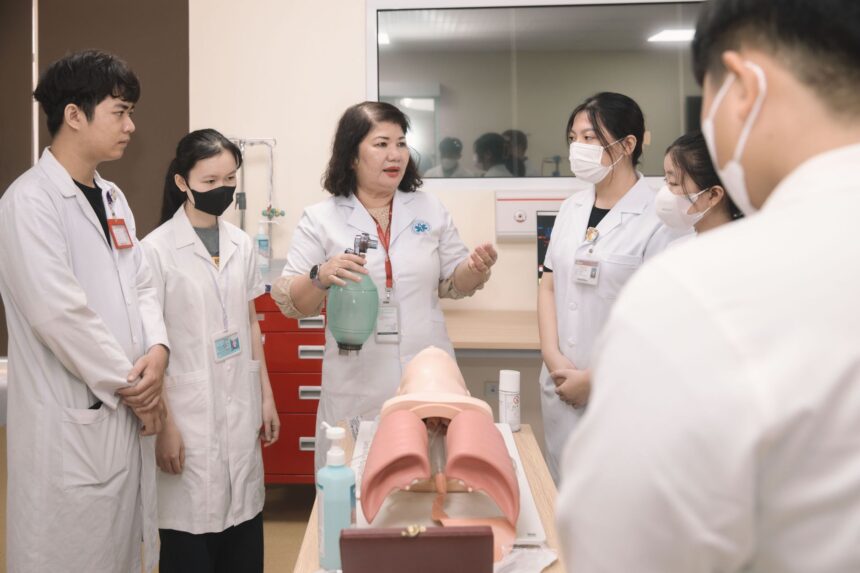
Medical students training in realistic hospital simulation ward with modern equipment
UK medical college unveils state-of-the-art simulation ward to provide students with realistic clinical training before entering live patient environments. The facility addresses documented gaps in clinical preparedness among newly qualified healthcare professionals. — Photo by Duy Tân Đại học on Pexels (Pexels License)
SHARE
1 min read|111 words

A concerning gap exists in medical education preparedness, with recent surveys indicating that 87% of final-year medical students report feeling inadequately prepared for clinical practice. This alarming statistic underscores longstanding concerns about the transition from academic training to real-world healthcare environments.

To address this challenge, educational institutions are increasingly adopting simulation-based training approaches with documented success. Research demonstrates that immersive simulation training significantly improves student confidence and clinical competency across essential areas including patient communication, basic procedures, and emergency response protocols. The opening of advanced simulation wards represents an evidence-based solution to bridge the preparedness gap, offering students controlled practice opportunities that build competence before they assume responsibility for live patient care.

Was this article helpful?

GMJ Brief · Key Finding

📰 Read the full article: UK Medical College Unveils Lifelike Hospital Training Ward to Bridge Clinical Skills Gap →

Related reference
  • Iron · Ingredient
Share This Article
Facebook LinkedIn Bluesky Copy Link Print
GMJ
ByProf. Giorgi Pkhakadze
Follow:
Prof. Giorgi Pkhakadze, MD, MPH, PhD, is Editor-in-Chief of the Georgian Medical Journal and Chair of the Public Health Institute of Georgia (PHIG). He is Professor and Head of the Department of Social and Behavioural Sciences at David Tvildiani Medical University, and Secretary/Treasurer of the UEMS Section of Public Health. ORCID: 0000-0001-7609-4515.

Submit Your Paper →

Georgia's peer-reviewed open-access medical journal. No APC until January 2027.
Submit Manuscript →
Brain preservation depends on where you store fat, not how much you weigh

A 16-year study reveals that visceral fat accumulation—not total weight—predicts brain volume…

The 20 Amino Acids: Your Body’s Protein Alphabet Explained

Your body builds every protein from just 20 amino acids, nine of…

White House Updates Dietary Guidelines: Emphasis on Whole Foods and Protein Over Processing

The White House has released its 2025–2030 Dietary Guidelines, prioritizing minimally processed,…

Submit Your Paper to GMJ

No APC until January 2027.
Submit Manuscript →

You Might Also Like

Paralympic guide runner training session with visually impaired athlete

Specialized Guide Runner Training Reduces Injury Risk by 73 Percent

By
Prof. Giorgi Pkhakadze
25/06/2026
Nigerian food safety officials and WHO World Food Safety Day 2026 campaign materials

600 Million Annual Foodborne Illnesses Drive Global Public Health Urgency

By
Prof. Giorgi Pkhakadze
02/07/2026

WHO and Brazil Call for Immediate Finalisation of Global Pandemic Prevention Agreement

By
Prof. Giorgi Pkhakadze
16/06/2026
Endoscopic view showing black esophageal mucosa characteristic of acute esophageal necrosis

Mortality in Acute Esophageal Necrosis Ranges 5-35% Based on Recognition Speed

By
Prof. Giorgi Pkhakadze
02/07/2026
Facebook Twitter Youtube Instagram
Company
  • Privacy Policy
  • Contact US
  • GMJ Journal
  • Submit Manuscript
  • Editorial Team
  • Register at GMJ
  • Terms of Use

Subscribe to GMJ News — Click here

Join Community
© 2026 Georgian Medical Journal (GMJ). Published by the Public Health Institute of Georgia (PHIG). All rights reserved.
Welcome Back!

Sign in to your account

Username or Email Address
Password

Lost your password?

Not a member? Sign Up