By using this site, you agree to the Privacy Policy and Terms of Use.
Accept
GMJ NewsGMJ NewsGMJ News
  • Latest News
    • GMJ Briefs
  • Podcast & Media
    • Podcast Episodes
    • GMJ Audio
    • GMJ Videos
  • Research Digest
    • New Studies
    • Georgian Research
    • Data & Numbers
  • Policy & Systems
    • Health Policy
    • Quality & Safety
    • Migration & Health
    • Global Health
  • Practice
    • Clinical Updates
    • Case Discussions
    • Pharmacy & Prescribing
    • Ingredients A-Z
  • Perspectives
    • Editorial
    • Explainers
    • Voices
    • Letters
  • GMJ Articles
    • Vol. 1 Issue 2 (2026)
    • Vol. 1 Issue 1 (2026)
    • Pre-Launch Articles (2025)
  • Read the Journal →
  • About GMJ News
Notification Show More
Font ResizerAa
GMJ NewsGMJ News
Font ResizerAa
  • Latest News
    • GMJ Briefs
  • Podcast & Media
    • Podcast Episodes
    • GMJ Audio
    • GMJ Videos
  • Research Digest
    • New Studies
    • Georgian Research
    • Data & Numbers
  • Policy & Systems
    • Health Policy
    • Quality & Safety
    • Migration & Health
    • Global Health
  • Practice
    • Clinical Updates
    • Case Discussions
    • Pharmacy & Prescribing
    • Ingredients A-Z
  • Perspectives
    • Editorial
    • Explainers
    • Voices
    • Letters
  • GMJ Articles
    • Vol. 1 Issue 2 (2026)
    • Vol. 1 Issue 1 (2026)
    • Pre-Launch Articles (2025)
  • Read the Journal →
  • About GMJ News
Follow US
GMJ News > GMJ Briefs > 20-Hour Weekly Minimum: New Medicaid Work Requirement Threshold

20-Hour Weekly Minimum: New Medicaid Work Requirement Threshold

GMJ
Last updated: 14/07/2026 10:43
By
Prof. Giorgi Pkhakadze
Share
1 Min Read
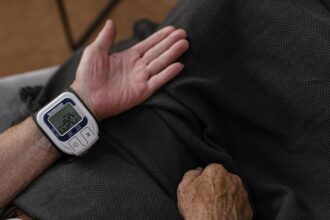
Healthcare policy document showing Medicaid work requirements implementation timeline
New federal rules require Medicaid recipients to demonstrate work activities or face coverage loss, with exemptions for vulnerable groups. States must implement verification systems while protecting eligible populations. — Photo by Julia Zyablova on Unsplash (Unsplash License)
SHARE
1 min read|140 words

New federal Medicaid regulations establish a 20-hour minimum weekly work requirement for eligible recipients, marking a significant policy shift in how states administer healthcare coverage. This threshold applies to non-disabled adults aged 19-64 without dependent children in state Medicaid expansion programs and creates substantial administrative demands for state verification systems.

The implementation timeline spans multiple years, with states beginning limited implementation in year one before expanding coverage in subsequent phases. States must develop robust verification mechanisms to document work activities while simultaneously maintaining exemption categories for vulnerable populations. The regulatory framework allows states discretion in defining specific work activity parameters within federal guidelines, potentially creating variation in how the 20-hour requirement is applied across jurisdictions. This variation underscores the importance of careful state-level program design to balance federal mandates with healthcare access goals.

Read the full article on GMJ Newsroom.

Was this article helpful?

GMJ Brief · Key Finding

📰 Read the full article: New US Rules Require Work Activities for Medicaid Recipients →

Share This Article
Facebook LinkedIn Bluesky Copy Link Print
GMJ
ByProf. Giorgi Pkhakadze
Follow:
Prof. Giorgi Pkhakadze, MD, MPH, PhD, is Editor-in-Chief of the Georgian Medical Journal and Chair of the Public Health Institute of Georgia (PHIG). He is Professor and Head of the Department of Social and Behavioural Sciences at David Tvildiani Medical University, and Secretary/Treasurer of the UEMS Section of Public Health. ORCID: 0000-0001-7609-4515.

Submit Your Paper →

Georgia's peer-reviewed open-access medical journal. No APC until January 2027.
Submit Manuscript →
Eye-tracking study reveals depression shifts children’s attention to sad faces

Eye-tracking research reveals that depression alters how children visually attend to emotional…

Why Nearly Half of U.S. Counties Lack Maternity Care Despite Falling Birth Rates

Nearly 50% of U.S. counties lack an obstetrician-gynecologist despite falling birth rates.…

Why Sunlight Triggers Sneezing in Some People: The Science Behind Photic Sneeze Reflex

Approximately 18–35% of people experience involuntary sneezing when exposed to bright sunlight—a…

Submit Your Paper to GMJ

No APC until January 2027.
Submit Manuscript →

You Might Also Like

Policy & SystemsQuality & Safety

FDA Alerts Hospitals to Medline Catheter Recall Over Infection Risk

By
Prof. Giorgi Pkhakadze
21/06/2026

EBOLA OUTBREAK – DRC/UGANDA CROSS-BORDER TRANSMISSION – PHEIC DECLARED

By
Prof. Giorgi Pkhakadze
31/05/2026

PHEIC Declaration: Ebola Cross-Border Transmission DRC-Uganda

By
Prof. Giorgi Pkhakadze
31/05/2026
Pharmacy & PrescribingPractice

UK Recalls ChloraPrep Antiseptic Applicators Over Sterility Breach Risk

By
Prof. Giorgi Pkhakadze
03/06/2026
Facebook Twitter Youtube Instagram
Company
  • Privacy Policy
  • Contact US
  • GMJ Journal
  • Submit Manuscript
  • Editorial Team
  • Register at GMJ
  • Terms of Use

Subscribe to GMJ News — Click here

Join Community
© 2026 Georgian Medical Journal (GMJ). Published by the Public Health Institute of Georgia (PHIG). All rights reserved.
Welcome Back!

Sign in to your account

Username or Email Address
Password

Lost your password?

Not a member? Sign Up