By using this site, you agree to the Privacy Policy and Terms of Use.
Accept
GMJ NewsGMJ NewsGMJ News
  • Latest News
    • GMJ Briefs
  • Podcast & Media
    • Podcast Episodes
    • GMJ Audio
    • GMJ Videos
  • Research Digest
    • New Studies
    • Georgian Research
    • Data & Numbers
  • Policy & Systems
    • Health Policy
    • Quality & Safety
    • Migration & Health
    • Global Health
  • Practice
    • Clinical Updates
    • Case Discussions
    • Pharmacy & Prescribing
    • Ingredients A-Z
  • Perspectives
    • Editorial
    • Explainers
    • Voices
    • Letters
  • Health Topics
  • GMJ Articles
    • Vol. 1 Issue 2 (2026)
    • Vol. 1 Issue 1 (2026)
    • Pre-Launch Articles (2025)
  • Read the Journal →
  • About GMJ News
Notification Show More
Font ResizerAa
GMJ NewsGMJ News
Font ResizerAa
  • Latest News
    • GMJ Briefs
  • Podcast & Media
    • Podcast Episodes
    • GMJ Audio
    • GMJ Videos
  • Research Digest
    • New Studies
    • Georgian Research
    • Data & Numbers
  • Policy & Systems
    • Health Policy
    • Quality & Safety
    • Migration & Health
    • Global Health
  • Practice
    • Clinical Updates
    • Case Discussions
    • Pharmacy & Prescribing
    • Ingredients A-Z
  • Perspectives
    • Editorial
    • Explainers
    • Voices
    • Letters
  • Health Topics
  • GMJ Articles
    • Vol. 1 Issue 2 (2026)
    • Vol. 1 Issue 1 (2026)
    • Pre-Launch Articles (2025)
  • Read the Journal →
  • About GMJ News
Follow US
GMJ News > GMJ Briefs > What You Need to Know About the New Biological Age Blood Test

What You Need to Know About the New Biological Age Blood Test

GMJ
Last updated: 30/07/2026 20:43
By
Prof. Giorgi Pkhakadze
Share
1 Min Read
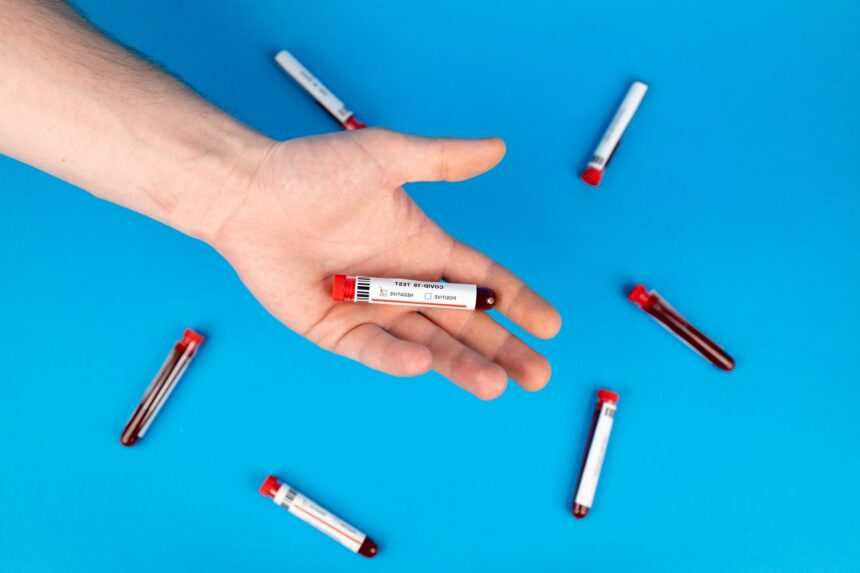
Medical researcher examining blood samples for biological age testing in laboratory setting
Stanford Medicine develops OrganAge blood test measuring biological aging across 11 organ systems. Test predicts disease risk 20-50% more accurately than traditional methods, potentially revolutionizing preventive medicine. — Photo by Maksim Goncharenok on Pexels (Pexels License)
SHARE
1 min read|148 words

The OrganAge blood test introduces three transformative capabilities for precision medicine. First, it measures aging across 11 distinct organ systems using protein biomarkers, providing comprehensive biological aging profiles rather than relying on chronological age alone. Second, this approach predicts disease risk 20-50% more accurately than traditional assessment methods, enabling clinicians to identify vulnerable patients with far greater precision.

Most importantly, the test offers potential prevention decades before symptoms appear—a paradigm shift in medical practice. Instead of waiting for disease manifestation, physicians can now identify accelerated aging in specific organs and implement targeted interventions. This Stanford Medicine research, conducted on over 45,000 participants, demonstrates that biological age varies significantly across organ systems within individual patients. Understanding these variations allows for personalized prevention strategies that address specific vulnerabilities, potentially preventing disease progression before it begins. This represents a significant advancement in preventive medicine practice.

Read the full article on GMJ Newsroom.

Was this article helpful?

GMJ Brief · Takeaway

📰 Read the full article: Blood Test Reveals Biological Age of 11 Organ Systems, Predicts Disease Risk Years in Advance →

Share This Article
Facebook LinkedIn Bluesky Copy Link Print
GMJ
ByProf. Giorgi Pkhakadze
Follow:
Prof. Giorgi Pkhakadze, MD, MPH, PhD, is Editor-in-Chief of the Georgian Medical Journal and Chair of the Public Health Institute of Georgia (PHIG). He is Professor and Head of the Department of Social and Behavioural Sciences at David Tvildiani Medical University, and Secretary/Treasurer of the UEMS Section of Public Health. ORCID: 0000-0001-7609-4515.

Submit Your Paper →

Georgia's peer-reviewed open-access medical journal. No APC until January 2027.
Submit Manuscript →
How neurotransmitters orchestrate mood, sleep, and cognition: a biochemical primer

Brain function depends on chemical communication between neurons through neurotransmitters. Twelve major…

Vitamin D’s Role in Alzheimer’s Tau Accumulation: New Evidence from Framingham Heart Study

A 16-year analysis from the Framingham Heart Study finds that higher vitamin…

Whey protein triggers substantial insulin response despite low carbohydrate content, research shows

Whey protein consumed on an empty stomach triggers insulin secretion 90% higher…

Submit Your Paper to GMJ

No APC until January 2027.
Submit Manuscript →

You Might Also Like

PHEIC Declaration: Ebola Outbreak Cross-Border Transmission DRC-Uganda

By
Prof. Giorgi Pkhakadze
31/05/2026
Medical illustration showing stem cell-derived heart patch being placed on damaged cardiac tissue

Stem Cell Heart Patches Offer New Treatment Path for Millions With Advanced Heart Failure

By
Prof. Giorgi Pkhakadze
04/06/2026
Dr Nicola Rose MHRA Executive Director receiving OBE recognition for public health contributions

Regulatory Excellence Recognized: MHRA Leader Receives OBE for Science Leadership

By
Prof. Giorgi Pkhakadze
05/07/2026
Portrait of Dr. Daniela Hozbor, Argentine biochemist researching pertussis vaccines

From Mar del Plata to Global Impact: Argentine Researcher Transforms Pertussis Vaccine Development

By
Prof. Giorgi Pkhakadze
21/06/2026
Facebook Twitter Youtube Instagram
Company
  • Privacy Policy
  • Contact US
  • GMJ Journal
  • Submit Manuscript
  • Editorial Team
  • Register at GMJ
  • Terms of Use

Subscribe to GMJ News — Click here

Join Community
© 2026 Georgian Medical Journal (GMJ). Published by the Public Health Institute of Georgia (PHIG). All rights reserved.
Welcome Back!

Sign in to your account

Username or Email Address
Password

Lost your password?

Not a member? Sign Up