By using this site, you agree to the Privacy Policy and Terms of Use.
Accept
GMJ NewsGMJ NewsGMJ News
  • Latest News
    • GMJ Briefs
  • Podcast & Media
    • Podcast Episodes
    • GMJ Audio
    • GMJ Videos
  • Research Digest
    • New Studies
    • Georgian Research
    • Data & Numbers
  • Policy & Systems
    • Health Policy
    • Quality & Safety
    • Migration & Health
    • Global Health
  • Practice
    • Clinical Updates
    • Case Discussions
    • Pharmacy & Prescribing
    • Ingredients A-Z
  • Perspectives
    • Editorial
    • Explainers
    • Voices
    • Letters
  • GMJ Articles
    • Vol. 1 Issue 2 (2026)
    • Vol. 1 Issue 1 (2026)
    • Pre-Launch Articles (2025)
  • Read the Journal →
  • About GMJ News
Notification Show More
Font ResizerAa
GMJ NewsGMJ News
Font ResizerAa
  • Latest News
    • GMJ Briefs
  • Podcast & Media
    • Podcast Episodes
    • GMJ Audio
    • GMJ Videos
  • Research Digest
    • New Studies
    • Georgian Research
    • Data & Numbers
  • Policy & Systems
    • Health Policy
    • Quality & Safety
    • Migration & Health
    • Global Health
  • Practice
    • Clinical Updates
    • Case Discussions
    • Pharmacy & Prescribing
    • Ingredients A-Z
  • Perspectives
    • Editorial
    • Explainers
    • Voices
    • Letters
  • GMJ Articles
    • Vol. 1 Issue 2 (2026)
    • Vol. 1 Issue 1 (2026)
    • Pre-Launch Articles (2025)
  • Read the Journal →
  • About GMJ News
Follow US
GMJ News > GMJ Briefs > What Clinicians Need to Know About Chikungunya’s Chronic Forms

What Clinicians Need to Know About Chikungunya’s Chronic Forms

GMJ
Last updated: 01/07/2026 18:52
By
Prof. Giorgi Pkhakadze
Share
1 Min Read
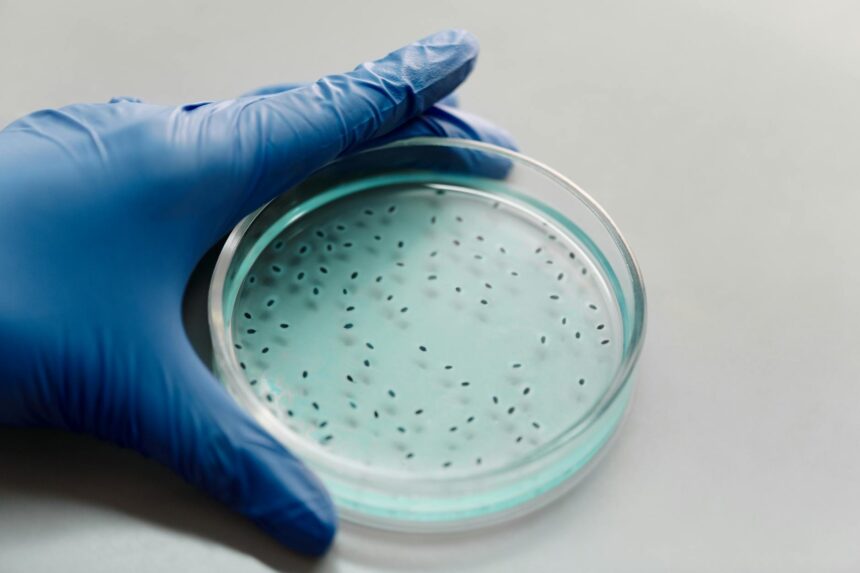
Microscopic image of chikungunya virus particles and infected joint tissue
New research suggests genetic factors may explain why some chikungunya virus patients develop chronic joint symptoms lasting months or years. Up to 40% of patients may experience persistent arthritis beyond the acute infection phase. — Photo: Edward Jenner / Pexels
SHARE
1 min read|138 words

As chikungunya cases continue to surge globally, healthcare providers must recognize that infection outcomes are not uniform, and genetic factors play a critical role in disease progression. Clinical teams should understand three key points: first, up to 40% of patients will develop persistent joint symptoms extending beyond six months, requiring long-term management strategies. Second, genetic variations in immune response pathways significantly influence who develops chronic complications, suggesting that future diagnostic testing may predict susceptibility. Third, currently no specific targeted treatments exist for chronic chikungunya arthralgia, making early identification and supportive care essential. Research into HLA polymorphisms and cytokine response pathways may eventually enable personalized medicine approaches. Clinicians managing chikungunya patients should maintain vigilance for persistent arthralgia development and counsel patients that genetic predisposition, rather than infection severity, may determine their long-term prognosis. Read the full article on GMJ Newsroom.

Was this article helpful?

GMJ Brief · Takeaway

📰 Read the full article: Genetic Factors May Explain Why Some Chikungunya Infections Turn Chronic →

Share This Article
Facebook LinkedIn Bluesky Copy Link Print
GMJ
ByProf. Giorgi Pkhakadze
Follow:
Prof. Giorgi Pkhakadze, MD, MPH, PhD, is Editor-in-Chief of the Georgian Medical Journal and Chair of the Public Health Institute of Georgia (PHIG). He is Professor and Head of the Department of Social and Behavioural Sciences at David Tvildiani Medical University, and Secretary/Treasurer of the UEMS Section of Public Health. ORCID: 0000-0001-7609-4515.

Submit Your Paper →

Georgia's peer-reviewed open-access medical journal. No APC until January 2027.
Submit Manuscript →
Trump Administration Removes Job Protections for Thousands of Federal Health Workers

Thousands of federal health workers at HHS agencies including CDC, FDA, and…

Rare Lymphatic-Urinary Fistula Causes Milky Urine in NEJM Case Report

A rare case of chyluria caused by a lymphatic-urinary fistula demonstrates how…

Gene Therapy Shows Promise for Inherited Cholesterol Disorder in First-in-Human Trial

First-in-human gene therapy trial shows preliminary safety and efficacy for treating homozygous…

Submit Your Paper to GMJ

No APC until January 2027.
Submit Manuscript →

You Might Also Like

Medical professional using infant resuscitation system in hospital setting

Key Finding: FDA Issues Early Alert for GE HealthCare Infant Resuscitation System Safety Issue

By
Prof. Giorgi Pkhakadze
27/06/2026
Medical illustration showing osteomyelitis bone infection diagnosis and treatment advances

MRI Technology Accelerates Osteomyelitis Detection, Transforming Patient Outcomes

By
Prof. Giorgi Pkhakadze
06/06/2026

Ebola Cross-Border Transmission: DRC-Uganda PHEIC Declaration

By
Prof. Giorgi Pkhakadze
31/05/2026
Medical researcher holding vaccine vial in laboratory setting

Dual-Action Vaccine Offers New Hope Against Lassa Fever in West Africa

By
Prof. Giorgi Pkhakadze
01/07/2026
Facebook Twitter Youtube Instagram
Company
  • Privacy Policy
  • Contact US
  • GMJ Journal
  • Submit Manuscript
  • Editorial Team
  • Register at GMJ
  • Terms of Use

Subscribe to GMJ News — Click here

Join Community
© 2026 Georgian Medical Journal (GMJ). Published by the Public Health Institute of Georgia (PHIG). All rights reserved.
Welcome Back!

Sign in to your account

Username or Email Address
Password

Lost your password?

Not a member? Sign Up