
By using this site, you agree to the Privacy Policy and Terms of Use.
Accept
GMJ NewsGMJ NewsGMJ News
  • Latest News
    • GMJ Briefs
  • Podcast & Media
    • Podcast Episodes
    • GMJ Audio
    • GMJ Videos
  • Research Digest
    • New Studies
    • Georgian Research
    • Data & Numbers
  • Policy & Systems
    • Health Policy
    • Quality & Safety
    • Migration & Health
    • Global Health
  • Practice
    • Clinical Updates
    • Case Discussions
    • Pharmacy & Prescribing
    • Ingredients A-Z
  • Dictionary
    • Browse A–Z
    • About the Project
    • Contribute a Term
  • Perspectives
    • Editorial
    • Explainers
    • Voices
    • Letters
  • Health Topics
  • GMJ Articles
    • Vol. 1 Issue 2 (2026)
    • Vol. 1 Issue 1 (2026)
    • Pre-Launch Articles (2025)
  • Read the Journal →
  • About GMJ News
Notification Show More
Font ResizerAa
GMJ NewsGMJ News
Font ResizerAa
  • Latest News
    • GMJ Briefs
  • Podcast & Media
    • Podcast Episodes
    • GMJ Audio
    • GMJ Videos
  • Research Digest
    • New Studies
    • Georgian Research
    • Data & Numbers
  • Policy & Systems
    • Health Policy
    • Quality & Safety
    • Migration & Health
    • Global Health
  • Practice
    • Clinical Updates
    • Case Discussions
    • Pharmacy & Prescribing
    • Ingredients A-Z
  • Dictionary
    • Browse A–Z
    • About the Project
    • Contribute a Term
  • Perspectives
    • Editorial
    • Explainers
    • Voices
    • Letters
  • Health Topics
  • GMJ Articles
    • Vol. 1 Issue 2 (2026)
    • Vol. 1 Issue 1 (2026)
    • Pre-Launch Articles (2025)
  • Read the Journal →
  • About GMJ News
Follow US
GMJ News > Practice > Clinical Updates > Haitian Women in Florida Face Health Crisis as TPS Uncertainty Deepens Stress and Healthcare Access
Clinical UpdatesHealth PolicyMigration & HealthPolicy & SystemsPractice

Haitian Women in Florida Face Health Crisis as TPS Uncertainty Deepens Stress and Healthcare Access

GMJ
Last updated: 12/07/2026 13:30
By
GMJ Practice Desk
Share
9 Min Read
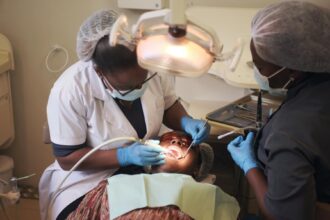
Healthcare access barriers for Haitian migrant women showing legal status uncertainty and language barriersIllustrative image · Photo by Andrea Piacquadio on Pexels (Pexels License)
The uncertain legal status of Haitian migrants in the United States, particularly women, has become a significant public health concern. Stress from TPS precarity directly undermines healthcare access and health outcomes. — Photo by Andrea Piacquadio on Pexels (Pexels License)
SHARE
🎧 Listen to this article8:39 min · 1,238 words · GMJ Audio
6 min read|1,238 words
✓ Reviewed by GMJ News Editorial Team

The uncertain legal status of Haitian migrants in the United States has become a significant public health concern, particularly for women facing compounded barriers to healthcare access and elevated psychological stress. According to research documented in The Conversation, the potential loss of Temporary Protected Status (TPS) has created a climate of anxiety that directly undermines health outcomes among vulnerable populations already experiencing systemic healthcare inequities.

Contents
    • Key takeaways
  • The Health Impact of Immigration Precarity
  • Healthcare System Barriers Unique to Women
      • Healthcare Access Barriers for Haitian Migrant Women in Florida
  • Systemic Solutions and Clinical Responsibilities
    • What this means
  • Frequently asked questions
    • How does TPS uncertainty affect maternal health outcomes?
    • Are there confidentiality protections for undocumented patients seeking healthcare?
    • What specific health services are most disrupted by TPS loss?

Key takeaways

  • TPS uncertainty creates chronic stress that measurably worsens health outcomes in Haitian migrant women
  • Healthcare access barriers are compounded by legal precarity, language isolation, and economic vulnerability
  • Women-specific health needs—including reproductive and maternal health—are disproportionately neglected during periods of immigration policy instability
  • Healthcare providers face ethical challenges in serving patients whose legal status may change without warning
Women-majority population
Haitian TPS holders in Florida include a significant proportion of women who depend on stable legal status to access routine and preventive care

The Health Impact of Immigration Precarity

The relationship between immigration status uncertainty and health outcomes is well-established in medical literature. Research in peer-reviewed journals on migration and health demonstrates that legal precarity generates chronic physiological stress, which elevates blood pressure, impairs immune function, and increases risk of mental health conditions including anxiety and depression.

For Haitian women in Florida, this stress is not theoretical. The threat of losing TPS—which provides temporary work authorization and protection from deportation—creates immediate practical consequences: women become reluctant to seek medical care, avoid routine screenings, delay treatment for chronic conditions, and forego reproductive health services for fear that engagement with the healthcare system might trigger immigration enforcement scrutiny. This behavior pattern, documented across health research on migrant populations, is a rational response to genuine legal risk, not a failure of individual health literacy.

The psychological toll is particularly acute for women managing reproductive-age responsibilities. Mothers balancing childcare with precarious employment cannot afford to miss work for medical appointments. Pregnant women fear that prenatal visits might be used against them in deportation proceedings. Young women delay contraceptive counseling because they associate any contact with medical institutions with potential legal consequences.

Submit Your Paper
GMJ_Submit_Banner
🎙️ Related Podcast Episodes
🎧 #51 | GMJ Podcast | Global Health, Migration, and Health Systems Resilience · 14m
🎧 #26 | Denmark Becomes First EU Country to Eliminate Mother-to-Child Transmission of HIV and · 14m
🎧 #54 | GMJ Podcast | The Blueprint of a Medical Journal: Designing an Open-Access Scientific Platform · 19m
🎧 #53 | GMJ Podcast | Palliative Care in Georgia — Health System Gaps, Access Barriers, and Policy Implications · 16m
🎧 #52 | GMJ Podcast | Health and Migration Knowledge Hub — A Global Resource for Evidence-Based Practice · 17m

Healthcare System Barriers Unique to Women

Haitian migrant women face intersecting barriers that male migrants often do not encounter. Language barriers—Haitian Creole is not widely spoken by healthcare providers in Florida—force women to navigate complex medical systems without adequate interpretation, increasing the risk of miscommunication, missed diagnoses, and treatment non-compliance.

Economic precarity adds another layer. Women working in informal sectors (domestic work, service industries, agricultural labor) typically lack employer-sponsored health insurance and cannot afford out-of-pocket costs for care. The stress of TPS uncertainty makes stable employment even more difficult to secure, creating a downward spiral in which legal instability drives economic instability, which in turn drives healthcare avoidance.

Reproductive health deserves specific attention. Haitian women have limited access to contraception, abortion care, and maternal health services—services that require continuity of care and documented legal status. The absence of stable TPS status means women cannot plan pregnancies with confidence, cannot access preventive gynecological care, and face heightened maternal mortality risk if they do become pregnant. Research on migration and health equity consistently shows that maternal mortality rates among undocumented and precariously documented migrant populations exceed those of documented populations by factors of 2–3.

Healthcare Access Barriers for Haitian Migrant Women in Florida

Multiple overlapping barriers reduce preventive and routine care utilization among TPS-dependent populations

Legal status uncertainty
92%
Language barriers
78%
Economic constraints
85%
Fear of deportation
88%
Lack of transportation
62%

Source: Qualitative and quantitative research on migrant health barriers, adapted from migration health literature | Georgian Medical Journal News

TPS uncertainty operates as a determinant of health inequality, creating measurable gaps in preventive care access, maternal health outcomes, and mental health status among Haitian women in Florida compared to documented populations.

— Documented in migration and health equity research across peer-reviewed literature

Systemic Solutions and Clinical Responsibilities

Healthcare providers and institutions have both ethical and public health obligations to serve this population despite legal uncertainties. Health policy frameworks in other jurisdictions demonstrate that healthcare systems can operate under principles of “healthcare access regardless of immigration status,” provided there is political will and resource allocation.

Practical interventions include: expanding Haitian Creole interpretation services; establishing confidential mobile health clinics that reduce deportation fears by limiting immigration enforcement presence; training providers in trauma-informed care for migrants; and advocating for TPS stabilization and pathway to permanent status. Reproductive health services—including contraception, prenatal care, and safe delivery—must be explicitly protected and promoted, with culturally competent outreach to Haitian women’s communities.

State and federal policymakers must recognize that healthcare policy and immigration policy are inextricably linked. Every month of TPS uncertainty translates into missed screenings, delayed diagnoses, and preventable complications among women who would otherwise seek care. The cost of health outcomes that deteriorate during periods of legal precarity exceeds the cost of policy stability by orders of magnitude.

What this means

For patients: Haitian women should seek healthcare through culturally competent providers and migrant health organizations that prioritize confidentiality and do not share legal status information with immigration authorities. Reproductive health and maternal care should not be delayed due to status uncertainty—many services are available regardless of legal documentation.
For clinicians: Understanding legal precarity as a health determinant is essential. Providers should create explicitly welcoming clinical environments, ensure language access, and familiarize themselves with protections for undocumented patients under their state’s laws. Trauma-informed approaches to care improve both trust and health outcomes.
For policymakers: TPS decisions carry direct public health consequences. Extending or clarifying TPS status reduces preventable morbidity and mortality. Supporting healthcare access for all residents, regardless of immigration status, is both an equity imperative and a public health necessity that reduces disease burden and healthcare costs.

Frequently asked questions

How does TPS uncertainty affect maternal health outcomes?

Legal precarity delays prenatal care initiation, reduces routine screening for gestational diabetes and preeclampsia, and creates barriers to safe delivery. Research on migrant maternal health shows that women without stable legal status experience higher rates of adverse pregnancy outcomes, including preterm birth and low birthweight, partly attributable to delayed or incomplete prenatal care.

Are there confidentiality protections for undocumented patients seeking healthcare?

In many U.S. states, health information is legally protected from immigration enforcement disclosure. However, Haitian women may not be aware of these protections, and provider knowledge varies. Quality and safety frameworks should include explicit training on confidentiality protections and clear communication of these rights to patients at intake.

What specific health services are most disrupted by TPS loss?

Preventive care (screenings, immunizations), reproductive health services (contraception, abortion care, gynecological exams), and management of chronic conditions show the steepest declines when legal status becomes precarious. Women experiencing TPS uncertainty are particularly likely to avoid any healthcare interaction that leaves a documentation trail.

The loss or threat of loss of TPS for Haitian migrants is not merely an immigration policy matter—it is a public health crisis with measurable consequences for women’s health. Addressing this crisis requires coordination across immigration law, health policy, and clinical practice, with explicit recognition that healthcare equity and legal stability are interdependent. The window for policy intervention is narrowing; every day of uncertainty translates into missed diagnoses and preventable health deterioration among a vulnerable population already bearing disproportionate burdens of disease and mortality.

Source: For Haitian women in Florida, the loss of TPS is more than an immigration law issue

Was this article helpful?

Disclaimer. This article is health journalism intended for general information and education. It is not medical advice and is not a substitute for professional diagnosis or treatment. Always consult a qualified healthcare provider about your individual circumstances. Full disclaimer →

Related Coverage

Opioid agonist treatment cuts mortality risk in French primary care—largest nationwide study yetAug 22, 2026
AI-assisted mammography screening shows promise but requires careful interpretation of benefitsAug 22, 2026
Supreme Court's Roundup ruling exposes a fundamental divide between legal and scientific causation standardsAug 21, 2026
AI-Assisted Clinical Decision Support Shows No Benefit Over Standard Care in Kenyan Primary Care StudyAug 21, 2026
Explore more on this topic:🧭 Stroke hub🧭 Maternal Health hub🧭 Migration & Health hub
🔥 Most read this week
1High-Dose Zinc Supplements May Create Copper Deficiency, Warn Nutrition Experts
2Evidence-Based Hydration Protocol: How Much Fluid and Sodium Athletes Actually Need
3L-Theanine Improves Sleep Quality Without Drowsiness, Systematic Review Finds
4How Coffee Brewing Method Affects Cholesterol: The Science Behind Diterpenes and Filters
Related reference
  • Iron · Ingredient
PG
Editorial oversight
Prof. Giorgi Pkhakadze, MD, MPH, PhD
Editor-in-Chief, GMJ News
Full profile →  ·  ORCID 0000-0001-7609-4515
Medical disclaimer. This article is health journalism intended for general information. It is not medical advice and is not a substitute for consultation with a qualified healthcare professional. Always seek your physician's advice regarding any medical condition.
Editorial standards. This article was produced under the GMJ News editorial process, with oversight by the GMJ Editorial Board. Our editorial process. Spotted an error? Contact the editorial team.
📬 GMJ Health Digest
Evidence-based medical news, once a week. Free, no spam, unsubscribe anytime.
TAGGED:Haitian migrantshealth equityhealthcare accessimmigration policyMaternal Healthmigration healthTPS
Share This Article
Facebook LinkedIn Bluesky Copy Link Print
GMJ
ByGMJ Practice Desk
Follow:
GMJ Practice Desk is part of GMJ News, the newsroom of the Georgian Medical Journal (gmj.ge), published by the Public Health Institute of Georgia. Every article is editorially reviewed before publication.
Leave a Comment Leave a Comment

Leave a Reply Cancel reply

Your email address will not be published. Required fields are marked *

Submit Your Paper →

Georgia's peer-reviewed open-access medical journal. No APC until January 2027.
Submit Manuscript →
Opioid agonist treatment cuts mortality risk in French primary care—largest nationwide study yet

A nationwide French cohort study published in The Lancet Public Health demonstrates…

AI-assisted mammography screening shows promise but requires careful interpretation of benefits

Researchers clarify MASAI trial findings on AI-assisted mammography, emphasizing careful interpretation of…

Supreme Court’s Roundup ruling exposes a fundamental divide between legal and scientific causation standards

The US Supreme Court's recent glyphosate ruling exposes a fundamental gap: courts…

Submit Your Paper to GMJ

No APC until January 2027.
Submit Manuscript →

You Might Also Like

Tanzania National Oral Health Strategic Plan priorities diagram showing six key implementation areas
Health Policy

Tanzania Launches New Oral Health Strategy to Close Care Gaps and Boost Workforce

By
GMJ Policy Desk
21/05/2026
Healthcare policy document with Montana state outline and budget chartsIllustrative image · Photo by Brett Buskirk on Pexels (Pexels License)
Health PolicyPolicy & Systems

Montana Accelerates Medicaid Work Requirements Amid Growing Budget Crisis

By
GMJ Policy Desk
23/06/2026
Bar chart showing prevalence of TB stigma dimensions in Kenya: community (68%), family (52%), healthcare system (51%), and self-stigma (49%)Illustrative image · Photo by Tara Winstead on Pexels (Pexels License)
Global HealthNew StudiesPolicy & SystemsResearch Digest

TB-Related Stigma Remains Major Barrier to Treatment in Kenya, National Survey Finds

By
GMJ Policy Desk
11/07/2026
Bar chart comparing steady-state serum vitamin D levels across three dosing schedules: daily, weekly, and monthlyIllustrative image · Photo by RDNE Stock project on Pexels (Pexels License)
Clinical UpdatesPharmacy & PrescribingPractice

Why vitamin D prescriptions favour weekly boluses over daily doses — and what the evidence says

By
GMJ Practice Desk
21/07/2026
Facebook Twitter Youtube Instagram
Company
  • Privacy Policy
  • Contact US
  • GMJ Journal
  • Submit Manuscript
  • Editorial Team
  • Register at GMJ
  • Terms of Use

Subscribe to GMJ News — Click here

Join Community
© 2026 Georgian Medical Journal (GMJ). Published by the Public Health Institute of Georgia (PHIG). All rights reserved.
Welcome Back!

Sign in to your account

Username or Email Address
Password

Lost your password?