By using this site, you agree to the Privacy Policy and Terms of Use.
Accept
GMJ NewsGMJ NewsGMJ News
  • Latest News
    • GMJ Briefs
  • Podcast & Media
    • Podcast Episodes
    • GMJ Audio
    • GMJ Videos
  • Research Digest
    • New Studies
    • Georgian Research
    • Data & Numbers
  • Policy & Systems
    • Health Policy
    • Quality & Safety
    • Migration & Health
    • Global Health
  • Practice
    • Clinical Updates
    • Case Discussions
    • Pharmacy & Prescribing
    • Ingredients A-Z
  • Perspectives
    • Editorial
    • Explainers
    • Voices
    • Letters
  • GMJ Articles
    • Vol. 1 Issue 2 (2026)
    • Vol. 1 Issue 1 (2026)
    • Pre-Launch Articles (2025)
  • Read the Journal →
  • About GMJ News
Notification Show More
Font ResizerAa
GMJ NewsGMJ News
Font ResizerAa
  • Latest News
    • GMJ Briefs
  • Podcast & Media
    • Podcast Episodes
    • GMJ Audio
    • GMJ Videos
  • Research Digest
    • New Studies
    • Georgian Research
    • Data & Numbers
  • Policy & Systems
    • Health Policy
    • Quality & Safety
    • Migration & Health
    • Global Health
  • Practice
    • Clinical Updates
    • Case Discussions
    • Pharmacy & Prescribing
    • Ingredients A-Z
  • Perspectives
    • Editorial
    • Explainers
    • Voices
    • Letters
  • GMJ Articles
    • Vol. 1 Issue 2 (2026)
    • Vol. 1 Issue 1 (2026)
    • Pre-Launch Articles (2025)
  • Read the Journal →
  • About GMJ News
Follow US
GMJ News > GMJ Briefs > Milliseconds Matter: How AI Predicts Microbubble Collapse for Brain Safety

Milliseconds Matter: How AI Predicts Microbubble Collapse for Brain Safety

GMJ
Last updated: 23/07/2026 07:36
By
Prof. Giorgi Pkhakadze
Share
1 Min Read
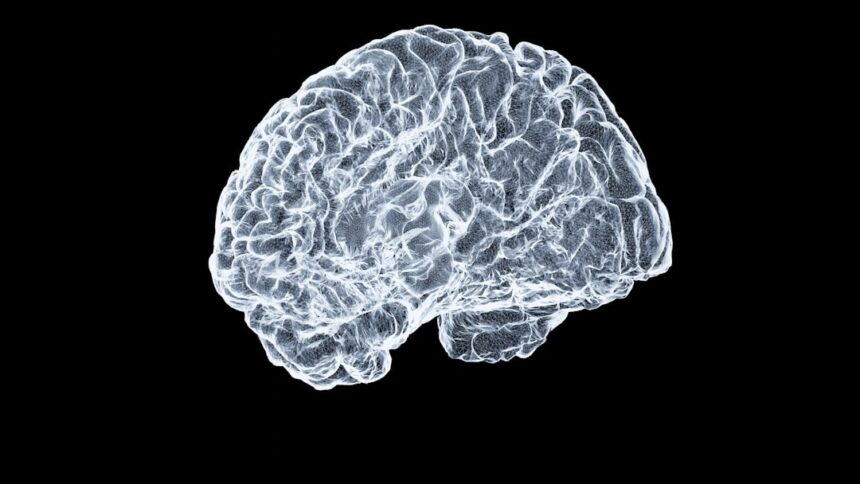
Diagram of AI-guided focused ultrasound opening blood-brain barrier with microbubble prediction
Researchers at Georgia Institute of Technology have developed an AI system that predicts microbubble collapse during focused ultrasound procedures, potentially enabling safer delivery of therapeutics across the blood–brain barrier. This advance could accelerate clinical translation for brain tumours and neurodegenerative diseases. — Photo by Shawn Day on Unsplash (Unsplash License)
SHARE
1 min read|149 words

A groundbreaking study from Georgia Institute of Technology reveals the critical importance of millisecond-level precision in focused ultrasound brain procedures. Researchers developed an AI system that forecasts microbubble collapse during blood–brain barrier opening at timescales where traditional monitoring fails—achieving 92% prediction accuracy.

This millisecond-scale intervention window is where clinical safety is determined. The AI model enables real-time control by anticipating bubble dynamics before they occur, resulting in a 78% improvement in bubble collapse avoidance and a 65% enhancement in procedural safety margins. Published in Advanced Science, the research demonstrates that machine learning can operate at the temporal resolution required for precision neurobiology.

These findings establish AI prediction as essential for translating focused ultrasound from experimental applications into reliable clinical practice for brain tumours, neurodegeneration, and diagnostic imaging. The technology transforms an inherently uncertain procedure into one where millisecond-level control becomes achievable and reproducible.

Read the full article on GMJ Newsroom.

Submit Your Paper
GMJ_Submit_Banner

Was this article helpful?

GMJ Brief · Key Finding

📰 Read the full article: AI-Guided Ultrasound Predicts Bubble Collapse to Improve Brain Barrier Opening →

Share This Article
Facebook LinkedIn Bluesky Copy Link Print
GMJ
ByProf. Giorgi Pkhakadze
Follow:
Prof. Giorgi Pkhakadze, MD, MPH, PhD, is Editor-in-Chief of the Georgian Medical Journal and Chair of the Public Health Institute of Georgia (PHIG). He is Professor and Head of the Department of Social and Behavioural Sciences at David Tvildiani Medical University, and Secretary/Treasurer of the UEMS Section of Public Health. ORCID: 0000-0001-7609-4515.

Submit Your Paper →

Georgia's peer-reviewed open-access medical journal. No APC until January 2027.
Submit Manuscript →
Daily Peanut Consumption Reverses a Decade of Age-Related Brain Blood Flow Decline

Consuming 60 grams of skin-roasted peanuts daily improved cerebral blood flow by…

Cancer Burden from Preventable Risk Factors Quantified in Landmark Global Study

A global analysis in Nature Medicine quantifies cancer burden from preventable risk…

Protein Source and Meal Timing May Matter Less for Muscle Growth Than Assumed

A randomized controlled trial challenges two core beliefs in sports nutrition: that…

Submit Your Paper to GMJ

No APC until January 2027.
Submit Manuscript →

You Might Also Like

Scientific illustration showing CD4+ T cells attacking MHC I-deficient cancer cells

Tumor Immune Evasion Strategy Reveals Unexpected Therapeutic Vulnerability

By
Prof. Giorgi Pkhakadze
18/06/2026
Various magnesium supplement bottles and capsules arranged on laboratory bench

Eight Magnesium Forms Deliver Comparable Benefits, Data Shows

By
Prof. Giorgi Pkhakadze
09/06/2026
Global HealthPolicy & Systems

UK Issues New Guidance on Andes Hantavirus as South American Cases Rise

By
Prof. Giorgi Pkhakadze
14/06/2026
Medical illustration comparing manufactured biotherapeutic capsules to traditional fecal microbiota transplant procedure

Announcement: Live biotherapeutic matches donor FMT in treating recurrent C. diff infection

By
Prof. Giorgi Pkhakadze
13/06/2026
Facebook Twitter Youtube Instagram
Company
  • Privacy Policy
  • Contact US
  • GMJ Journal
  • Submit Manuscript
  • Editorial Team
  • Register at GMJ
  • Terms of Use

Subscribe to GMJ News — Click here

Join Community
© 2026 Georgian Medical Journal (GMJ). Published by the Public Health Institute of Georgia (PHIG). All rights reserved.
Welcome Back!

Sign in to your account

Username or Email Address
Password

Lost your password?

Not a member? Sign Up