By using this site, you agree to the Privacy Policy and Terms of Use.
Accept
GMJ NewsGMJ NewsGMJ News
  • Latest News
    • GMJ Briefs
  • Podcast & Media
    • Podcast Episodes
    • GMJ Audio
    • GMJ Videos
  • Research Digest
    • New Studies
    • Georgian Research
    • Data & Numbers
  • Policy & Systems
    • Health Policy
    • Quality & Safety
    • Migration & Health
    • Global Health
  • Practice
    • Clinical Updates
    • Case Discussions
    • Pharmacy & Prescribing
    • Ingredients A-Z
  • Perspectives
    • Editorial
    • Explainers
    • Voices
    • Letters
  • GMJ Articles
    • Vol. 1 Issue 2 (2026)
    • Vol. 1 Issue 1 (2026)
    • Pre-Launch Articles (2025)
  • Read the Journal →
  • About GMJ News
Notification Show More
Font ResizerAa
GMJ NewsGMJ News
Font ResizerAa
  • Latest News
    • GMJ Briefs
  • Podcast & Media
    • Podcast Episodes
    • GMJ Audio
    • GMJ Videos
  • Research Digest
    • New Studies
    • Georgian Research
    • Data & Numbers
  • Policy & Systems
    • Health Policy
    • Quality & Safety
    • Migration & Health
    • Global Health
  • Practice
    • Clinical Updates
    • Case Discussions
    • Pharmacy & Prescribing
    • Ingredients A-Z
  • Perspectives
    • Editorial
    • Explainers
    • Voices
    • Letters
  • GMJ Articles
    • Vol. 1 Issue 2 (2026)
    • Vol. 1 Issue 1 (2026)
    • Pre-Launch Articles (2025)
  • Read the Journal →
  • About GMJ News
Follow US
GMJ News > GMJ Briefs > Brain Imaging Reveals Why Alcohol Affects People Differently at the Same Legal Limit

Brain Imaging Reveals Why Alcohol Affects People Differently at the Same Legal Limit

GMJ
Last updated: 05/08/2026 03:30
By
Prof. Giorgi Pkhakadze
Share
1 Min Read
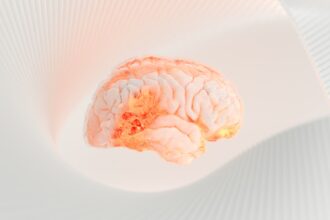
Brain fMRI scan showing reduced neural connectivity from alcohol at legal blood alcohol concentration levels
Functional MRI reveals that individuals with identical blood alcohol levels show variable degrees of brain network fragmentation, predicting differences in subjective intoxication. This neurobiological variation explains why people experience alcohol's effects differently despite the same BAC. — Photo by Google DeepMind on Pexels (Pexels License)
SHARE
1 min read|129 words

New neuroimaging research has identified a key mechanism underlying individual differences in alcohol sensitivity: brain network fragmentation. Published in Drug and Alcohol Dependence (2025), the study used functional MRI to examine how alcohol reorganizes neural connectivity in individuals consuming alcohol to legal driving limits.

The findings challenge the assumption that blood alcohol concentration alone determines intoxication level. Researchers observed that two people with identical BAC measurements can exhibit markedly different patterns of brain network disruption, with the degree of fragmentation directly correlating to how intoxicated they subjectively feel.

This neurobiological variation may explain why some individuals experience pronounced impairment at legal alcohol limits while others report minimal effects. Understanding these brain-level differences could inform personalized assessments of alcohol-related impairment and individual risk profiles.

Read the full article on GMJ Newsroom.

Submit Your Paper
GMJ_Submit_Banner

Was this article helpful?

GMJ Brief · Announcement

📰 Read the full article: Brain network fragmentation at legal alcohol limits predicts subjective intoxication →

Share This Article
Facebook LinkedIn Bluesky Copy Link Print
GMJ
ByProf. Giorgi Pkhakadze
Follow:
Prof. Giorgi Pkhakadze, MD, MPH, PhD, is Editor-in-Chief of the Georgian Medical Journal and Chair of the Public Health Institute of Georgia (PHIG). He is Professor and Head of the Department of Social and Behavioural Sciences at David Tvildiani Medical University, and Secretary/Treasurer of the UEMS Section of Public Health. ORCID: 0000-0001-7609-4515.

Submit Your Paper →

Georgia's peer-reviewed open-access medical journal. No APC until January 2027.
Submit Manuscript →
Personalised Squat Biomechanics: How Individual Posture Determines Safe Exercise Form

Effective squat technique depends on individual postural alignment and structural constraints, not…

Cardiorespiratory Fitness: A Stronger Predictor of Longevity Than Blood Pressure or Cholesterol

Maximal oxygen uptake (VO₂max) emerges as a stronger predictor of long-term health…

The Master Clock: How Your Brain’s Circadian Rhythm Controls Sleep, Hunger, and Mood

Your brain contains a master clock—the suprachiasmatic nucleus—that controls every major physiological…

Submit Your Paper to GMJ

No APC until January 2027.
Submit Manuscript →

You Might Also Like

Medical illustration showing sleep's role in trauma recovery for forced migrants

Poor Sleep Linked to Worse Outcomes Across Three Health Domains in Migrant Trauma Recovery

By
Prof. Giorgi Pkhakadze
22/06/2026
Digital representation of lung transplant technology and ex vivo perfusion systems

Virtual Organ Models Set to Revolutionize Transplant Evaluation

By
Prof. Giorgi Pkhakadze
17/06/2026
Medical stethoscope over legal documents representing healthcare lawsuits in immigration detention

Nationwide Medical Crisis: 33 States Document Systematic Healthcare Failures in Immigration Detention

By
Prof. Giorgi Pkhakadze
09/06/2026
Comparison of frozen, canned, and fresh vegetables showing equivalent nutrient retention across processing methods.

Freezer and Pantry Staples Match Fresh Produce Nutritionally, Study Confirms

By
Prof. Giorgi Pkhakadze
06/08/2026
Facebook Twitter Youtube Instagram
Company
  • Privacy Policy
  • Contact US
  • GMJ Journal
  • Submit Manuscript
  • Editorial Team
  • Register at GMJ
  • Terms of Use

Subscribe to GMJ News — Click here

Join Community
© 2026 Georgian Medical Journal (GMJ). Published by the Public Health Institute of Georgia (PHIG). All rights reserved.
Welcome Back!

Sign in to your account

Username or Email Address
Password

Lost your password?

Not a member? Sign Up