By using this site, you agree to the Privacy Policy and Terms of Use.
Accept
GMJ NewsGMJ NewsGMJ News
  • Latest News
    • GMJ Briefs
  • Podcast & Media
    • Podcast Episodes
    • GMJ Audio
    • GMJ Videos
  • Research Digest
    • New Studies
    • Georgian Research
    • Data & Numbers
  • Policy & Systems
    • Health Policy
    • Quality & Safety
    • Migration & Health
    • Global Health
  • Practice
    • Clinical Updates
    • Case Discussions
    • Pharmacy & Prescribing
    • Ingredients A-Z
  • Perspectives
    • Editorial
    • Explainers
    • Voices
    • Letters
  • GMJ Articles
    • Vol. 1 Issue 2 (2026)
    • Vol. 1 Issue 1 (2026)
    • Pre-Launch Articles (2025)
  • Read the Journal →
  • About GMJ News
Notification Show More
Font ResizerAa
GMJ NewsGMJ News
Font ResizerAa
  • Latest News
    • GMJ Briefs
  • Podcast & Media
    • Podcast Episodes
    • GMJ Audio
    • GMJ Videos
  • Research Digest
    • New Studies
    • Georgian Research
    • Data & Numbers
  • Policy & Systems
    • Health Policy
    • Quality & Safety
    • Migration & Health
    • Global Health
  • Practice
    • Clinical Updates
    • Case Discussions
    • Pharmacy & Prescribing
    • Ingredients A-Z
  • Perspectives
    • Editorial
    • Explainers
    • Voices
    • Letters
  • GMJ Articles
    • Vol. 1 Issue 2 (2026)
    • Vol. 1 Issue 1 (2026)
    • Pre-Launch Articles (2025)
  • Read the Journal →
  • About GMJ News
Follow US
GMJ News > GMJ Briefs > UK Launches Puberty Blocker Trial with Age 11 Enrollment Standard

UK Launches Puberty Blocker Trial with Age 11 Enrollment Standard

GMJ
Last updated: 22/07/2026 03:30
By
Prof. Giorgi Pkhakadze
Share
1 Min Read
Clinical research ethics and pediatric enrollment criteria in gender-affirming care studies
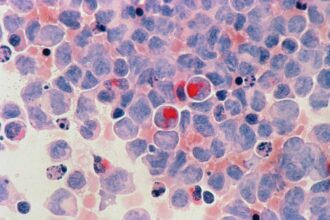
The UK has set a minimum age of 11 years for children to participate in a clinical trial of puberty-blocking drugs. The threshold reflects regulatory and ethical standards for pediatric research participation and informed assent. — CDC scientist transfers H7N9.png by Photo Credit: James Gathany Content Providers: CDC/ Douglas E. Jordan / Public domain via Wikimedia Commons (Public domain)
SHARE
1 min read|138 words

The United Kingdom has established an 11-year minimum age requirement for a clinical trial examining the safety and efficacy of puberty-blocking medications in gender-questioning children. This eligibility threshold represents a carefully calibrated approach to pediatric research ethics, balancing the need to protect vulnerable populations with the scientific imperative to generate robust clinical evidence.

The age standard aligns with regulatory frameworks governing informed assent in pediatric endocrinology research. By setting a developmental capacity benchmark, UK researchers aim to ensure that young participants possess sufficient cognitive maturity to comprehend trial procedures, potential risks, and the voluntary nature of their participation—distinct from parental consent alone.

The trial is expected to generate UK-specific safety and efficacy data that will inform clinical practice guidelines and regulatory decision-making on puberty blockers in gender-affirming care for minors. Read the full article on GMJ Newsroom.

Was this article helpful?

GMJ Brief · Announcement

📰 Read the full article: UK Sets Minimum Age of 11 for Puberty Blocker Clinical Trial in Gender-Questioning Children →

Share This Article
Facebook LinkedIn Bluesky Copy Link Print
GMJ
ByProf. Giorgi Pkhakadze
Follow:
Prof. Giorgi Pkhakadze, MD, MPH, PhD, is Editor-in-Chief of the Georgian Medical Journal and Chair of the Public Health Institute of Georgia (PHIG). He is Professor and Head of the Department of Social and Behavioural Sciences at David Tvildiani Medical University, and Secretary/Treasurer of the UEMS Section of Public Health. ORCID: 0000-0001-7609-4515.

Submit Your Paper →

Georgia's peer-reviewed open-access medical journal. No APC until January 2027.
Submit Manuscript →
Evidence-Based Hydration Protocol: How Much Fluid and Sodium Athletes Actually Need

An evidence-based hydration protocol establishes clear targets for fluid and electrolyte intake:…

Resistance Training Protects Brain Health Through Multiple Pathways, Research Shows

Resistance training activates seven biological pathways that protect brain health and reduce…

Coffee and Heart Health: New 2025 Evidence Reshapes Clinical Guidance

New 2025 evidence reshapes clinical guidance on coffee consumption and heart health,…

Submit Your Paper to GMJ

No APC until January 2027.
Submit Manuscript →

You Might Also Like

Medical illustration showing autoimmune disease impact on myelodysplastic syndrome outcomes

Clinical Implications: Integrating Autoimmune Disease Assessment into MDS Management Protocols

By
Prof. Giorgi Pkhakadze
10/07/2026
Medical illustration showing hepatitis B virus and treatment breakthrough concept

GSK’s Experimental Hepatitis B Drug Shows Promise in Phase 2 Trials

By
Prof. Giorgi Pkhakadze
04/06/2026
Medical practice closure statistics showing rural hospital and clinic impacts on healthcare access

Rural Healthcare System Under Siege: NEJM Study Documents Crisis-Level Practice Closures

By
Prof. Giorgi Pkhakadze
25/06/2026
Infographic showing global blood donation statistics and safety improvements by WHO

WHO Celebrates Blood Safety Milestone as Voluntary Donations Surpass 85% Globally

By
Prof. Giorgi Pkhakadze
05/07/2026
Facebook Twitter Youtube Instagram
Company
  • Privacy Policy
  • Contact US
  • GMJ Journal
  • Submit Manuscript
  • Editorial Team
  • Register at GMJ
  • Terms of Use

Subscribe to GMJ News — Click here

Join Community
© 2026 Georgian Medical Journal (GMJ). Published by the Public Health Institute of Georgia (PHIG). All rights reserved.
Welcome Back!

Sign in to your account

Username or Email Address
Password

Lost your password?

Not a member? Sign Up