By using this site, you agree to the Privacy Policy and Terms of Use.
Accept
GMJ NewsGMJ NewsGMJ News
  • Latest News
    • GMJ Briefs
  • Podcast & Media
    • Podcast Episodes
    • GMJ Audio
    • GMJ Videos
  • Research Digest
    • New Studies
    • Georgian Research
    • Data & Numbers
  • Policy & Systems
    • Health Policy
    • Quality & Safety
    • Migration & Health
    • Global Health
  • Practice
    • Clinical Updates
    • Case Discussions
    • Pharmacy & Prescribing
    • Ingredients A-Z
  • Perspectives
    • Editorial
    • Explainers
    • Voices
    • Letters
  • GMJ Articles
    • Vol. 1 Issue 2 (2026)
    • Vol. 1 Issue 1 (2026)
    • Pre-Launch Articles (2025)
  • Read the Journal →
  • About GMJ News
Notification Show More
Font ResizerAa
GMJ NewsGMJ News
Font ResizerAa
  • Latest News
    • GMJ Briefs
  • Podcast & Media
    • Podcast Episodes
    • GMJ Audio
    • GMJ Videos
  • Research Digest
    • New Studies
    • Georgian Research
    • Data & Numbers
  • Policy & Systems
    • Health Policy
    • Quality & Safety
    • Migration & Health
    • Global Health
  • Practice
    • Clinical Updates
    • Case Discussions
    • Pharmacy & Prescribing
    • Ingredients A-Z
  • Perspectives
    • Editorial
    • Explainers
    • Voices
    • Letters
  • GMJ Articles
    • Vol. 1 Issue 2 (2026)
    • Vol. 1 Issue 1 (2026)
    • Pre-Launch Articles (2025)
  • Read the Journal →
  • About GMJ News
Follow US
GMJ News > GMJ Briefs > UK Implements Standardised Rabies Risk Assessment Framework Across NHS

UK Implements Standardised Rabies Risk Assessment Framework Across NHS

GMJ
Last updated: 22/07/2026 05:30
By
Prof. Giorgi Pkhakadze
Share
1 Min Read
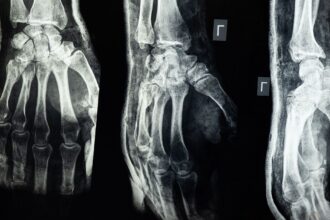
Rabies post-exposure prophylaxis risk assessment decision pathway showing exposure type stratification
The UK Department of Health and Social Care has published a standardised rabies post-exposure risk assessment form to help clinicians rapidly evaluate exposure incidents and determine prophylaxis urgency. The tool systematically classifies risk by animal type, exposure route, and geographic origin, ensuring consistent decision-making across UK healthcare settings. — Photo by Sasun Bughdaryan on Unsplash (Unsplash License)
SHARE
1 min read|138 words

The UK Department of Health and Social Care has introduced a standardised rabies post-exposure risk assessment form designed to enhance clinical decision-making consistency across NHS emergency departments and primary care settings. This new tool addresses longstanding variability in how clinicians evaluate potential rabies exposures and determine appropriate prophylaxis urgency.

The structured assessment form systematically classifies exposure incidents based on three critical variables: animal species (domestic versus wildlife), geographic origin of the animal, and route and severity of exposure. By integrating these factors into a formalised decision pathway, the tool enables rapid risk stratification and facilitates timely initiation of post-exposure prophylaxis—the only effective intervention once symptoms appear.

Clinicians can now apply evidence-based risk categories to guide treatment protocols, reducing delays and ensuring standardised responses to rabies exposure across the healthcare system. Read the full article on GMJ Newsroom.

Was this article helpful?
GMJ Brief · Announcement

📰 Read the full article: UK Releases Rabies Post-Exposure Risk Assessment Tool for Clinical Practice →

Share This Article
Facebook LinkedIn Bluesky Copy Link Print
GMJ
ByProf. Giorgi Pkhakadze
Follow:
Prof. Giorgi Pkhakadze, MD, MPH, PhD, is Editor-in-Chief of the Georgian Medical Journal and Chair of the Public Health Institute of Georgia (PHIG). He is Professor and Head of the Department of Social and Behavioural Sciences at David Tvildiani Medical University, and Secretary/Treasurer of the UEMS Section of Public Health. ORCID: 0000-0001-7609-4515.

Submit Your Paper →

Georgia's peer-reviewed open-access medical journal. No APC until January 2027.
Submit Manuscript →
The Citric Acid Cycle: How Cells Convert Food Into Energy

The citric acid cycle—Earth's most fundamental energy conversion process—occurs billions of times…

Astaxanthin’s unique membrane-spanning antioxidant action explained

Astaxanthin, a carotenoid pigment found in marine organisms, possesses a unique molecular…

Leucine Alone Cannot Build Muscle: Why BCAA Supplements Fall Short Without Complete Amino Acids

Leucine activates the muscle-building signal through mTORC1, but research shows this signal…

Submit Your Paper to GMJ

No APC until January 2027.
Submit Manuscript →

You Might Also Like

American Diabetes Association annual convention with attendees and medical professionals

What the ADA Controversy Reveals About Medical Association Governance and Member Rights

By
Prof. Giorgi Pkhakadze
26/07/2026
Pregnant Sudanese refugee women waiting for prenatal consultation at Birao District Hospital in Central African Republic

Maternal Mortality Disparity: Sudanese Refugee Women Face 138-Fold Higher Death Risk

By
Prof. Giorgi Pkhakadze
09/07/2026
Clinical UpdatesPolicy & SystemsPracticeQuality & Safety

Nearly 400 antibiotic-resistant infections per week in England in 2024, UK data shows

By
Prof. Giorgi Pkhakadze
29/06/2026
Abstract visualization of AI assisting with scientific research and data analysis

The AI Co-Scientist Promise: Why Hype Outpaces Evidence

By
Prof. Giorgi Pkhakadze
03/06/2026
Facebook Twitter Youtube Instagram
Company
  • Privacy Policy
  • Contact US
  • GMJ Journal
  • Submit Manuscript
  • Editorial Team
  • Register at GMJ
  • Terms of Use

Subscribe to GMJ News — Click here

Join Community
© 2026 Georgian Medical Journal (GMJ). Published by the Public Health Institute of Georgia (PHIG). All rights reserved.
Welcome Back!

Sign in to your account

Username or Email Address
Password

Lost your password?

Not a member? Sign Up