By using this site, you agree to the Privacy Policy and Terms of Use.
Accept
GMJ NewsGMJ NewsGMJ News
  • Latest News
    • GMJ Briefs
  • Podcast & Media
    • Podcast Episodes
    • GMJ Audio
    • GMJ Videos
  • Research Digest
    • New Studies
    • Georgian Research
    • Data & Numbers
  • Policy & Systems
    • Health Policy
    • Quality & Safety
    • Migration & Health
    • Global Health
  • Practice
    • Clinical Updates
    • Case Discussions
    • Pharmacy & Prescribing
    • Ingredients A-Z
  • Perspectives
    • Editorial
    • Explainers
    • Voices
    • Letters
  • GMJ Articles
    • Vol. 1 Issue 2 (2026)
    • Vol. 1 Issue 1 (2026)
    • Pre-Launch Articles (2025)
  • Read the Journal →
  • About GMJ News
Notification Show More
Font ResizerAa
GMJ NewsGMJ News
Font ResizerAa
  • Latest News
    • GMJ Briefs
  • Podcast & Media
    • Podcast Episodes
    • GMJ Audio
    • GMJ Videos
  • Research Digest
    • New Studies
    • Georgian Research
    • Data & Numbers
  • Policy & Systems
    • Health Policy
    • Quality & Safety
    • Migration & Health
    • Global Health
  • Practice
    • Clinical Updates
    • Case Discussions
    • Pharmacy & Prescribing
    • Ingredients A-Z
  • Perspectives
    • Editorial
    • Explainers
    • Voices
    • Letters
  • GMJ Articles
    • Vol. 1 Issue 2 (2026)
    • Vol. 1 Issue 1 (2026)
    • Pre-Launch Articles (2025)
  • Read the Journal →
  • About GMJ News
Follow US
GMJ News > GMJ Briefs > 15% Fracture Reduction: The Semaglutide Bone-Protection Paradox

15% Fracture Reduction: The Semaglutide Bone-Protection Paradox

GMJ
Last updated: 23/07/2026 10:35
By
Prof. Giorgi Pkhakadze
Share
1 Min Read
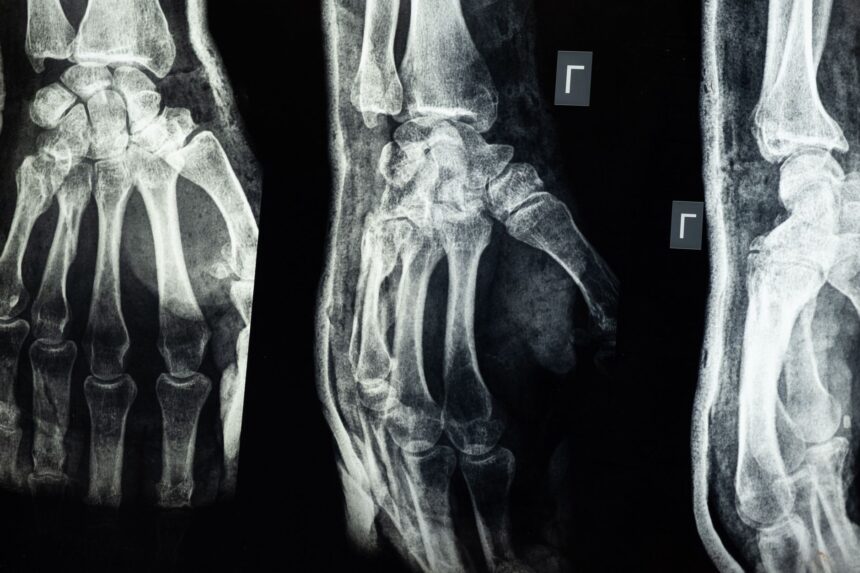
Medical chart showing fracture risk reduction across weight-loss medications; semaglutide demonstrates lowest fracture incidence despite greatest weight loss
A real-world analysis of 60,000 adults with type 2 diabetes shows semaglutide users experienced 15% fewer bone fractures than those on other weight-loss medications, despite losing more weight—suggesting an unexpected skeletal protective benefit. — Photo by cottonbro studio on Pexels (Pexels License)
SHARE
1 min read|113 words

A striking statistical finding emerges from real-world analysis of 60,000 patients with type 2 diabetes: semaglutide users demonstrated significantly lower fracture incidence despite experiencing more weight loss than those receiving other weight-loss medications. The 15% reduction in fracture risk defies traditional clinical expectations.

Conventionally, rapid weight reduction correlates with skeletal mineral density loss and heightened fracture vulnerability—particularly in older and post-menopausal populations. Yet semaglutide users maintained bone integrity despite superior weight outcomes. Comparative analysis showed other GLP-1 agents and SGLT2 inhibitors associated with higher fracture rates relative to semaglutide’s baseline.

This unexpected protective profile, independent of weight loss magnitude, suggests GLP-1 receptor signalling may directly enhance bone formation or inhibit pathological resorption, warranting mechanistic investigation.

Was this article helpful?

GMJ Brief · Key Finding

📰 Read the full article: Semaglutide Linked to Fewer Bone Fractures Despite Greater Weight Loss in Type 2 Diabetes →

Related reference
  • Type 2 Diabetes · Condition
  • Semaglutide · Drug
Share This Article
Facebook LinkedIn Bluesky Copy Link Print
GMJ
ByProf. Giorgi Pkhakadze
Follow:
Prof. Giorgi Pkhakadze, MD, MPH, PhD, is Editor-in-Chief of the Georgian Medical Journal and Chair of the Public Health Institute of Georgia (PHIG). He is Professor and Head of the Department of Social and Behavioural Sciences at David Tvildiani Medical University, and Secretary/Treasurer of the UEMS Section of Public Health. ORCID: 0000-0001-7609-4515.

Submit Your Paper →

Georgia's peer-reviewed open-access medical journal. No APC until January 2027.
Submit Manuscript →
How Vitamins and Minerals Power Brain Chemistry: The Neurotransmitter Connection

Vitamins B6, B12, folate, and minerals including zinc, magnesium, and iron function…

Beyond Neurons: How Brain’s Supporting Cells Drive Inflammation and Cognitive Resilience

The brain's health depends on more than neurons alone. A complex cellular…

How Your Immune System Learns and Remembers: The Dual Defence Strategy

Your immune system operates through two coordinated mechanisms: innate immunity provides immediate…

Submit Your Paper to GMJ

No APC until January 2027.
Submit Manuscript →

You Might Also Like

Scientific comparison chart of magnesium supplement absorption rates

Three Evidence-Based Facts About Magnesium Supplements Clinicians Should Know

By
Prof. Giorgi Pkhakadze
27/06/2026
Chart showing Michigan school vaccination waiver rates declining then rising again

The Numbers Behind Michigan’s Vaccine Policy Success and Setback

By
Prof. Giorgi Pkhakadze
17/06/2026
World map showing migration policy implementation rates by region

Global Migration Policy Adoption Outpaces Implementation Capacity

By
Prof. Giorgi Pkhakadze
27/06/2026

6.6 Magnitude Earthquake Strikes Central Mid-Atlantic Ridge

By
Prof. Giorgi Pkhakadze
18/06/2026
Facebook Twitter Youtube Instagram
Company
  • Privacy Policy
  • Contact US
  • GMJ Journal
  • Submit Manuscript
  • Editorial Team
  • Register at GMJ
  • Terms of Use

Subscribe to GMJ News — Click here

Join Community
© 2026 Georgian Medical Journal (GMJ). Published by the Public Health Institute of Georgia (PHIG). All rights reserved.
Welcome Back!

Sign in to your account

Username or Email Address
Password

Lost your password?

Not a member? Sign Up