By using this site, you agree to the Privacy Policy and Terms of Use.
Accept
GMJ NewsGMJ NewsGMJ News
  • Latest News
    • GMJ Briefs
  • Podcast & Media
    • Podcast Episodes
    • GMJ Audio
    • GMJ Videos
  • Research Digest
    • New Studies
    • Georgian Research
    • Data & Numbers
  • Policy & Systems
    • Health Policy
    • Quality & Safety
    • Migration & Health
    • Global Health
  • Practice
    • Clinical Updates
    • Case Discussions
    • Pharmacy & Prescribing
    • Ingredients A-Z
  • Perspectives
    • Editorial
    • Explainers
    • Voices
    • Letters
  • GMJ Articles
    • Vol. 1 Issue 2 (2026)
    • Vol. 1 Issue 1 (2026)
    • Pre-Launch Articles (2025)
  • Read the Journal →
  • About GMJ News
Notification Show More
Font ResizerAa
GMJ NewsGMJ News
Font ResizerAa
  • Latest News
    • GMJ Briefs
  • Podcast & Media
    • Podcast Episodes
    • GMJ Audio
    • GMJ Videos
  • Research Digest
    • New Studies
    • Georgian Research
    • Data & Numbers
  • Policy & Systems
    • Health Policy
    • Quality & Safety
    • Migration & Health
    • Global Health
  • Practice
    • Clinical Updates
    • Case Discussions
    • Pharmacy & Prescribing
    • Ingredients A-Z
  • Perspectives
    • Editorial
    • Explainers
    • Voices
    • Letters
  • GMJ Articles
    • Vol. 1 Issue 2 (2026)
    • Vol. 1 Issue 1 (2026)
    • Pre-Launch Articles (2025)
  • Read the Journal →
  • About GMJ News
Follow US
GMJ News > GMJ Briefs > Why a 6-Subject Study Became Nutritional Gospel: The Evidence Timeline

Why a 6-Subject Study Became Nutritional Gospel: The Evidence Timeline

GMJ
Last updated: 30/07/2026 15:30
By
Prof. Giorgi Pkhakadze
Share
1 Min Read
Chart comparing protein dose-response evidence from 2009 to 2023 showing increasing efficacy of higher doses with whole-body exercise
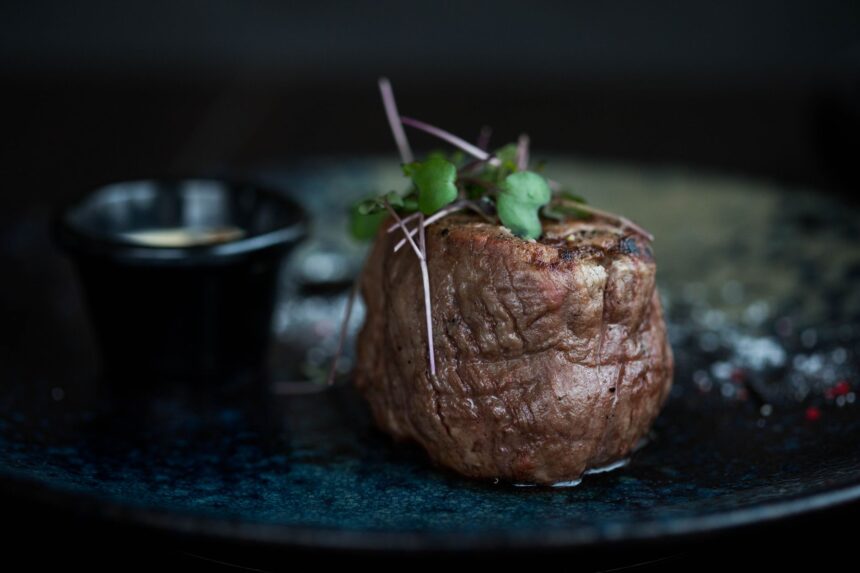
For over a decade, the fitness industry has promoted a rule: your body can only use 25–30 grams of protein per meal. Recent peer-reviewed research suggests this threshold is not fixed, and may be considerably higher, particularly for resistance-trained individuals performing whole-body exercise. — Photo by Valeria Boltneva on Pexels (Pexels License)
SHARE
1 min read|133 words

The origins of fitness culture’s most persistent claim reveal a critical gap between initial research scope and lasting industry practice. Moore et al.’s 2009 study, which enrolled just 6 subjects and measured muscle protein synthesis during a narrow 4-hour post-exercise window, established the 20–25 gram protein threshold that later evolved into the ubiquitous 30-gram rule.

Over 14 years, this finding became nutritional dogma despite its limited experimental design. However, subsequent research has challenged these boundaries. Macnaughton et al. (2016) enrolled 30 resistance-trained men and demonstrated that a 40-gram whey protein dose produced significantly greater muscle protein synthesis than 20 grams. More recent work by Trommelen et al. (2023), involving 30+ subjects in whole-body exercise protocols, reinforced this dose-response relationship.

These findings highlight how early evidence with small sample sizes can disproportionately influence long-term industry practice, even when methodological limitations are considerable.

Was this article helpful?

GMJ Brief · Key Finding

📰 Read the full article: The 30-gram protein myth: why recent evidence challenges the fitness industry’s most durable claim →

Related reference
  • Whey Protein · Ingredient
Share This Article
Facebook LinkedIn Bluesky Copy Link Print
GMJ
ByProf. Giorgi Pkhakadze
Follow:
Prof. Giorgi Pkhakadze, MD, MPH, PhD, is Editor-in-Chief of the Georgian Medical Journal and Chair of the Public Health Institute of Georgia (PHIG). He is Professor and Head of the Department of Social and Behavioural Sciences at David Tvildiani Medical University, and Secretary/Treasurer of the UEMS Section of Public Health. ORCID: 0000-0001-7609-4515.

Submit Your Paper →

Georgia's peer-reviewed open-access medical journal. No APC until January 2027.
Submit Manuscript →
Leucine Alone Cannot Build Muscle: Why BCAA Supplements Fall Short Without Complete Amino Acids

Leucine activates the muscle-building signal through mTORC1, but research shows this signal…

Exercise intensity, not volume alone, drives mitochondrial remodeling—meta-analysis of 425 studies reveals cellular architecture matters more than training time

A systematic review of 425 studies shows that high-intensity training produces 2–4…

The 20 amino acids: life’s molecular alphabet explained

The human body uses 20 standard amino acids as the building blocks…

Submit Your Paper to GMJ

No APC until January 2027.
Submit Manuscript →

You Might Also Like

Medical professional holding blood donation bag with WHO Africa logo

Announcement: WHO Africa Calls for Greater Blood Donation as Critical Shortages Persist Across Region

By
Prof. Giorgi Pkhakadze
11/07/2026
Medical researcher in laboratory representing scientific independence under threat from new federal grantmaking rules

What the New Federal Grantmaking Rule Means for Medical Research: Three Critical Concerns

By
Prof. Giorgi Pkhakadze
27/07/2026
Medical imaging comparison showing enhanced MRI detecting small brain tumor missed by standard scan

Stanford Scientists Unveil Enhanced MRI Technology to Detect Previously Invisible Brain Tumors

By
Prof. Giorgi Pkhakadze
14/06/2026
Microscopic view of plastic polymer chains and chemical structure representations

Common Plastic Chemical Linked to Long-Term Anxiety Effects in Developmental Study

By
Prof. Giorgi Pkhakadze
19/07/2026
Facebook Twitter Youtube Instagram
Company
  • Privacy Policy
  • Contact US
  • GMJ Journal
  • Submit Manuscript
  • Editorial Team
  • Register at GMJ
  • Terms of Use

Subscribe to GMJ News — Click here

Join Community
© 2026 Georgian Medical Journal (GMJ). Published by the Public Health Institute of Georgia (PHIG). All rights reserved.
Welcome Back!

Sign in to your account

Username or Email Address
Password

Lost your password?

Not a member? Sign Up