By using this site, you agree to the Privacy Policy and Terms of Use.
Accept
GMJ NewsGMJ NewsGMJ News
  • Latest News
    • GMJ Briefs
  • Podcast & Media
    • Podcast Episodes
    • GMJ Audio
    • GMJ Videos
  • Research Digest
    • New Studies
    • Georgian Research
    • Data & Numbers
  • Policy & Systems
    • Health Policy
    • Quality & Safety
    • Migration & Health
    • Global Health
  • Practice
    • Clinical Updates
    • Case Discussions
    • Pharmacy & Prescribing
    • Ingredients A-Z
  • Dictionary
    • Browse A–Z
    • About the Project
    • Contribute a Term
  • Perspectives
    • Editorial
    • Explainers
    • Voices
    • Letters
  • Health Topics
  • GMJ Articles
    • Vol. 1 Issue 2 (2026)
    • Vol. 1 Issue 1 (2026)
    • Pre-Launch Articles (2025)
  • Read the Journal →
  • About GMJ News
Notification Show More
Font ResizerAa
GMJ NewsGMJ News
Font ResizerAa
  • Latest News
    • GMJ Briefs
  • Podcast & Media
    • Podcast Episodes
    • GMJ Audio
    • GMJ Videos
  • Research Digest
    • New Studies
    • Georgian Research
    • Data & Numbers
  • Policy & Systems
    • Health Policy
    • Quality & Safety
    • Migration & Health
    • Global Health
  • Practice
    • Clinical Updates
    • Case Discussions
    • Pharmacy & Prescribing
    • Ingredients A-Z
  • Dictionary
    • Browse A–Z
    • About the Project
    • Contribute a Term
  • Perspectives
    • Editorial
    • Explainers
    • Voices
    • Letters
  • Health Topics
  • GMJ Articles
    • Vol. 1 Issue 2 (2026)
    • Vol. 1 Issue 1 (2026)
    • Pre-Launch Articles (2025)
  • Read the Journal →
  • About GMJ News
Follow US
GMJ News > GMJ Briefs > Protein Timing and Type: What Real-World Nutrition Reveals

Protein Timing and Type: What Real-World Nutrition Reveals

GMJ
Last updated: 19/08/2026 01:30
By
Prof. Giorgi Pkhakadze
Share
1 Min Read
Bar chart comparing protein synthesis and breakdown between whey and casein from 1997 Boirie study
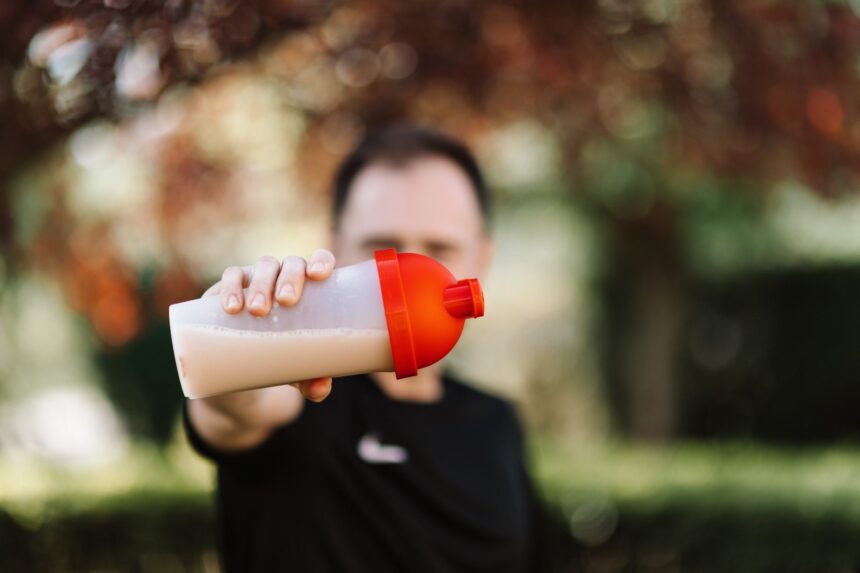
The 1997 Boirie study showing whey as "fast" and casein as "slow" protein has become nutrition dogma — but the paper's actual finding was that casein produced superior net protein retention. Here's what the research really showed. — Photo by www.kaboompics.com on Pexels (Pexels License)
SHARE
1 min read|132 words

The 1997 whey versus casein protein research is frequently reduced to binary “fast” versus “slow” classifications, but the full dataset offers more nuanced practical guidance. Whey protein facilitates rapid amino acid absorption and elevates synthesis rates—advantageous in acute post-exercise windows. Casein, conversely, suppresses protein breakdown while producing moderate synthesis increases, creating a sustained protective effect on nitrogen balance.

Critically, the metabolic differences documented in single-meal feeding studies largely attenuate when protein consumption follows realistic daily patterns of multiple meals. Continuous protein turnover throughout the day diminishes the relative advantage of either protein source consumed in isolation.

For practitioners, this suggests that total daily protein intake, meal distribution consistency, and training stimulus remain more influential variables than protein source selection for most populations and training contexts.

Read the full article on GMJ Newsroom.

Submit Your Paper
GMJ_Submit_Banner

Was this article helpful?

GMJ Brief · Takeaway

📰 Read the full article: How one 1997 protein study became nutrition dogma — and what the data actually shows →

Related reference
  • Casein Protein · Ingredient
  • Whey Protein · Ingredient
Share This Article
Facebook LinkedIn Bluesky Copy Link Print
GMJ
ByProf. Giorgi Pkhakadze
Follow:
Prof. Giorgi Pkhakadze, MD, MPH, PhD, is Editor-in-Chief of the Georgian Medical Journal and Chair of the Public Health Institute of Georgia (PHIG). He is Professor and Head of the Department of Social and Behavioural Sciences at David Tvildiani Medical University, and Secretary/Treasurer of the UEMS Section of Public Health. ORCID: 0000-0001-7609-4515.

Submit Your Paper →

Georgia's peer-reviewed open-access medical journal. No APC until January 2027.
Submit Manuscript →
Ethiopia Study Reveals Stakeholder Concerns Over Novel Malaria Treatments

A qualitative study in Ethiopia reveals that health workers and patients view…

Sitafloxacin monotherapy matches doxycycline-rifampicin for brucellosis treatment in landmark trial

A multicenter randomized trial in The Lancet Regional Health – Western Pacific…

Ultra-processed foods linked to higher kidney cancer risk in large US study

A prospective analysis of over 300,000 US adults found that higher consumption…

Submit Your Paper to GMJ

No APC until January 2027.
Submit Manuscript →

You Might Also Like

Illustration of brain mitochondria, B vitamins, and neurotransmitter pathways supporting cognitive energy and signal transmission

Micronutrient Assessment Should Be Standard in Cognitive Care, GMJ Research Suggests

By
Prof. Giorgi Pkhakadze
27/07/2026
Sunscreen ingredient approval timeline showing 25-year gap between FDA approvals

FDA Breaks 25-Year Drought: Bemotrizinol Approval Reshapes US Sunscreen Market

By
Prof. Giorgi Pkhakadze
19/07/2026
Brain scan imaging showing activity patterns in long COVID patients compared to healthy controls

Landmark Study Upends Long COVID Inflammation Hypothesis

By
Prof. Giorgi Pkhakadze
21/06/2026
Diagram showing cervical, thoracic, lumbar, and sacral spinal nerve levels and their body system connections

Key Finding: Why Your Spine Is Your Body’s Critical Nerve Highway: Understanding Spinal Function and Health

By
Prof. Giorgi Pkhakadze
21/08/2026
Facebook Twitter Youtube Instagram
Company
  • Privacy Policy
  • Contact US
  • GMJ Journal
  • Submit Manuscript
  • Editorial Team
  • Register at GMJ
  • Terms of Use

Subscribe to GMJ News — Click here

Join Community
© 2026 Georgian Medical Journal (GMJ). Published by the Public Health Institute of Georgia (PHIG). All rights reserved.
Welcome Back!

Sign in to your account

Username or Email Address
Password

Lost your password?