By using this site, you agree to the Privacy Policy and Terms of Use.
Accept
GMJ NewsGMJ NewsGMJ News
  • Latest News
    • GMJ Briefs
  • Podcast & Media
    • Podcast Episodes
    • GMJ Audio
    • GMJ Videos
  • Research Digest
    • New Studies
    • Georgian Research
    • Data & Numbers
  • Policy & Systems
    • Health Policy
    • Quality & Safety
    • Migration & Health
    • Global Health
  • Practice
    • Clinical Updates
    • Case Discussions
    • Pharmacy & Prescribing
    • Ingredients A-Z
  • Perspectives
    • Editorial
    • Explainers
    • Voices
    • Letters
  • Health Topics
  • GMJ Articles
    • Vol. 1 Issue 2 (2026)
    • Vol. 1 Issue 1 (2026)
    • Pre-Launch Articles (2025)
  • Read the Journal →
  • About GMJ News
Notification Show More
Font ResizerAa
GMJ NewsGMJ News
Font ResizerAa
  • Latest News
    • GMJ Briefs
  • Podcast & Media
    • Podcast Episodes
    • GMJ Audio
    • GMJ Videos
  • Research Digest
    • New Studies
    • Georgian Research
    • Data & Numbers
  • Policy & Systems
    • Health Policy
    • Quality & Safety
    • Migration & Health
    • Global Health
  • Practice
    • Clinical Updates
    • Case Discussions
    • Pharmacy & Prescribing
    • Ingredients A-Z
  • Perspectives
    • Editorial
    • Explainers
    • Voices
    • Letters
  • Health Topics
  • GMJ Articles
    • Vol. 1 Issue 2 (2026)
    • Vol. 1 Issue 1 (2026)
    • Pre-Launch Articles (2025)
  • Read the Journal →
  • About GMJ News
Follow US
GMJ News > GMJ Briefs > The Osteocalcin Signal: How Bone Loading Improves Insulin Sensitivity

The Osteocalcin Signal: How Bone Loading Improves Insulin Sensitivity

GMJ
Last updated: 06/08/2026 19:30
By
Prof. Giorgi Pkhakadze
Share
1 Min Read
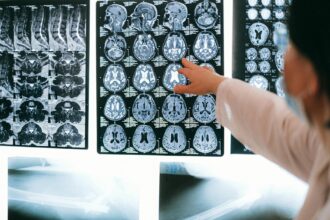
Illustration of bone cells (osteoblasts) releasing osteocalcin hormone into bloodstream, connecting to pancreas and skeletal muscle in a metabolic feedback loop
Bone tissue functions as an active metabolic organ that regulates blood sugar through mechanical loading responses. When bones experience stress from weight-bearing or resistance exercise, they release osteocalcin, a hormone that improves insulin sensitivity and glucose uptake by muscle—establishing a direct feedback loop between movement and metabolic health. — Photo by Pavel Danilyuk on Pexels (Pexels License)
SHARE
1 min read|115 words

Recent bone physiology research has identified a critical metabolic mechanism: when bone experiences mechanical loading, specialized bone-forming cells release osteocalcin, a hormone that directly improves insulin sensitivity and enhances glucose uptake by skeletal muscle. This three-organ pathway—bone, pancreas, and muscle—forms an integrated feedback system triggered by mechanical stress. The hormone-signaling cascade demonstrates that the skeleton is not merely a passive structural framework but an active participant in glucose regulation. Weight-bearing and resistance exercise activate this pathway more efficiently than aerobic activity, making mechanical loading a key metabolic intervention. This finding reshapes clinical understanding of how exercise improves metabolic health, positioning skeletal loading as a fundamental component of diabetes prevention and glucose control strategies.

Was this article helpful?
GMJ Brief · Key Finding

📰 Read the full article: Bones Are Metabolic Organs: How Mechanical Loading Regulates Blood Sugar →

Related reference
  • Insulin · Drug
Share This Article
Facebook LinkedIn Bluesky Copy Link Print
GMJ
ByProf. Giorgi Pkhakadze
Follow:
Prof. Giorgi Pkhakadze, MD, MPH, PhD, is Editor-in-Chief of the Georgian Medical Journal and Chair of the Public Health Institute of Georgia (PHIG). He is Professor and Head of the Department of Social and Behavioural Sciences at David Tvildiani Medical University, and Secretary/Treasurer of the UEMS Section of Public Health. ORCID: 0000-0001-7609-4515.

Submit Your Paper →

Georgia's peer-reviewed open-access medical journal. No APC until January 2027.
Submit Manuscript →
Burundi’s first quarter 2026: refugees access care as WHO strengthens health partnerships

WHO's first-quarter 2026 report documents that over 65,000 Congolese refugees in Burundi…

Danish Medicines Agency Launches Cell Therapy Clinical Trial Template

The Danish Medicines Agency has released a standardized Investigator's Brochure template for…

UK’s MHRA Launches Innovation Guidance to Accelerate Medical Device and Drug Development

The UK's MHRA has published formal guidance for drug and medical device…

Submit Your Paper to GMJ

No APC until January 2027.
Submit Manuscript →

You Might Also Like

Infographic showing physiological gains from brief daily vigorous exercise bouts: 10% peak power, 7% fitness, 3% body fat reduction

Peak Power Output Surges 10% With Daily Vigorous Exercise Snacks

By
Prof. Giorgi Pkhakadze
03/08/2026
Healthcare worker administering RSV vaccine to older adult patient

What Healthcare Providers Should Know About Updated RSV Vaccination Guidelines

By
Prof. Giorgi Pkhakadze
07/08/2026
Chart showing declining healthcare cost security in the United States from 2021 to 2026

New Data: US Healthcare Affordability Declines 4 Points in Five Years

By
Prof. Giorgi Pkhakadze
25/07/2026
Medical illustration showing targeted cancer therapy mechanism

NHS Marks Major Milestone with First Ovarian Cancer Drug Approval in Two Decades

By
Prof. Giorgi Pkhakadze
24/06/2026
Facebook Twitter Youtube Instagram
Company
  • Privacy Policy
  • Contact US
  • GMJ Journal
  • Submit Manuscript
  • Editorial Team
  • Register at GMJ
  • Terms of Use

Subscribe to GMJ News — Click here

Join Community
© 2026 Georgian Medical Journal (GMJ). Published by the Public Health Institute of Georgia (PHIG). All rights reserved.
Welcome Back!

Sign in to your account

Username or Email Address
Password

Lost your password?

Not a member? Sign Up